

Is AI Good Enough to Replace CSRs? That's the Wrong Question to Ask
Callers detect AI in seconds. On $8K+ jobs, that kills the deal. Learn how AI call center coaching turns every CSR into your best closer
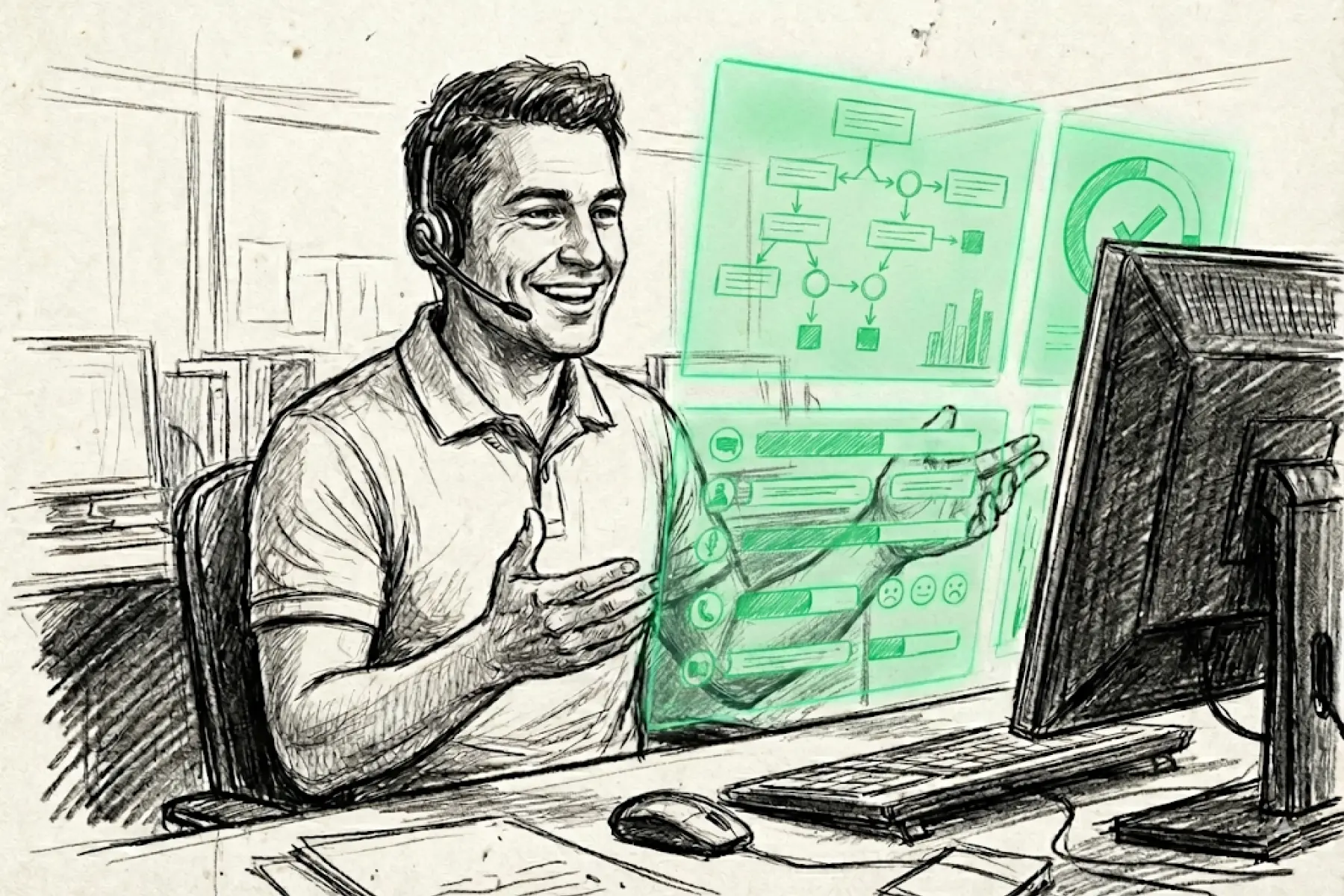
The question isn't "AI or human."
It's this: at what dollar amount does trust require a human voice? And how do you make every human voice perform like your best closer?
Every AI vendor in home services is racing to replace your CSR team.
Reddit threads, trade forums, and your own gut say the same thing. Callers can tell. And for big jobs, it kills the deal.
But the other side ("just ignore AI entirely") isn't right either. There's a third model. It starts with understanding exactly where AI breaks down, why, and what to do instead.
Can AI replace CSRs in home service call centers?
The sales deck sounds great. Lower costs. 24/7 coverage. No training headaches. Some vendors promise to replace your entire front office with a bot that never calls in sick.
Here's what actually happens.
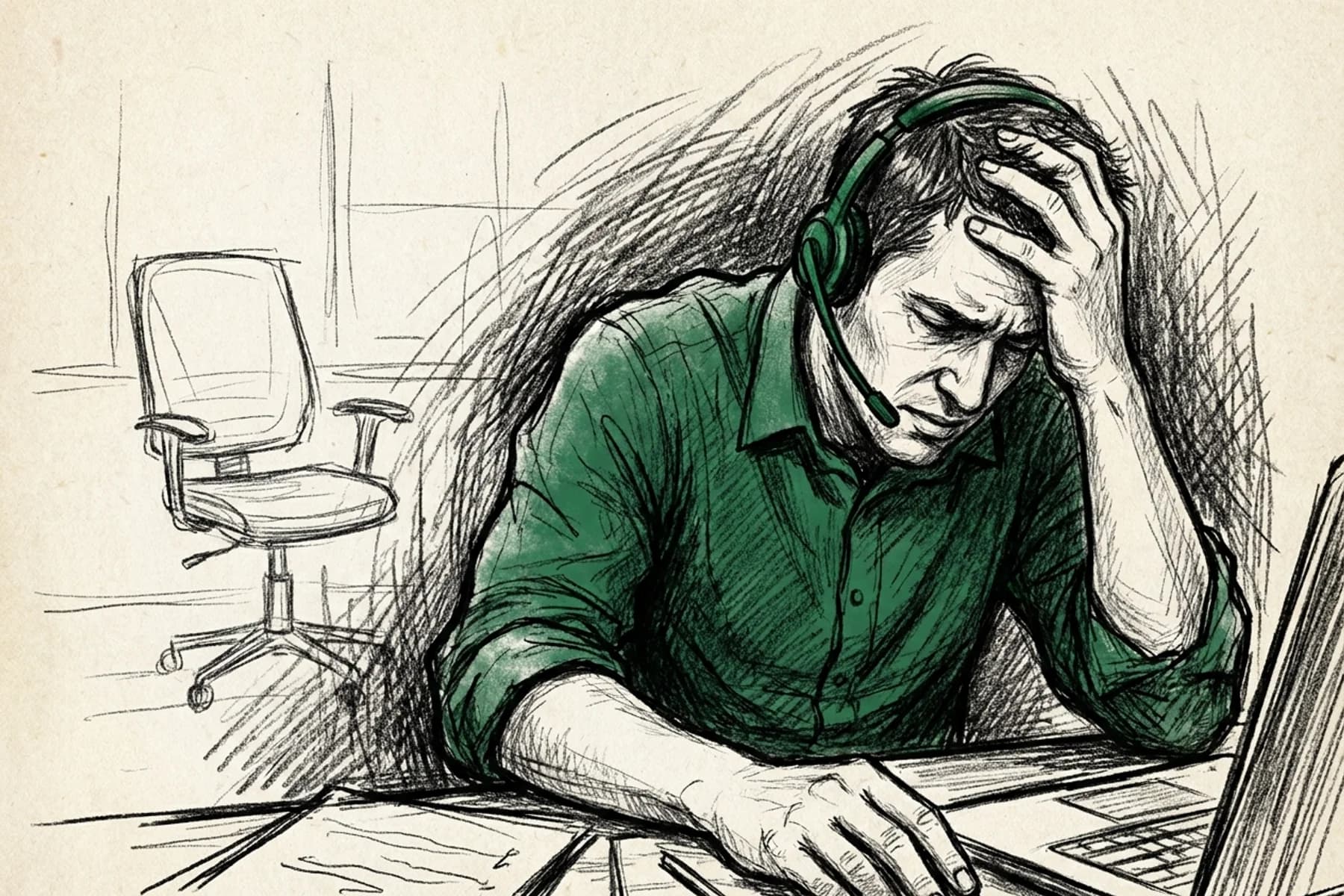
Real operators report callers detect the AI within seconds. Conversations feel scripted. On complex calls (the ones worth real money) trust evaporates before the homeowner even asks about pricing.
The data backs this up.
Consumer preference for human representatives has increased 12% since 2022 for high-stakes decisions. AI chatbots achieve 80% satisfaction on simple queries, but human agents hit 87%.
That gap widens fast on complex, emotionally charged calls.
AI handles appointment confirmations and after-hours routing fine.
But objection handling? Reading urgency when a furnace dies at 2 AM? Building rapport on a $15K system replacement?
That requires what elite HVAC CSRs actually do: empathy, real-time objection handling, and earning trust in 90 seconds. No AI on the market replicates that.
Not all calls are equal. A $200 drain cleaning booking is a completely different conversation than a $15K HVAC install. Treating them the same is the mistake.
Why does AI fail on high-ticket HVAC jobs?
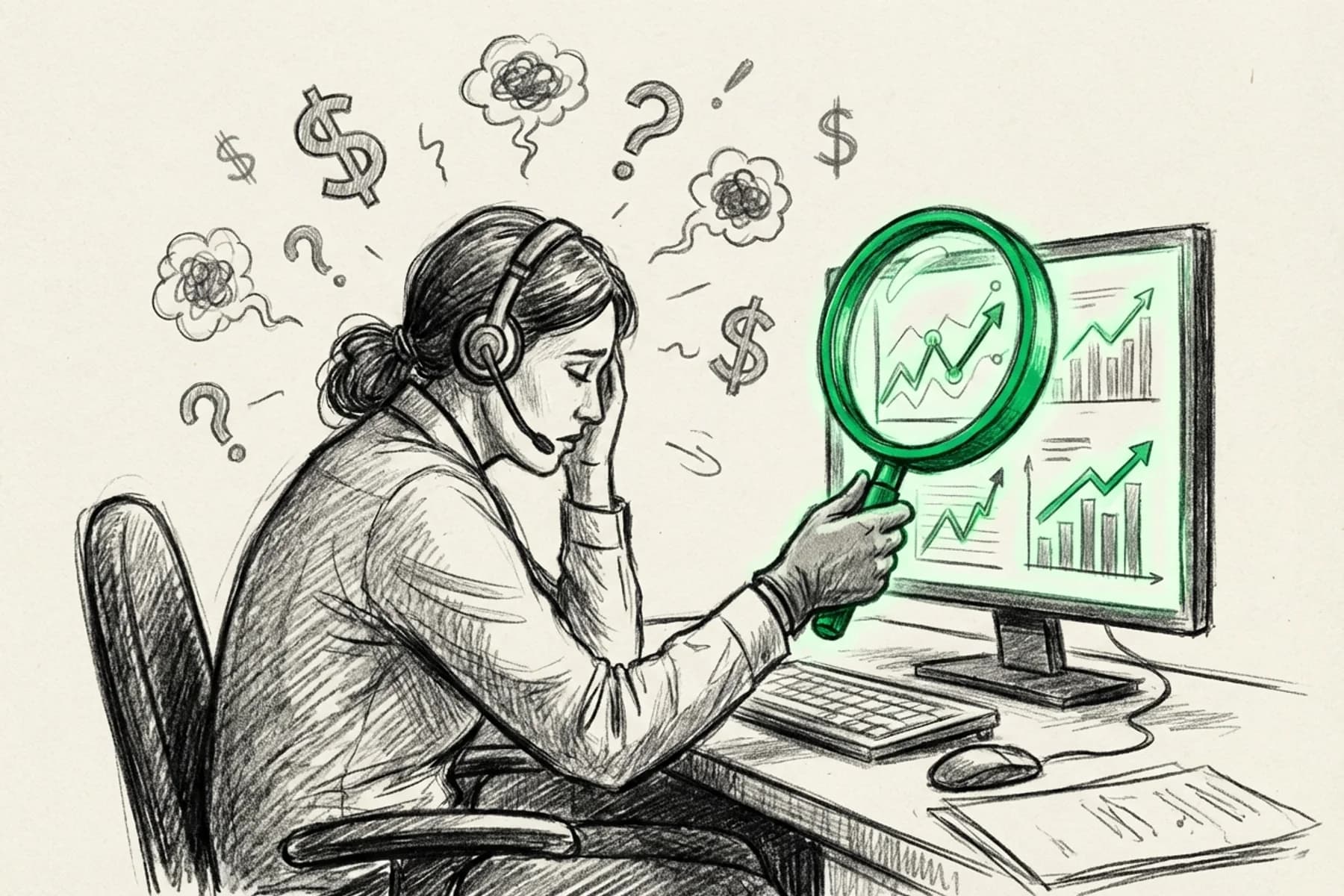
We call it the Trust Gap. As ticket price rises, the caller's need for human trust and judgment rises with it. Past a certain dollar threshold, AI-only handling doesn't just underperform. It actively repels.
Here's how it maps:
Low-ticket ($0 to $500): AI-only works. Scheduling, confirmations, basic routing. Callers tolerate automation because the stakes are low. 74% of customers prefer chatbots for simple questions. This is that tier.
Mid-ticket ($500 to $5K): Gray zone. AI can assist, but humans need to steer. Callers start asking harder questions. "What's included?" "Why is this more than the other quote?" AI's speed advantage disappears when problems get complicated.
High-ticket ($5K to $20K+): Trust Gap is at maximum. The caller needs to feel heard and confident. 61% of consumers over 45 strongly favor human agents on complex matters. AI-only equals trust collapse.
The implication is blunt. If your average job is $8K+, AI replacing call center agents isn't suboptimal. It's a revenue liability.
You paid for the ad. You generated the lead. And a bot gave it away to the competitor with a human on the phone.
How does AI coaching improve call center agent performance?
The industry got the use case backwards. AI's strength was never replacing the human voice. It's making every human voice sharper, faster, and more consistent.
What AI excels at:
Real-time script guidance during live calls
Instant data pull (customer history, pricing, warranty status)
Live call scoring so managers see call center agent performance as it happens
Consistent messaging across every agent, every shift
Post-call data entry and CRM updates with zero manual work
Flagging missed upsell and rebooking opportunities
What humans do that AI can't:
Reading vocal tone. Panicked, skeptical, or price-shopping?
Handling emotional objections ("That's way more than I expected")
Building rapport in the first 90 seconds
Adapting when the conversation goes sideways
Conveying genuine empathy on emergency calls
The results of AI call center coaching speak for themselves: 21% sales increase, 27% boost in customer satisfaction, and 56-second reduction in average handle time when AI coaches the human instead of replacing them.
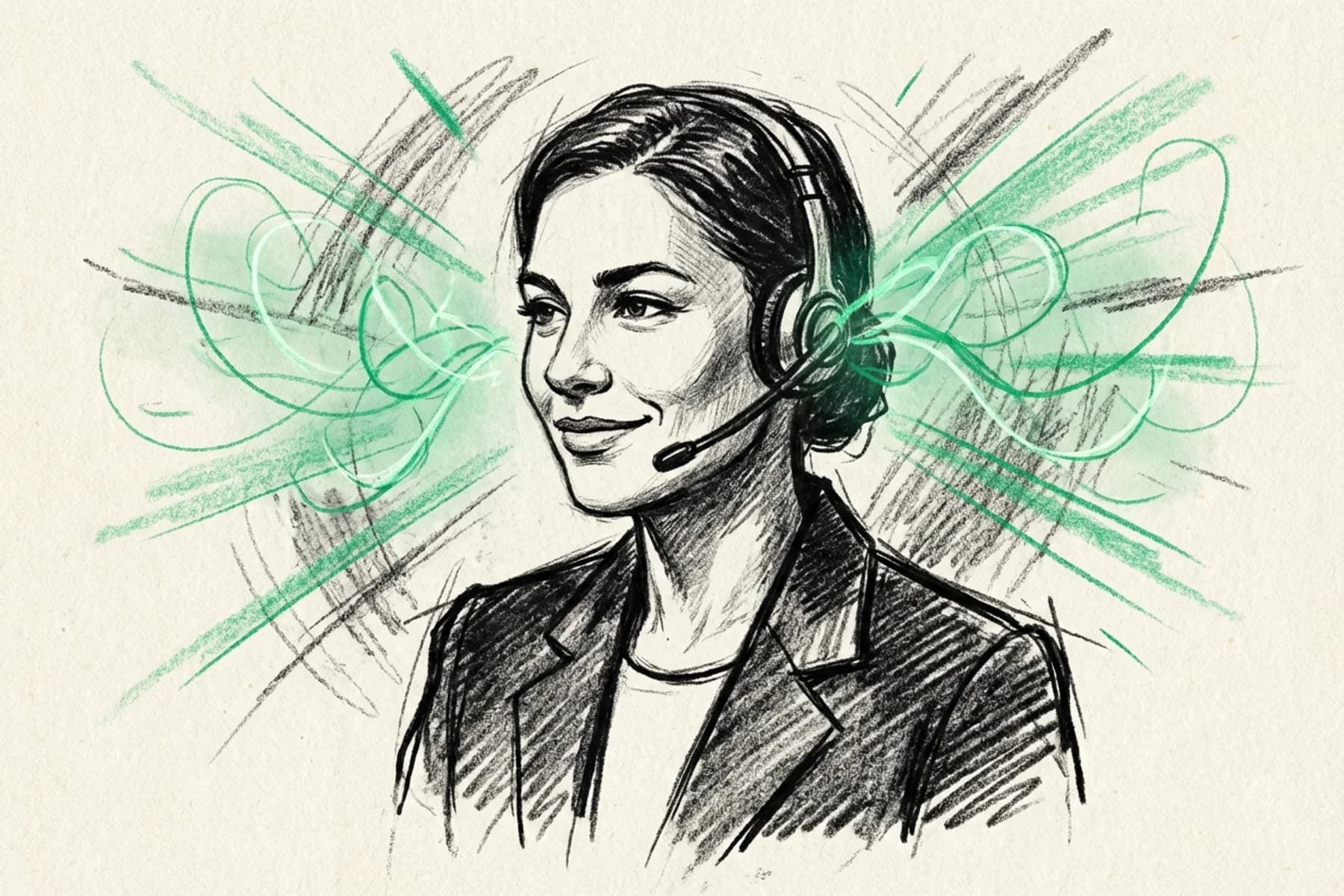
This is the birth of the 10x CSR.
Your best CSR already knows what to say. The problem is your other 9 don't. AI call center coaching closes that gap. Not in six months. On their next call.
What is a hybrid AI model for home service call centers?
Here's what it actually looks like in practice:
AI listens to the live call and surfaces real-time prompts (pricing, rebuttals, upsell cues) directly to the agent's screen.
The human agent delivers with natural empathy, judgment, and trust-building no bot can fake.
AI handles the aftermath. Documentation, call scoring, QA. All automatic. No clipboard. No spreadsheet.
Managers get 100% visibility without listening to recordings. Every fumble and win is flagged.
Why this beats both alternatives:
AI-only loses trust on high-ticket jobs. You already know this.
Human-only means inconsistent quality. Your bottom performers bleed revenue you can't even see.
The co-pilot model delivers the consistency of AI with the trust of a human voice. Your worst CSR starts performing like your best. Not in six months. On their next call. Real-time AI guidance has driven a 42% improvement in first-call resolution rates in contact centers already using this approach.
HVAC CSR training accelerates fast when AI provides real-time guardrails instead of relying on classroom sessions your team forgets by Thursday. No 6-month ramp. No hoping the new hire "gets it" before they quit.
Stop debating AI vs. human. Start building Super-CSRs.
The Trust Gap is real. For high-ticket trades, AI replacing call center agents is a losing bet. The data, the forums, and your gut all agree.
The winning move: use AI where it's strongest (coaching, data, consistency) and humans where they're irreplaceable (trust, empathy, closing).
If your gut told you full AI replacement felt wrong for your business, it was right.
The future isn't fewer humans. It's better-equipped humans. It's every CSR on your team performing like the one you wish you could clone.
That's the Super-CSR model. The only approach that closes the Trust Gap instead of widening it.
Key Takeaway: AI can't replace the human trust required to close high-ticket jobs. But AI call center coaching can make every CSR perform like your best closer, in real time, on every call. Stop choosing between AI replacing call center agents and ignoring AI entirely. Combine them.
FAQs
What is the best way to train HVAC CSRs with AI?
The fastest path is real-time AI coaching during live calls. Instead of classroom training your team forgets in a week, AI surfaces the right scripts, rebuttals, and pricing data while the agent is on the phone. New hires ramp in days, not months. Your worst performer starts sounding like your best. That's the core of the Super-CSR model.
At what ticket price does AI call handling start losing you money?
Our framework puts the danger zone around $5K and above. Below $500, AI-only handling works fine for scheduling and confirmations. Between $500 and $5K it's a gray area. Above $5K, callers need to feel heard by a real person. If your average job is $8K+, every AI-handled call is a potential lost deal.
Why do callers hang up on AI bots within seconds?
Because they can tell. The pacing is off. The responses feel scripted. And on high-stakes calls, homeowners want to talk to someone who understands their situation. Consumer preference for human agents on complex decisions has jumped 12% since 2022. It's not a tech problem. It's a trust problem.
See the Super-CSR model in action
You've seen the framework. You know why AI-only breaks and human-only bleeds.
See what happens when you combine them.
Book a Demo with Tradesly and watch AI call center coaching turn a live call into a booked job. Your scripts. Your pricing. Your brand voice.