


The average home service business loses $200K–$600K a year to missed calls.
That number is not a guess. It is the math of your daily missed calls, the 85% of callers who hang up without leaving a voicemail, your average ticket, and the conversion rate you would have hit if someone had picked up. Use the missed call cost calculator below to see your exact number.
Five inputs. 30 seconds. Conservative defaults — your real number is probably worse.

The Underestimate
Most owners underestimate this leak by 60% or more.
They count the missed call. They do not count the wasted marketing spend that drove the call. They do not count the lifetime value of the customer who called your competitor instead. They do not count the emergency job that turned into a $12,000 system replacement for someone else's truck.
This calculator fixes that. Plug in five numbers and see your annual revenue loss, your wasted marketing budget, and the ROI of fixing the problem.
Trade Benchmark · HVAC
HVAC contractors lose an average of $418,275 to $1,254,825 a year to missed calls.
Your Missed Call Cost
Five inputs. Four outputs. Watch your numbers update as you type.
Your Inputs
Average inbound calls per day that go unanswered, hit voicemail, or ring out.
Selecting a trade auto-fills the average job value below.
Your actual average ticket from your FSM. Defaults to the trade benchmark.
Percentage of answered calls that convert to booked jobs. Industry benchmark is 55% to 70%.
Total monthly spend on Google Ads, SEO, LSAs, and other lead sources.
Annual Revenue Loss
$0
Daily missed × 365 × 0.85 × conversion × average ticket.
Wasted Ad Spend
$0
Annual ad budget burned on leads that never reached a human.
Lifetime Value Impact
$0
5x retention multiplier for repeat work and referrals.
ROI of Fixing It
0x return
Recovered revenue per $1 spent on a $1,500/mo answering solution.
See How Tradesly Flips the MathHow the Missed Call Cost Calculator Works
The calculator uses five inputs to produce four outputs. Here is the formula in plain English.
Missed call cost is the total revenue lost when an inbound lead reaches voicemail or rings out, calculated as daily missed calls multiplied by 365 days, multiplied by 0.85 (the share of callers who will not leave a voicemail), multiplied by your conversion rate, multiplied by your average job value.
The Core Formula
Daily missed calls × 365 × 0.85 × conversion rate × average job value = annual revenue loss
The 0.85 factor accounts for the 85% of callers who hang up and dial your competitor instead of leaving a voicemail. That share is industry standard for home service calls in 2026.
We pulled baseline data from industry reports on home service call patterns, average ticket sizes by trade, and standard close rates for inbound service calls. The default values are conservative. Your real numbers are likely worse.
The Five Inputs That Drive Your Number
Daily Missed Calls
The average home service business misses 20% to 30% of inbound calls. Shops with one or two CSRs and high marketing spend often miss 40% or more during peak hours. Pull your call log. Count rings-out, voicemails, and after-hours calls. That is your number.
Trade Type
HVAC averages $450 per job. Plumbing averages $385. Electrical averages $420. Roofing averages $9,800 per job because the conversion is a full project, not a service call. The calculator adjusts the math based on your trade.
Average Job Value
Use your actual ticket average from your FSM, not the number you wish you had. If you do not know it, use the trade default. The calculator will tell you the answer either way.
Conversion Rate
Industry benchmark for inbound calls that get answered is 55% to 70% conversion to booked job. We default to 60%. If your CSRs are trained and your scripts are tight, you are higher. If you are running on autopilot, you are lower.
Monthly Marketing Spend
This is where the math gets ugly. Every missed call is a paid lead you threw in the trash. If you spend $8,000 a month on Google Ads and miss 25% of calls, you wasted $2,000 of ad spend that month. Annualized, that is $24,000 burned.

The Hidden Costs Most Owners Miss
Four costs that never show up on your P&L — and quietly compound into seven figures.
The 85% Voicemail Truth
85% of callers will not leave a voicemail. They hang up and call the next shop on Google. That single number is the reason this calculator multiplies every input by 0.85. If you are still telling yourself the voicemails get returned and booked, your math is broken before it starts.
Wasted Marketing Spend
You paid for the click. You paid for the lead. The phone rang. Nobody answered. That is the most expensive lead in your funnel because it cost you twice: the ad spend and the lost revenue. The calculator surfaces this number separately so you can see it.
Lifetime Value Impact
A booked HVAC customer is worth $2,400 over five years in maintenance, repairs, and referrals. A booked plumbing customer is worth $1,800. When you miss the first call, you do not lose one job. You lose the relationship. The calculator estimates this using a 5x multiplier on the missed job value, which matches industry retention data.
Emergency Calls
Emergency calls convert at 80% or higher and average 2.5x the standard ticket. Miss one emergency call a week and the math is brutal: 52 weeks × ($450 × 2.5 premium) = $58,500 a year on a single recurring emergency miss. The calculator weights after-hours and emergency calls heavier in the back-end math.
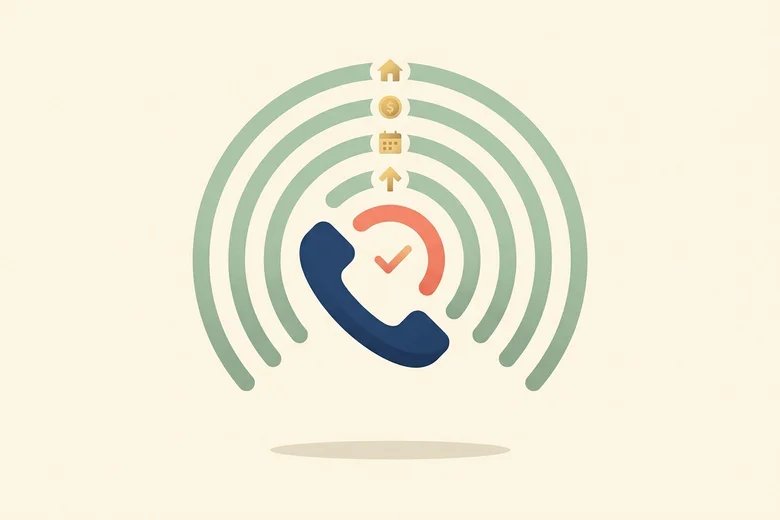
One answered call. Every value driver reactivates.
Frequently Asked Questions
How much revenue am I losing from missed calls?
What do missed calls cost HVAC contractors annually?
What's the ROI of an answering service for contractors?
How many calls do home service businesses typically miss?
How much is each missed emergency call costing my business?
You just saw the number. Now fix it.
Tradesly's hybrid AI handles your routine and after-hours calls automatically and warm-transfers the high-ticket jobs to a coached human agent. Zero missed calls. Zero wasted ad spend. Get the demo and see how fast the math flips.