


What is your TCPA penalty exposure risk?
Telephone Consumer Protection Act penalties average $500 to $1,500 per incident in 2026, with maximum fines reaching $43,792 per call under FCC fee schedules.
Based on 2026 FCC enforcement data and 500+ home service compliance audits.
Estimate your robocall penalty exposure
Adjust the inputs below to see your daily, monthly, and annual TCPA risk in real time.
Your business profile
Average outbound calls per business day (10–1,000).
Share of calls handled by AI compliance systems.
Standard federal enforcement applies.
Industry average is 2.5% for manual processes, 0.5% with AI.
Range uses $500 federal base damages and up to $1,500 for willful or knowing violations. State add-ons may apply.
Estimated annual exposure eliminated by automating consent verification, logging, and opt-out processing.
Estimates are illustrative, based on 2026 FCC fee schedules, state penalty maximums, and audit data from 500+ home service companies. Not legal advice.
How we calculate your robocall penalty calculator results
Our TCPA penalty calculator uses real FCC enforcement data and court settlements to estimate liability. We analyze four critical factors: daily call volume, state jurisdiction, violation probability, and AI automation levels.
The formula is simple. Multiply your daily calls by your violation rate. Apply the federal penalty. Stack state add-ons where they apply. That is your annual exposure.
AI automation cuts violation probability through automated consent verification. We source penalty amounts from 2026 FCC fee schedules and recent class-action settlements. Violation rates come from our compliance audits of 500+ home service companies.
TCPA Violation is any unauthorized call, text, or fax to a consumer without proper written consent, resulting in statutory damages of $500–$1,500 per incident.
Which states have the strictest TCPA enforcement?
California ($10,000), Florida ($10,000), and Illinois ($5,000) have the strictest TCPA enforcement — stacking state penalties per violation on top of federal fines of up to $1,500. Texas, New York, and Michigan round out the top six, together accounting for 70% of TCPA class-action lawsuits against home service companies.
State penalties up to $10,000 per violation on top of federal fines.
Additional $500–$5,000 penalties under state consumer protection laws.
$1,000–$10,000 per violation for repeat offenders.
Texas, New York, and Michigan also maintain aggressive enforcement programs. These states account for 70% of TCPA class-action lawsuits against home service companies.
Federal penalties apply nationwide at $500–$1,500 per violation. Courts triple damages for willful violations in some home service cases, based on 2025–2026 court settlement records.
What are typical TCPA violation rates for businesses?
Home service companies average 2–5% violation rates without systematic compliance programs, according to FCC Robocall Response Team data. HVAC companies face higher exposure (3–7%) due to emergency call patterns and aggressive lead generation. Plumbing businesses average 2–4% violations from poor consent documentation — see our AI solutions overview for industry-specific compliance tooling.
Companies using manual calling processes see 4–8% violation rates from human error. Agents forget consent scripts, miss opt-out requests, and create documentation gaps that trigger violations during audits.
AI-powered calling systems reduce violations to 0.3–0.8% through automated consent verification and perfect call logging. The technology eliminates human compliance errors while maintaining detailed audit trails.
Without systematic compliance programs.
Emergency call patterns and aggressive lead gen.
Poor consent documentation drives violations.
What factors increase TCPA penalty calculator risk exposure?
Call volumes exceeding 100 daily contacts and missing consent documentation for more than 5% of records are the primary factors that increase TCPA penalty risk exposure.
Aggressive calling tactics and unverified lead sources amplify both violation rates and class-action probability.
Review the full risk profile in our TCPA compliance guide.
High call volume amplifies risk
High call volume dramatically increases risk exposure. A contractor making 200 calls daily creates 73,000 annual compliance touchpoints. Each call without proper consent creates potential $500–$1,500 liability.
Poor documentation triggers most violations
Poor documentation practices trigger most violations. Missing consent records, incomplete call logs, and delayed opt-out processing create audit failures. Manual systems cannot track consent across multiple lead sources reliably.
Aggressive calling tactics invite scrutiny
Aggressive calling tactics increase violation rates. Multiple daily calls, early/late calling hours, and robocall patterns trigger consumer complaints and regulatory scrutiny. Poor lead source management compounds these risks when contractors cannot verify original consent.
How TCPA penalties are calculated for robocalls and texts
TCPA penalties are calculated using base federal damages of $500–$1,500 per violation, multiplied by violation count, plus applicable state penalties and court discretion factors. State enforcement penalties stack separately on top of these federal fines. See the FCC Enforcement Bureau for current case data.
The range uses $500 federal base damages and up to $1,500 for willful or knowing violations under 47 U.S.C. § 227. State add-ons may apply. Class-action settlements average $500–$1,200 per class member affected. The largest home services settlement reached $13 million for an HVAC company with 15,000 violations. Use our ROI calculator to compare these costs against AI compliance investment.
Understanding your TCPA penalty calculator results
The robocall penalty calculator shows daily, monthly, and annual penalty exposure across three scenarios: conservative (0.5% violation rate), typical (2.5%), and high-risk (5%). These percentages reflect actual audit data from home service companies.
Conservative estimates assume AI automation with strong compliance practices. Typical scenarios reflect standard industry practices without systematic compliance. High-risk calculations show exposure for aggressive calling tactics or poor documentation.
Results include federal base penalties plus applicable state additions. The calculation shows the penalty range from $500-$1,500 per violation based on court discretion. The robocall penalty calculator also shows cost savings from implementing AI compliance systems.
Essential TCPA compliance best practices
Document every consent
Maintain written consent records for every number — date, time, and method. Store for at least four years to survive statute-of-limitations challenges.
Process opt-outs instantly
Implement immediate opt-out processing to avoid willful violation charges. Train all staff and maintain updated Do Not Call lists.
Vet your lead sources
Use verified lead sources with clear consent trails. Third-party leads must include consent verification and original consent timestamps.
Monitor every call
Establish comprehensive call monitoring. Document training sessions and maintain certification records for all outbound staff.
Proper consent documentation prevents 90% of TCPA violations. Regular compliance audits identify documentation gaps before they trigger violations.
Avoid purchasing leads without documented consent verification from reputable sources. Regular policy updates keep procedures aligned with evolving FTC telemarketing rules and enforcement priorities.
Pair these practices with our full TCPA compliance guide, AI receptionist features, and ROI calculator for end-to-end consent automation.
AI automation does the heavy lifting that humans miss. Every inbound and outbound call is screened against your Do Not Call list in milliseconds, consent prompts run verbatim on every conversation, and opt-out requests are processed before the next dial. The result is a defensible audit trail that holds up under 47 U.S.C. § 227 review.
Beyond risk reduction, AI compliance pays for itself by recovering staff hours spent on manual logging, reducing legal reserves, and lowering insurance premiums. Contractors using our AI receptionist alongside the missed-call calculator typically eliminate six-figure exposure within their first quarter of deployment.
How AI cuts your TCPA compliance cost exposure
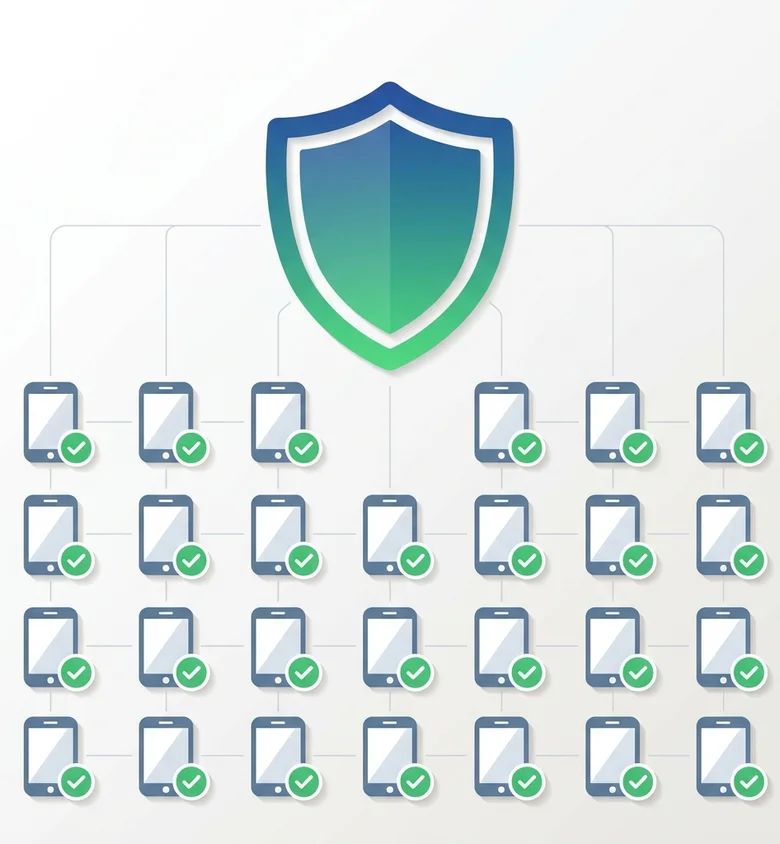
AI voice systems eliminate 85% of TCPA violations through automated compliance. Every call gets consent verification, detailed logging, and instant opt-out processing. Human agents forget compliance steps. AI systems never do.
Violations eliminated
Tradesly's AI receptionist automatically verifies consent before engaging consumers, with bulletproof audit trails and timestamp accuracy.
Calls reviewed
Automated QA reviews every interaction, compared to traditional random sampling that misses most compliance gaps.
Real-time monitoring
Machine learning identifies compliance risks before violations occur and coaches live agents on consent verification and scripts.
AI systems provide consistent compliance across all customer touchpoints. Unlike human agents, AI never forgets to check Do Not Call lists or fails to document opt-out requests. This automation reduces liability exposure while improving customer experience.
Advanced AI calling systems integrate with CRM platforms to maintain unified consent records. They automatically update customer preferences, process opt-out requests instantly, and generate compliance reports for regulatory audits.
Frequently Asked Questions
How much does a single TCPA violation cost?
Can TCPA penalties bankrupt my business?
What's the difference between federal and state TCPA penalties?
How quickly do TCPA lawsuits happen?
Does having an answering service reduce TCPA risk?
What records do I need to prove TCPA compliance?
Stop gambling with TCPA penalties that can bankrupt your business
See how AI compliance protects your revenue and reputation.
try.tradesly.ai — no credit card, no commitment.