


The 'Waive the Trip Charge' Objection: How to Train Your Team to Protect Your Service Fees
Every waived trip charge is a margin leak. See the real math behind a 'free' diagnostic and get the step-by-step script to protect your service fees.

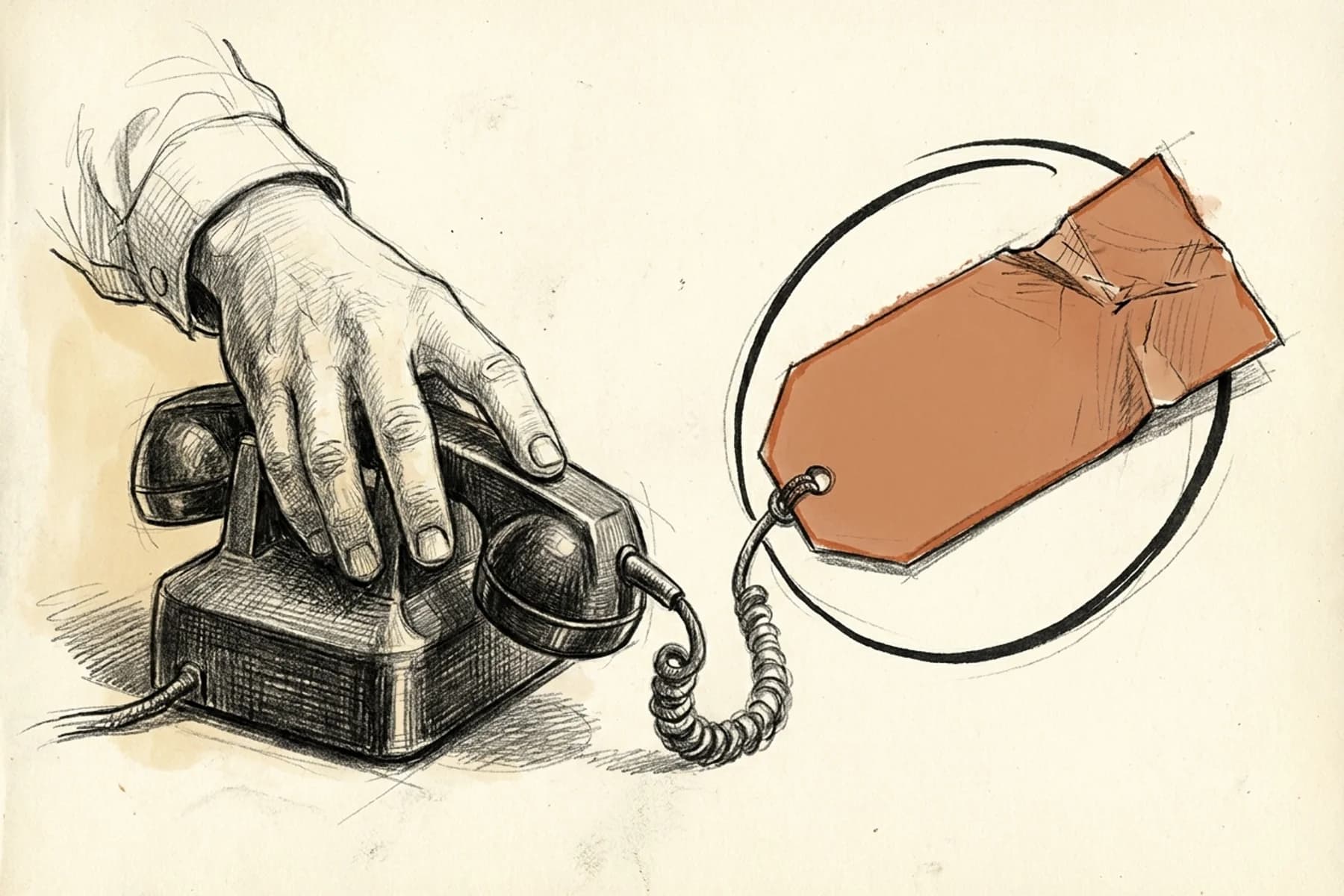
The Hidden Math Behind 'Waive the Trip Charge' (And Why Your Team Caves)
The trip charge objection is costing you more than the fee
Here's how it plays out: a price-shopper calls, pushes back on the diagnostic fee, and your CSR folds. You get the booking. You eat the loss. Repeat that 10 times a week and you've got a real margin problem disguised as a customer service win.
In 2026, the typical HVAC trip charge runs $70 to $200 for business-hours calls, with the modal diagnostic fee sitting around $89, according to Smart Service's 2026 service fee benchmarks. That's not a rounding error. That's real cash leaving your business on every caved call.
The trip charge objection isn't a customer problem. It's a process problem. Your CSR isn't caving because the fee is wrong. They're caving because nobody trained them to hold the line.
Trip charge objection is when a customer pushes back on the diagnostic or service call fee before a technician is dispatched, pressuring the booking agent to waive or reduce the fee as a condition of scheduling the appointment.
The false win of the 'saved' booking
Waiving the fee feels like a save. It's not. You just booked a job where your most expensive hour of the day, the first hour including drive time, overhead, and tech pay, is subsidized by you. The customer got a free diagnostic. You got a truck on the road for nothing.
Check out the 5-step script for handling HVAC price objections if your team needs a starting framework. But first, understand why the cave happens at all.
Why your CSRs cave on the diagnostic fee
Fear. Pure and simple. They're afraid the customer will hang up. Nobody trained them to reframe the fee as value. Nobody gave them a script for the objection. So they improvise, and improvisation under pressure almost always means a discount.
That's not a hiring problem. That's a training problem. The instinct to appease is human. The fix is a system that doesn't leave room for that instinct to fire.
What does a free HVAC diagnostic actually cost the business?
A "free" diagnostic costs you $55 to $80 in fully loaded field expenses before a single billable minute starts. According to CallJolt's 2026 HVAC pricing guide, a typical single-tech truck in a mid-size market runs $55 to $80 per hour fully loaded, meaning billing $75 on a time-and-material call can put you at break-even or below once drive time is factored in.
That's the number your CSR is giving away when they fold on the service call fee.
Fully-loaded field cost per hour
Most operators think about tech pay and fuel. The real number includes tools, insurance, vehicle depreciation, dispatch overhead, and the owner's time managing the call. Stack it all and that first hour on-site is expensive before the wrench touches anything.
Add the efficiency problem. CallJolt's data shows that travel, paperwork, and callbacks eat 20 to 35% of a tech's paid day. Your tech isn't billable for every hour you're paying them. The diagnostic fee exists to cover that gap.
Want to see how your actual numbers stack up? Run the numbers on your real cost per booked job and you'll see where the margin is going.
Why $75 can be a loss
Here's the scenario nobody wants to admit: the customer lets your tech diagnose the problem, then declines the repair. You just sent a truck, burned an hour, and collected nothing. That happens every time a CSR waives the fee and the job doesn't close.
When you waive the HVAC diagnostic fee, you're not being generous. You're subsidizing a customer who may walk anyway. That's not a strategy. That's a bleed.
Why waiving the fee trains customers to devalue your work
Every time you cave on the diagnostic fee, you teach the market that your expert diagnostics are optional extras, not paid professional labor. Customers talk. Word gets around that your shop folds on the first push. You've just attracted a lower-quality pipeline.
Smart Service's research makes a critical point: surprise trip charges generate more negative reviews than the charge itself. The fix isn't to waive the fee. It's to state it clearly before the tech shows up. Put it on your website, in your dispatcher's script, and in the booking confirmation. Eliminate the surprise. Don't eliminate the revenue.
The discipline narrative
The standard advice is "just waive it if they proceed with the repair." That conditions customers, CSRs, and your whole pricing culture to treat the fee as optional.
Protect the fee. Protect your positioning. Protect your service fees by enforcing the line on every call.
The 'credit toward repair' alternative
Here's the better play. Frame the fee as applied toward the repair. The customer doesn't pay extra if they proceed. You still get paid for the diagnostic if they decline. The objection disappears because there's no penalty for moving forward, and your shop is protected either way.
According to CallJolt, framing the service call fee as applied toward any repair removes the biggest objection while still protecting the shop when customers decline. This isn't a concession. It's a reframe. You're still collecting the fee. You're just packaging it as a customer benefit.
How do I train CSRs to hold the line on a diagnostic fee?
Train CSRs to hold the line by giving them a stated-fee process, a value script, and real-time guidance during the call. The framework works in four steps: state the fee early, explain what it covers, offer the credit-toward-repair reframe, and pivot persistent objectors to a membership — without ever offering an unprompted waiver. Without all three elements, the training evaporates the moment a customer pushes hard.
Step 1: Pre-frame the fee at intake
State the fee early. Not at the end of the booking as an afterthought. Right after you confirm availability. "Our diagnostic fee is $89, and that's credited toward your repair if you move forward." Full stop.
This does two things. It filters price-shoppers who were never going to convert. And it sets expectations for real customers so there's no surprise when the tech arrives. The customers who push back hard at this stage are almost never your best jobs. Let them self-select out.
For nearly every HVAC, electrical, and plumbing shop, the math on small jobs simply doesn't work without a trip fee. Stating it early is discipline, not rigidity.
Step 2: Give the value, not the discount
When the customer objects, the CSR's job is to explain what the fee buys, not to apologize for it. Train them on this script: "The diagnostic fee covers a licensed technician, a full system inspection, and a written estimate. You're not paying for a guess. You're paying for a diagnosis."
No defensiveness. No instant discounts. The fee is professional labor. Treat it that way and customers usually do too. Read more on how to build a flat-rate price book your CSRs can actually sell to back up this approach with a pricing structure that holds.
Step 3: Pivot to a membership
When the customer still pushes, turn the trip charge objection into a recurring revenue opportunity. "If you'd like to waive the diagnostic fee, we do have a maintenance club membership that covers it and includes two tune-ups a year. Want me to run through what's included?"
Now you're not losing the fee. You're converting the objection into a subscription. See what elite CSRs do differently and how to train the whole team to execute this kind of pivot consistently.
Step 4: Make the policy enforceable
This is where most shops fail. You write the script. You run the training. Then a customer gets aggressive and the CSR improvises. Static manuals don't survive live call pressure.
Real-time on-screen guidance during the call keeps every CSR on script regardless of experience level. When the system detects a fee objection, it surfaces the reframe and the membership pivot instantly. The CSR doesn't have to remember. They just have to read.
See how AI coaching enforces price-objection handling in real time to understand what that looks like in practice.
Should I waive the trip charge if the customer proceeds with the repair?
No. Apply it as a credit toward the repair instead of waiving it. Waiving the fee trains customers that it was never real. Crediting it protects your margin on declined jobs while removing friction for customers who do move forward. You get paid either way.
Protect the fee, protect the margin
The trip charge objection will never stop coming. Customers will always test the line. The question is whether your team is trained to hold it or trained to fold.
Here's the system in short:
- Know your loaded cost. The diagnostic fee isn't markup, it's break-even math. $55 to $80 per hour before profit means waiving $89 is a real loss on a lot of calls.
- Pre-frame the fee at intake. State it early. It filters tire-kickers and eliminates surprise.
- Sell the value, not the discount. Licensed tech, full diagnosis, written estimate. That's worth $89.
- Pivot persistent objections to membership. Turn the waiver request into a recurring revenue conversation.
- Enforce in real time. Scripts on paper don't hold under pressure. Real-time guidance does.
The win looks like this: a dispatch board full of qualified jobs, a team that doesn't flinch when a customer pushes, and margin that stops leaking one waived fee at a time. That's not luck. That's preparation.
Stop guessing whether your team is giving away the diagnostic. See how Tradesly coaches your team live on every call and lock in fee discipline across every CSR, every shift, every booking.
Plumbing operators handling price shoppers face the same fight — a customer who balks at a dispatch fee before your tech has touched a single pipe. The same framework applies: state the fee, explain the value, credit it toward the repair.
Keep reading
 Pricing & Revenue
The Contractor’s Job Costing Cheatsheet: A 5-Step Template to Guarantee Profit on Every Job
11 min read Pricing & Revenue
The Contractor's Flat-Rate Playbook: How to Build a Price Book That Sells Itself
7 min read Pricing & Revenue
Cost Per Booked Job: The Only Marketing Metric That Actually Matters
6 min read