

AI Call Monitoring: The $75B Revenue Leak Your Business Misses
Traditional QA monitors only 1-3% of calls. Discover how 100% AI call monitoring uncovers the $75B revenue leak hiding in your call center. Data-driven coaching that actually works.

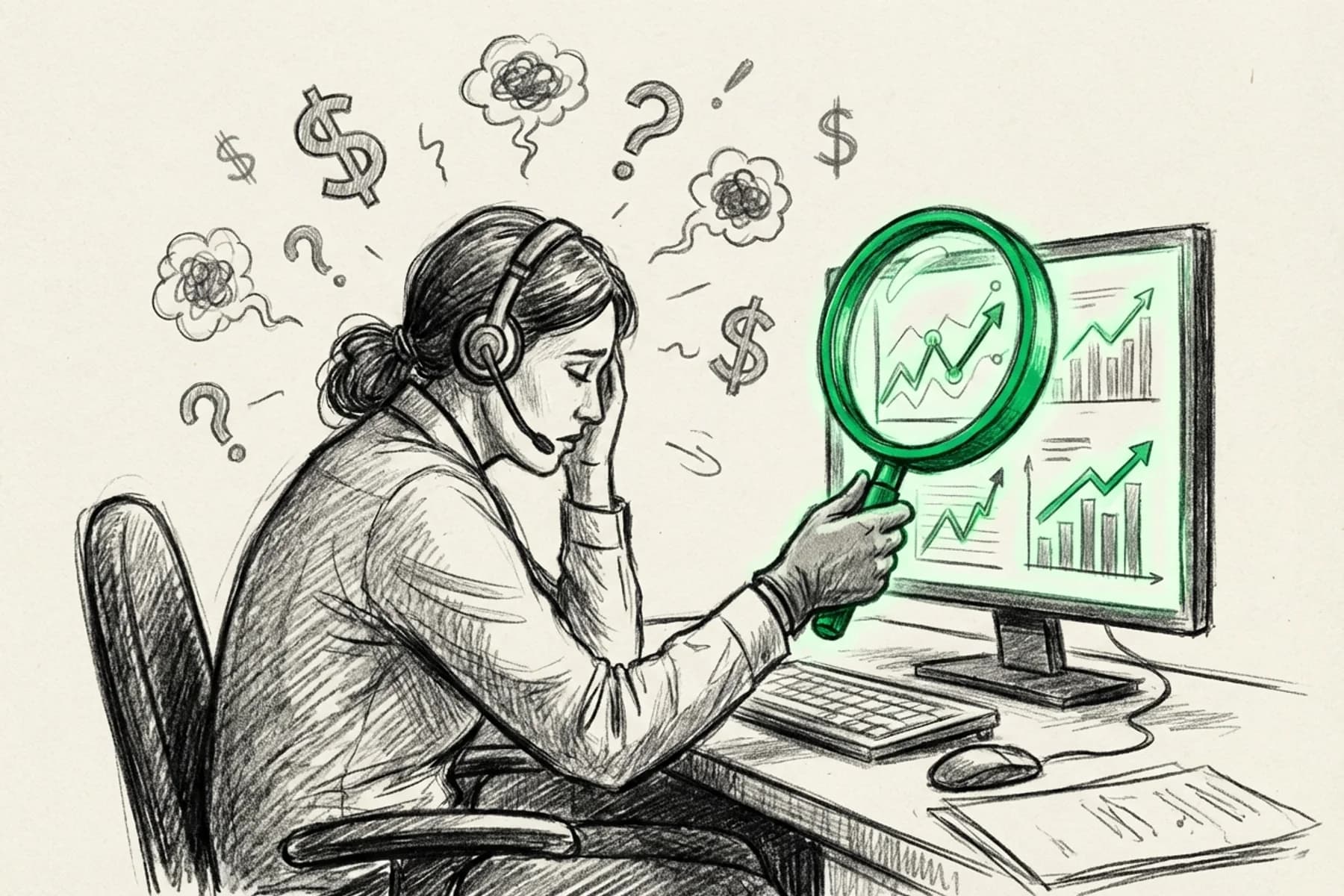
US companies lose $75 billion annually due to poor customer service. Yet most home service businesses still monitor only 1-3% of their calls, leaving 97% of revenue-impacting interactions invisible. That's like having security cameras on one door while three others stay wide open.
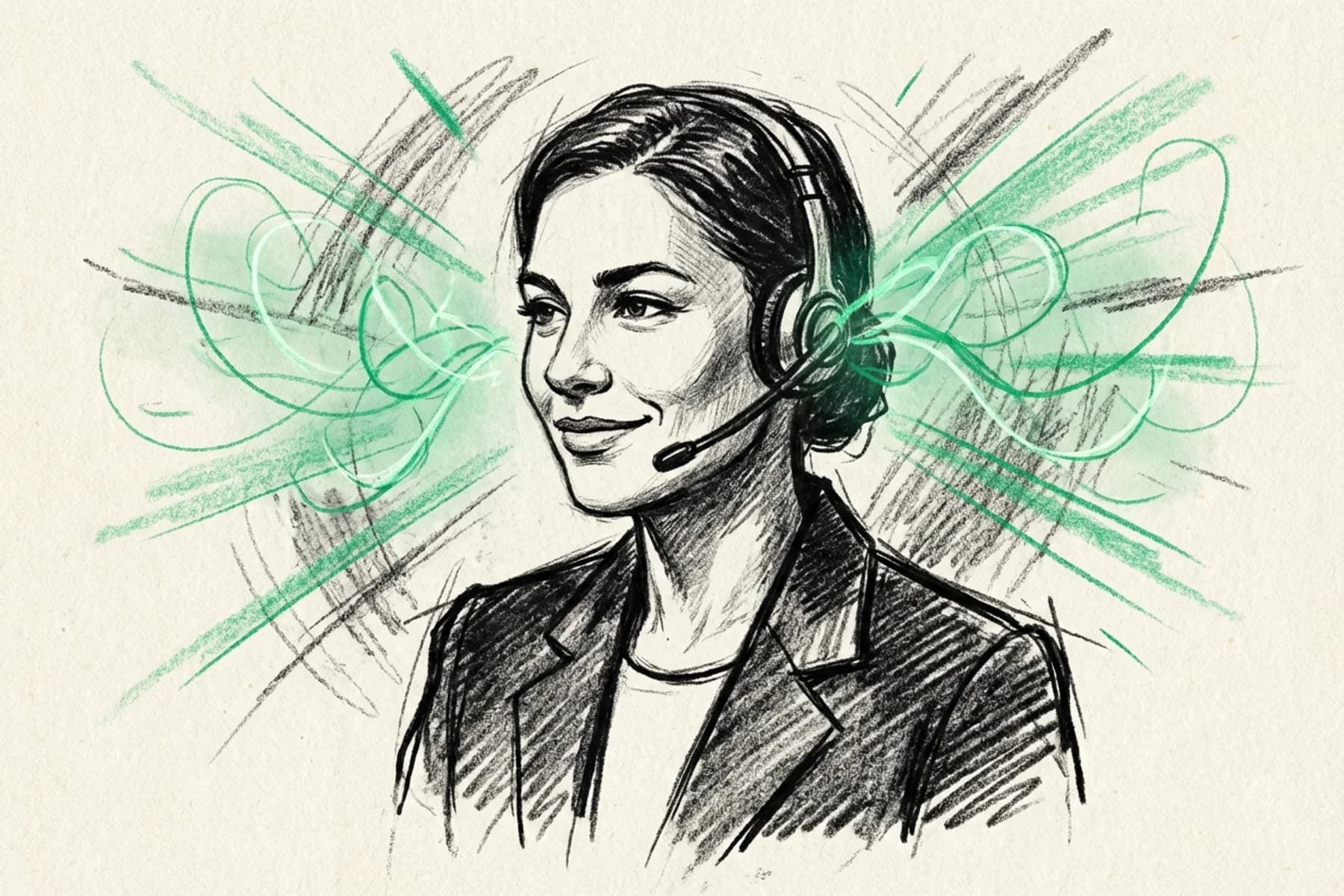
AI call quality monitoring is a technology that uses artificial intelligence to analyze 100% of customer service calls in real-time, identifying coaching opportunities, revenue leaks, and performance patterns that traditional sampling methods miss.
The math is brutal. Home services businesses miss 27% of inbound calls. Each missed call costs approximately $1,200 in lost revenue. But here's the part that'll keep you up at night: the calls you do answer might be bleeding money too, and you'd never know.
Traditional QA is reactive. AI QA is preventive. Time to close the gap.
The $75 billion problem hiding in plain sight
The scale of this problem is staggering. US companies lose $75 billion yearly due to poor customer service, and that number hasn't budged despite massive AI investment acceleration across industries.
In home services, the stakes are even higher. Home services businesses miss 27% of inbound calls, and each missed call costs approximately $1,200 in lost revenue. But that's just the visible leak.
Why traditional QA is like playing whack-a-mole blindfolded
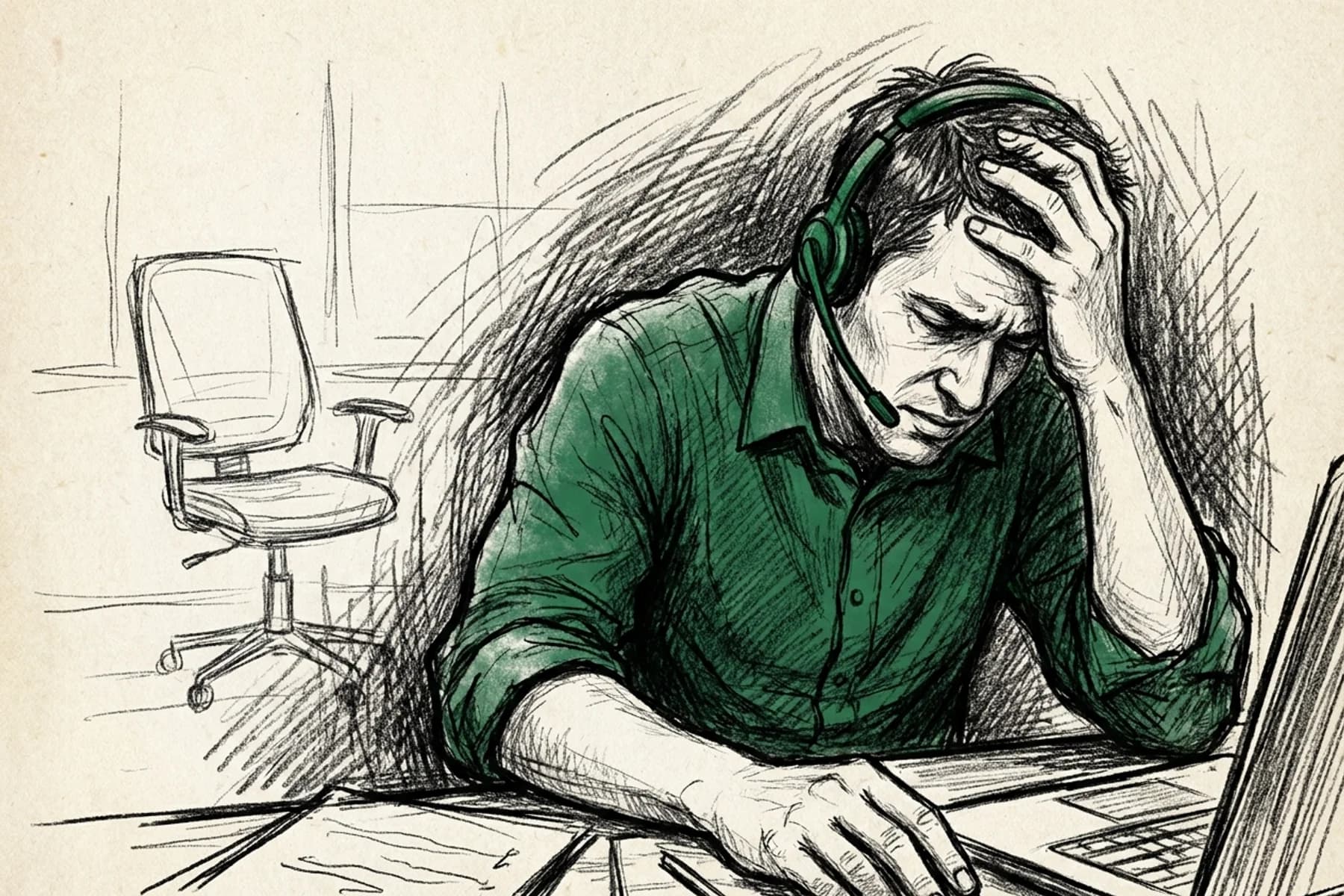
Most call centers still use sampling-based QA. They randomly review 1-3% of calls and hope those few interactions represent the other 97%. It's like judging a football team's performance by watching three plays.
The result? Critical coaching moments slip through. Revenue-killing behaviors go unnoticed. High-performing techniques never get replicated because nobody saw them happen.
Only 25% of call centers have successfully integrated AI automation into daily operations. The rest are stuck in 2015, manually reviewing tiny sample sets while their competition captures every coaching opportunity.
The home services-specific revenue leak
Home services calls are different. Emergency plumbing calls at 10 PM. HVAC estimates during family dinner. These aren't routine transactions—they're high-stakes conversations where emotional intelligence meets technical expertise.
Traditional 100% call center QA monitoring methods can't capture the nuance of explaining why a customer's $15,000 HVAC system needs immediate replacement. But AI can track every hesitation, every objection, every moment where the deal could go either way.
The teardown: What AI sees that humans miss
92% of contact centers have QA programs, but only 61% measure across all critical error types. AI doesn't have that problem. It measures everything.
Case study: The $310K revelation from 100% monitoring
A mid-sized HVAC company implemented AI-powered call monitoring across their dispatch team. Within 30 days, the system identified a pattern their traditional QA missed entirely:
CSRs were consistently failing to ask discovery questions on service calls. "We'll send someone out" became the default response instead of "What specific issue are you experiencing?"
The financial impact: 23% of service calls were getting dispatched without proper pre-qualification. Technicians arrived unprepared. Diagnostic fees went uncollected. Simple repairs turned into multiple truck rolls.
Annual revenue recovery from this single insight: $310,000.
The invisible moments where deals die
AI identifies micro-moments that human reviewers miss:
Hesitation patterns: When customers pause before agreeing to pricing, AI flags the exact objection handling that needs work
Emotional sentiment shifts: AI detects when a customer goes from interested to skeptical mid-call
Script deviations: Even small variations from proven scripts get tracked and correlated with conversion rates
Upsell missed opportunities: AI identifies calls where additional services could have been naturally introduced
Organizations using speech analytics achieve 20-30% cost reductions. That's because AI sees patterns humans can't.
Pattern recognition beyond human capability
Human QA reviewers can handle maybe 20-30 calls per day if they're pushing hard. They're looking for obvious problems—dead air, rude behavior, clear script violations.
AI analyzes thousands of calls simultaneously. It identifies subtle patterns like:
CSRs who rush through qualification questions have 18% lower booking rates
Using "unfortunately" instead of "however" correlates with 12% more price objections
Calls that include the customer's name three times close at 23% higher rates
These insights transform coaching from generic advice to precision interventions.
From data to dollars: The revenue recovery framework
First Call Resolution rates of 70-75% are industry benchmark, top performers achieve 80%+. But getting there requires data most companies don't have.
How much revenue do businesses lose from poor call handling?
Businesses lose 15-25% of potential revenue from poor call handling, but most never calculate their actual leak. Here's the simple math:
Monthly inbound leads: 400
Average job value: $850
Current booking rate: 35%
Current monthly revenue: $119,000
If AI coaching brings your booking rate from 35% to 42% (industry-standard improvement), that's $23,800 in additional monthly revenue. Over a year: $285,600.
The investment in call center performance metrics technology pays for itself in months, not years.
The coaching goldmine in call data
Traditional coaching relies on gut feel and occasional call reviews. AI coaching uses data:
Individual performance trends: Sarah's booking rate drops 15% after lunch breaks
Skill gap identification: Mike handles price objections well but struggles with urgency creation
Script optimization: Version A of the emergency dispatch script books 8% more than Version B
Training effectiveness: New hires using AI guidance hit target performance 60% faster
Call center managers believe improving agent satisfaction can increase CSAT by 62%. Data-driven coaching improves both performance and job satisfaction.
Turning insights into immediate action
AI identifies problems in real-time. But identification without action is worthless. The best systems provide instant coaching interventions:
Pop-up script suggestions when AI detects customer hesitation
Manager alerts for calls that need immediate escalation
Post-call coaching summaries highlighting specific improvement opportunities
Team performance dashboards showing trends before they become problems
The goal isn't perfect calls—it's consistent improvement across every interaction.
How does AI call quality monitoring work for home services?
AI call quality monitoring works by analyzing speech patterns, conversation flow, and outcome data to identify coaching opportunities and revenue optimization points in real-time. For home services, this means tracking everything from initial call answer to job booking confirmation.
Unlike traditional sampling methods, Tradesly's approach monitors every call while providing instant coaching guidance to CSRs and dispatchers.
What are the benefits of 100% call monitoring vs sampling?
100% call monitoring captures every revenue opportunity and coaching moment, while sampling-based QA misses 97-99% of interactions. The benefits include complete visibility into performance patterns, real-time coaching interventions, and data-driven insights that drive consistent improvement across all agents and shifts.
Tradesly's AI call escalation features exemplify this approach—every call gets analyzed, scored, and turned into actionable coaching data.
Beyond monitoring: Real-time coaching and intervention
The real power isn't in post-call analysis—it's in preventing problems while the customer is still on the line. Call center monitoring and review becomes instant when AI provides real-time guidance.
CSRs get pop-up suggestions for handling objections. Managers get alerted to calls that need escalation. The system prevents problems instead of just identifying them later.
Integration with existing workflows and CRMs
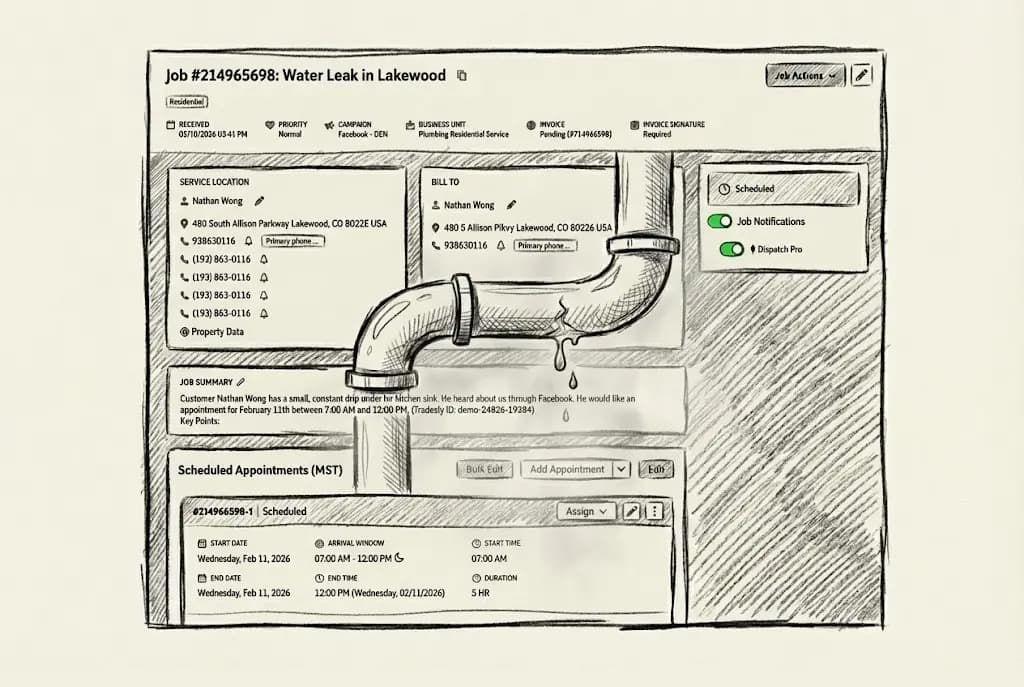
AI QA doesn't replace your current systems—it supercharges them. ServiceTitan integration means call data flows directly into job records. Coaching insights connect to dispatch performance metrics.
Your team doesn't learn new software. They get smarter at using what they already know. Real-time call scripts appear when needed, not as another system to manage.
The hybrid intelligence advantage
This isn't about replacing humans with bots. It's about making humans superhuman. AI handles pattern recognition and data analysis. Humans handle relationship building and complex problem-solving.
The result: HVAC CSR training programs that turn new hires into performers in days instead of months. Experienced CSRs who get data-driven insights to break through performance plateaus.
Stop guessing, start measuring: Your next steps
Ready to close your QA gap? Here's how to move from reactive sampling to proactive AI monitoring.
How can AI help improve call center coaching programs?
AI improves call center coaching programs by providing data-driven insights on individual performance patterns, identifying specific skill gaps, and delivering real-time guidance during customer interactions. This transforms coaching from generic advice to precision interventions based on actual conversation data.
The key is moving from "here's what you should do" to "here's exactly what happened in your 2:30 PM call with Mrs. Johnson and how to handle it better next time."
Immediate actions to assess your current QA blind spots
Start with an honest audit:
Calculate your current monitoring coverage: What percentage of calls actually get reviewed?
Track your conversion rates by agent: Who's consistently booking jobs and who's struggling?
Measure your speed-to-lead: How quickly are inbound calls getting answered and qualified?
Identify your highest-value call types: Emergency calls, estimate follow-ups, and service upsells
If you're not monitoring at least 50% of your highest-value interactions, you're flying blind.
What percentage of calls should be monitored for quality assurance?
100% of calls should be monitored for quality assurance using AI technology, with human coaching focused on the highest-impact opportunities identified by the system. Traditional sampling of 1-3% leaves too many revenue opportunities and coaching moments invisible.
The question isn't whether you can afford 100% monitoring—it's whether you can afford to miss 97% of your coaching opportunities.
Building the business case for 100% monitoring
Quality assurance tools account for 15-20% of operational budgets for mid-sized centers. But the ROI calculation is straightforward:
If you're doing $2M in annual revenue and AI coaching improves your booking rate by 7 percentage points, that's $140,000 in additional revenue annually. Most AI QA systems cost a fraction of that.
Implementation roadmap for maximum impact
Smart implementation happens in phases:
Phase 1 (Month 1): Deploy AI monitoring on your highest-value call types
Phase 2 (Month 2): Use data to identify top coaching priorities
Phase 3 (Month 3): Implement real-time coaching interventions
Phase 4 (Ongoing): Expand to 100% coverage and continuous optimization
Want to see how how to use Tradesly call QA transforms your coaching data? The system shows you exactly where revenue is hiding in your current call handling.
Stop guessing about call quality. Stop sampling 3% and hoping for the best. Start measuring everything and coaching with precision.
Your competitors are already using AI to capture the opportunities you're missing. The $75 billion QA gap isn't just an industry problem—it's your competitive advantage waiting to be claimed.
Ready to close your QA gap? Get the demo and see what 100% monitoring reveals about your current call performance.