Why Your Best CSRs Quit: AI Coaching Fixes Retention
Your best CSRs don't quit for money—they quit when they feel unsupported on tough calls. Learn how AI coaching builds confidence, prevents burnout, and cuts turnover. Read the playbook.


Even your best CSRs will quit if they feel unsupported during tough customer calls. I've watched seasoned reps walk away from good jobs not because of money, but because they felt lost during difficult conversations with no one to guide them through the moment. CSR training AI coaching home services changes this equation completely: providing real-time guidance that builds confidence, prevents burnout, and creates long-term retention.
The numbers tell a brutal story. Home services CSR turnover rates exceed 70% annually, and most operators keep throwing money at the wrong problem. They raise wages, improve benefits, add pizza parties. The CSRs still leave.
Here's what actually works: give your team real-time support when they need it most.
Why do home service CSRs quit despite good pay?
Home service CSRs quit because they feel incompetent during difficult customer interactions, not because they're underpaid. The decision to leave happens during the call, not during salary review time.
Most operators assume turnover is about compensation. Wrong. Customer service reps have turnover rates of 29% with average lifespan of 3.3 years, and pay isn't the primary driver. I've seen CSRs making $22/hour quit to take $18/hour jobs elsewhere.
The false assumption kills retention programs before they start. You can't fix the wrong problem.
CSR Retention Crisis occurs when capable customer service representatives leave positions due to lack of real-time support during challenging customer interactions, despite competitive compensation and benefits packages.
What exit interviews don't reveal: CSRs rarely tell you the real reason they're leaving. They'll say "better opportunity" or "career growth." They won't admit they felt stupid on calls because it sounds unprofessional.
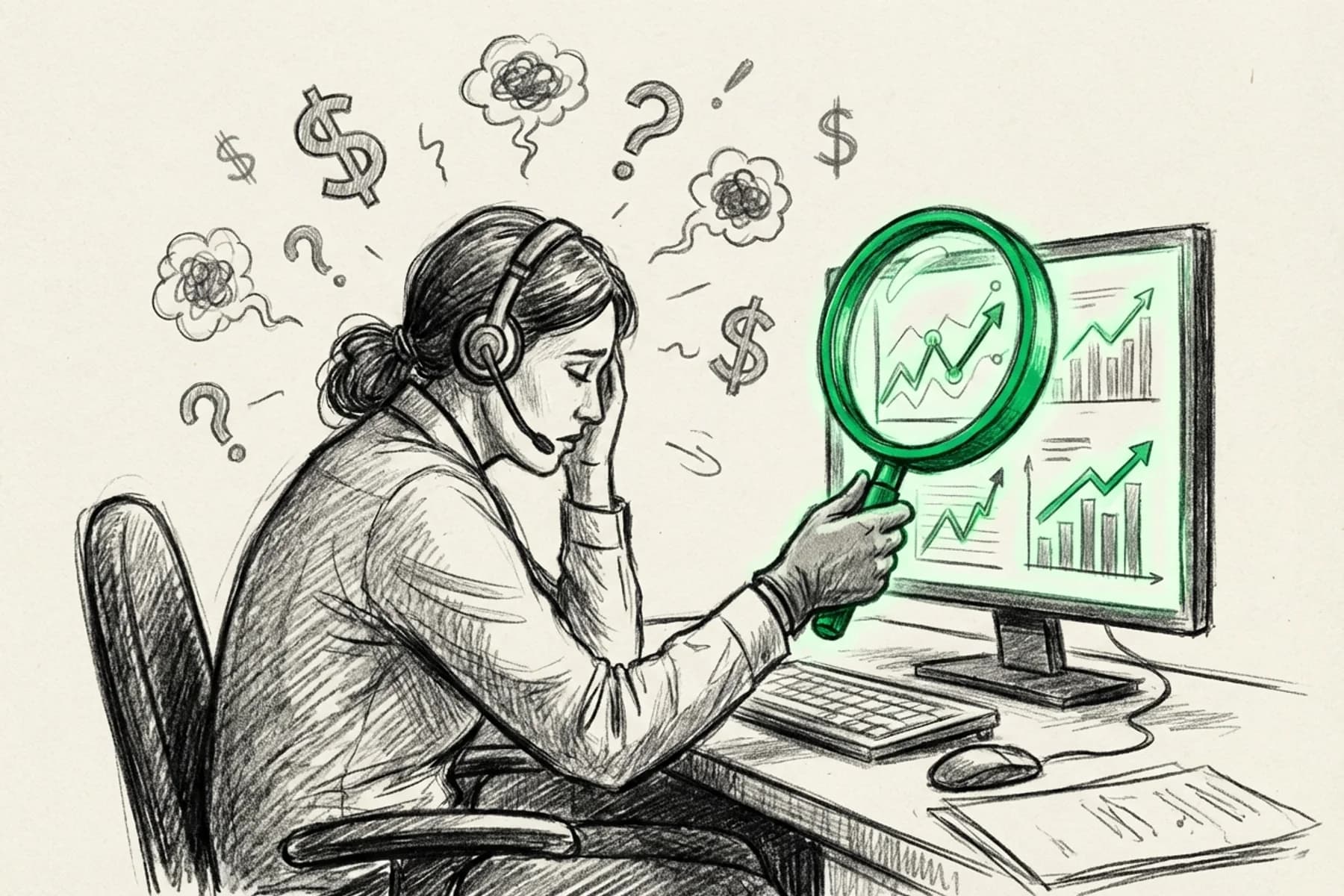
The real breaking point happens in real-time. A homeowner is screaming about a $400 service call. The CSR freezes. No script covers this exact scenario. No manager is available.
They fumble through it, hang up feeling defeated, and start browsing job boards that afternoon.
I've watched this pattern destroy otherwise solid teams. Your CSR burnout reduction strategies fail because they address symptoms, not causes.
What causes high turnover in home services call centers?
High turnover happens because CSRs decide to quit during the call, not after it. Traditional training doesn't prepare them for real-world scenarios, and confidence erodes faster than skill builds.
Here's the anatomy of a breaking point call: Customer calls furious about yesterday's service. Price objection gets heated. CSR follows the script but customer escalates. No manager available. CSR improvises, says the wrong thing, customer threatens bad reviews. Call ends badly.
That CSR just mentally checked out. Not because of the one bad call, but because they felt completely alone during it.
Traditional training fails because:
Role-play scenarios never match real customer anger
Scripts don't cover every objection combination
Managers can't coach every call in real-time
50% of new call center hires are 'Quick Quits' gone within 90 days because the confidence crisis happens faster than skill development. We train them on perfect scenarios, then throw them into chaos.
The gap between training room and phone reality destroys confidence. One reason companies have high CSR turnover is lack of proper training, but it's not about more training hours. It's about real-time support when training meets reality.
My real-time AI call coaching framework addresses this gap directly, supporting CSRs during the actual moments when they would otherwise break.
How does AI coaching improve CSR retention rates?
AI coaching improves retention by providing instant guidance during challenging interactions, building confidence faster than traditional training methods. CSRs stay when they feel competent and supported in real-time.
Here's what changes with AI coaching: Same angry customer calls. Same price objection. But this time, the CSR sees real-time prompts on their screen. "Acknowledge the frustration first." "Use the value bridge script." "Offer the payment plan option." They navigate the call successfully.
The confidence boost is immediate. They handled a tough situation well. They'll take the next difficult call with less anxiety.
AI Coaching for CSR Retention provides real-time guidance through on-screen prompts and suggestions during live customer interactions, preventing the confidence breakdown that typically leads to employee turnover.
Many junior CSRs just want to feel like they have support. I love being able to sit with them and guide them through difficult calls. But it's not scalable, and as a manager you can't be there for everyone all the time. AI coaching gives every CSR that mentorship experience.
AI coaching reduces new hire ramp-up time by 50% and boosts customer satisfaction by 40%. More importantly, it prevents the breaking point moments that drive turnover.
Real-time support works because:
CSRs get guidance exactly when they need it
Confidence builds during successful call resolution
No waiting for post-call feedback or coaching sessions
Real-time coaching influences call outcomes as they happen with live prompts and guidance, which is exactly what CSRs need to stay confident and engaged.
Our AI CSR training 72-hour framework accelerates this process, getting new hires to confidence levels that used to take months.
How to reduce CSR training costs with AI technology?
AI technology reduces CSR training costs by compressing the confidence-building timeline from months to weeks through real-time guidance and support during actual customer interactions.
Here's the three-week transformation I've seen work:
Week 1: Baseline confidence assessment
Measure current performance during difficult calls. Track booking rates, call resolution times, escalation frequency. Most importantly, ask CSRs directly: "How confident do you feel handling price objections? Angry customers? Technical questions?"
Don't skip this step. You need to know where confidence breaks down.
Week 2: Real-time guidance deployment
Deploy AI coaching during live calls. CSRs get on-screen prompts for objection handling, de-escalation techniques, booking scripts. AI-led monitoring moves from 2% sampling to 100% visibility and fairness.
Our number one metric is the booking rate. Our CSRs know that is the win and everyone loves the feeling of winning. With AI coaching during the call, their booking rates are comparable to a star CSR in the first week, so you definitely see confidence building immediately.
Week 3: Confidence building and skill reinforcement
CSRs start handling tough calls independently but with safety net support. Confidence compounds. Performance stabilizes. Most teams see measurable improvement within 4 to 6 weeks of AI coaching deployment.
When you aren't having one-on-one performance improvement meetings with them because they're failing, that also keeps them positive and they continue winning.
Track the right metrics using our CSR scorecard template for tracking performance throughout the transformation.
Why do customer service reps leave after training?
Customer service reps leave after training because traditional training doesn't prepare them for the emotional reality of difficult customer interactions. They feel confident after training but break down during their first few tough calls.
Beyond retention, AI coaching creates a revenue protection multiplier effect. Confident CSRs convert more calls to bookings. Stable teams perform consistently better. Low turnover becomes a competitive advantage in hiring.
How confident CSRs book more jobs:
A confident CSR doesn't rush price-sensitive customers off the phone. They use objection handling techniques properly. They ask for the sale multiple times. Companies with CSR coaching see booking rates improve to 85% or higher.
I've calculated the revenue impact. When your star performer leaves, you feel it immediately. Your booking rates suffer immediately and that is lost revenue. With coaching support, the revenue hit doesn't tank when someone leaves because you can quickly put someone new in the seat and be up and running fast.
The compound effect of reduced turnover:
Less time spent hiring and training replacements
Consistent performance across the entire team
Customer experience improves with stable CSR relationships
Low turnover attracts better candidates. 94% of employees would stay at their current employer if they invested in their long-term learning. Word gets out that your company supports its CSRs properly.
Track these improvements with our profit per call metrics to quantify the full impact.
Implementation: From Turnover Crisis to Retention Success
Start with data on current turnover patterns. Focus on real-time support over post-call analysis. Monitor both retention rates and booking performance simultaneously.
Measuring your current retention baseline:
Calculate true turnover costs. Include hiring, training, lost productivity during ramp-up, and revenue impact of inexperienced replacements. Most operators underestimate the real cost by 50%.
Choosing the right AI coaching approach:
Look for systems that provide guidance during the call, not just analysis after. Real-time prompts prevent problems instead of documenting them. The CSR needs help in the moment, not feedback tomorrow.
Tracking both retention and performance improvements:
Monitor retention rates monthly, but also track confidence indicators: booking rates, call resolution times, customer satisfaction scores. Confident CSRs perform better and stay longer.
One strategic shift changes everything: hire CSRs for attitude over experience. With AI coaching, you can train the skills. You can't train the attitude.
Ready to stop the retention crisis? Your CSRs want to succeed. Give them the real-time support they need to feel confident during difficult calls. Book a demo to see how AI coaching transforms both retention and revenue.