


The Real Cost of CSR Burnout: Why Your Best Home Service Staff Are Quietly Quitting (And How AI Fixes It)
Your best CSRs are burning out and leaving. Find out exactly what that costs—and how AI reduces the repetitive workload that causes burnout. Learn the fix.

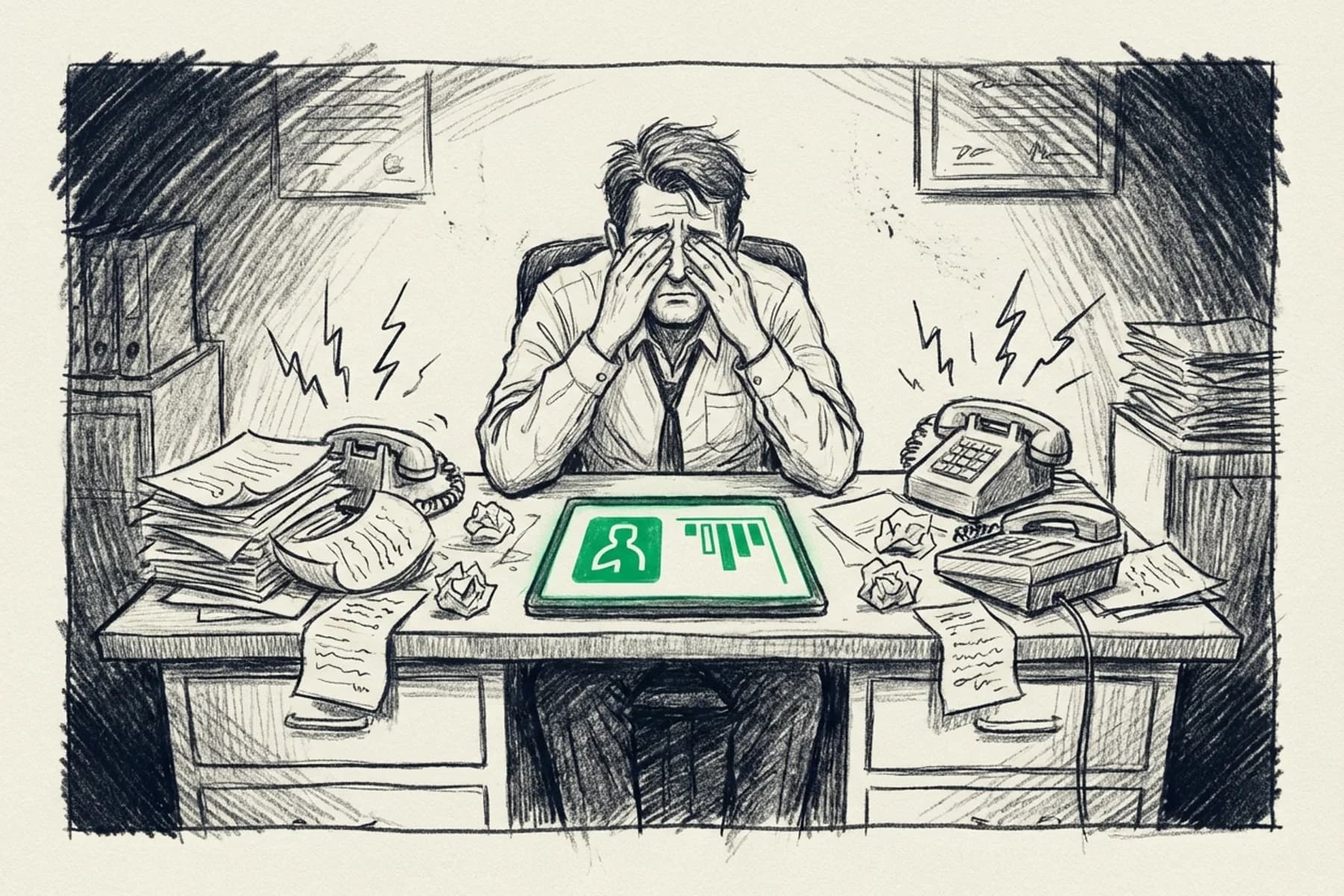
Your best CSRs are leaving. Not with dramatic exits or angry emails. They're quietly quitting, going through the motions until they find something better. The brutal truth? CSR burnout in home services isn't just an HR problem. It's costing you $15,000-$22,000 per departed employee, plus the hidden revenue leak from inconsistent call handling.
I've watched this pattern destroy booking rates at dozens of shops. The experienced CSR who used to close 70% of calls starts fumbling objections. The dispatcher who knew every tech's schedule by heart suddenly can't keep track of appointments. The warning signs are there, but most owners miss them until it's too late.
CSR burnout is the physical and emotional exhaustion experienced by customer service representatives due to repetitive tasks, high-stress interactions, and lack of career advancement opportunities that leads to decreased performance and eventual turnover.
Here's what I learned from analyzing retention data across 200+ home service companies: the problem isn't pay or benefits. It's that we've turned talented people into human answering machines. The solution? AI that handles the soul-crushing repetition so your CSRs can focus on what actually builds careers — complex problem-solving and revenue-generating conversations.
What causes CSR burnout in home services companies?
Home services CSR burnout is driven by three core factors: 60-70% of their day spent answering the same basic questions, emotional exhaustion from difficult customer calls, and zero path for professional growth. Most CSRs cycle between "What are your hours?" and "How much for a water heater?" 40+ times per day.
Call center turnover rates average 30-45% annually, but home services companies face unique stressors. Your CSRs aren't just taking orders — they're fielding emergency calls at 11 PM, managing angry customers with flooded basements, and trying to book $15,000 HVAC installs over the phone.
The quiet quitting phenomenon hits differently in our industry. A burned-out CSR doesn't just show up late or scroll social media. They stop fighting for the sale. They take the easy "no" instead of handling objections. They let high-value leads slip through because it's easier than pushing back on price shoppers.
Traditional retention methods — pizza parties, employee-of-the-month programs, even pay raises all miss the point entirely. When someone hates their daily tasks, more money doesn't make those tasks less soul-crushing. When you hire CSRs for attitude over experience, you're bringing in ambitious people who want to grow. Then we trap them in repetitive work.
How much does CSR turnover cost home service businesses?
CSR turnover costs home service businesses between $15,000-$22,000 per departed employee when you factor in recruiting, training, lost productivity, and revenue impact during the 3-6 month ramp-up period. Most owners only see the obvious costs — job boards, interviews, training time. The real damage is hidden.
Industry data shows replacing a single CSR costs $10,000-$20,000 in direct expenses, but that's just the beginning. Here's the real math on a $50K/year CSR replacement:
- Recruiting & Hiring: $2,500 (job posts, screening, interviews, background checks)
- Training & Onboarding: $3,500 (trainer time, materials, shadow shifts)
- Lost Productivity: $8,000 (3 months at 60% booking rate vs. veteran performance)
- Overtime Coverage: $2,200 (existing staff covering extra shifts during transition)
- Revenue Leak: $5,800 (missed bookings during transition period)
Total real cost: $22,000 per CSR turnover
The productivity hit is the killer. A new CSR needs 90-120 days to match a veteran's booking rate. During that period, they're fumbling objections, missing upsell opportunities, and letting qualified leads walk. If your CSR team turns over twice per year, you're hemorrhaging $44,000+ per seat.
Customer satisfaction drops with frequent turnover because relationships matter in home services. Mrs. Johnson wants to talk to the same dispatcher who handled her last HVAC repair. When she gets a different person every six months who doesn't know her history, your company feels less reliable. The real reason call center turnover is so high isn't just the work — it's the lack of investment in making that work sustainable.
Why home service CSRs burn out: the real culprits
Home services CSRs burn out because they spend 60-70% of their time on mind-numbing repetitive tasks like answering "What are your hours?" while being expected to handle complex emergency calls and high-pressure sales conversations with zero real-time support. It's cognitive whiplash 40+ times per day.
Research shows licensed agents spend 60-70% of their day answering routine questions that could be handled by a FAQ page. In home services, those routine calls include scheduling routine maintenance, basic pricing inquiries, and service area questions. Your $20/hour CSR is basically a human Google search for half their shift.
Then you throw them into the deep end with emergency calls. One minute they're scheduling a tune-up, the next minute they're trying to calm down a homeowner whose basement is flooding while dispatching an emergency plumber and managing the emotional labor of a genuine crisis. This pattern is particularly brutal for plumbing dispatcher burnout because they're juggling non-stop emergency calls with routine maintenance scheduling. No real-time coaching. No support system. Just figure it out.
The career advancement problem is worse than most industries realize. In a traditional call center, CSRs can move into supervisor or training roles. In home services, the next step up is usually field work or office management — completely different skill sets. So talented CSRs hit a ceiling fast. They master call handling in 18 months, then what? They're trapped in repetitive work with nowhere to grow.
I've seen this pattern at every shop: the CSR who starts excited and engaged gradually becomes robotic and disengaged. They stop asking follow-up questions. They stop fighting objections. They become order-takers instead of sales professionals. That's when you know burnout is setting in. They're still showing up, but they've mentally checked out. Understanding what elite HVAC CSRs do differently shows you what's possible when people aren't burned out.
Can AI reduce call center agent burnout?
Yes, AI reduces call center agent burnout by handling 40-60% of repetitive inquiries automatically and providing real-time coaching during complex calls, allowing CSRs to focus on high-value problem-solving and relationship building instead of being human answering machines.
The transformation happens at two levels. First, AI handles the routine stuff — hours, basic pricing, service areas, appointment scheduling for standard maintenance. Your CSR never sees these calls. They're filtered out before they hit a human brain.
Second, when complex calls do come through, AI real-time call scripting provides live coaching. The CSR sees suggested responses, objection handling scripts, and relevant customer history in real-time. They're not flying blind on difficult calls anymore.
Studies show that by removing 40-60% of repetitive tickets, agents can focus on complex problem solving, which is inherently more engaging work. Instead of answering "What time do you close?" for the 30th time today, your CSR is helping a family navigate a water heater replacement decision. That's meaningful work that builds skills.
The career growth angle changes completely. CSRs with AI support become specialists in complex customer interactions, emergency dispatch, and consultative sales. These are transferable skills that lead to advancement opportunities. They're not just taking calls — they're managing customer relationships with AI assistance.
We're not replacing CSRs with robots. We're giving them superpowers. The routine work gets automated so they can focus on work that actually requires human judgment, empathy, and relationship skills.
How do you improve CSR retention in HVAC companies?
Improve CSR retention in HVAC companies by implementing AI that handles routine calls and provides real-time coaching, reducing workload stress while creating opportunities for skill development and career advancement. AI-supported CSRs stay longer because their work becomes more satisfying and less repetitive.
The workload management piece is crucial. AI can detect potential service dips and recommend breaks, preventing poor interactions that lead to emotional exhaustion. Smart routing ensures no single CSR gets overwhelmed with difficult calls while another handles only easy ones.
Early warning systems identify burnout risk before it becomes turnover. AI monitors call patterns, response times, and interaction quality to flag when someone might be struggling. Instead of losing a good CSR because we missed the signs, we can intervene with additional support or temporary workload adjustments.
The coaching component transforms job satisfaction. CSRs aren't just winging it on complex calls — they have real-time guidance that makes them more confident and effective. AI customer service empathy coaching helps them handle difficult emotional situations without burning out from the emotional labor.
Performance improvement becomes automatic. Instead of quarterly reviews that feel punitive, CSRs get instant feedback and coaching that helps them improve daily. They see their booking rates climb, their confidence grow, and their skills develop in real-time.
What is the average turnover rate for home services CSRs?
The average turnover rate for home services CSRs ranges from 30-45% annually, significantly higher than the overall workforce average of 22%, due to the unique stressors of emergency calls, repetitive tasks, and limited advancement opportunities in the trades industry.
The numbers get worse when you dig deeper. Companies without AI support see turnover rates push toward 50-60% in competitive markets. When agent turnover stays below 15%, customer satisfaction increases by 26%, which shows the direct connection between retention and revenue.
Remote work with AI support cuts turnover by 50% because CSRs can work from home while still having the support structure they need for complex calls. They're not commuting to sit in a call center and answer basic questions all day. They're working from home and focusing on meaningful customer interactions.
The retention improvements compound over time. When experienced CSRs stay longer, they mentor new hires more effectively. The whole team performs better. Customers get consistent service. Revenue per call increases because veteran CSRs know how to handle objections and close sales.
Hybrid AI customer service for high-ticket trades creates the best of both worlds — AI handles the routine stuff while humans focus on relationship building and complex problem solving. CSRs feel valued for their human skills instead of being treated like robots.
Getting started: how to reduce CSR burnout with AI today
Start by auditing repetitive tasks that consume 60-70% of your CSRs' time, then implement AI automation for routine inquiries and real-time coaching for complex calls. The goal is to eliminate soul-crushing repetition while providing support for challenging interactions.
Here's your action plan:
Week 1: Assess Current CSR Workload
- Track call types for one full week
- Identify which calls could be automated (hours, basic pricing, scheduling)
- Survey CSRs about their most stressful daily tasks
- Calculate your current turnover costs using the $15,000-$22,000 per departure formula
Week 2: Identify Automation Opportunities
- Map routine questions that waste CSR time
- List complex call types that need human judgment
- Determine which calls need real-time coaching support
- Set baseline metrics for booking rates and customer satisfaction
Week 3: Implement AI Coaching Tools
- Start with real-time coaching for objection handling
- Automate appointment scheduling for routine maintenance
- Set up AI responses for basic FAQ calls
- Train CSRs on new hybrid workflow
The 72-hour CSR onboarding framework shows how AI support accelerates new hire productivity. Instead of 3-6 months to reach veteran performance, new CSRs can start contributing meaningfully in their first week.
Measure these retention improvements:
- Monthly voluntary turnover rate
- CSR job satisfaction scores
- Time to productivity for new hires
- Revenue per call handled by CSRs
- Customer satisfaction ratings
Your best CSRs don't want to quit — they want to do meaningful work. AI gives them that opportunity by eliminating the repetitive tasks that cause burnout and providing support for the complex interactions that build careers.
Stop losing $22,000 every time a good CSR walks out the door. Stop the quiet quitting before it becomes actual quitting. Give your team the AI support they need to love their jobs again.
Ready to reduce CSR burnout and improve retention? See how AI transforms your customer service team from order-takers into revenue-generators. Get the demo.
Keep reading
 CSR Coaching & Call Handling
Plumbing Call Center Scripts That Actually Book Jobs
8 min read CSR Coaching & Call Handling
The 'Diagnostic Fee' Friction: How to Coach CSRs to Address Trip Charges Without Killing the Booking Rate
7 min read CSR Coaching & Call Handling
The Summer Heatwave Blueprint: Handling a 300% Call Spike Without Seasonal Temps
8 min read