The Summer Heatwave Blueprint: Handling a 300% Call Spike Without Seasonal Temps
A 300% HVAC call spike doesn't kill your summer revenue — your missing triage system does. Here's the 4-layer blueprint that fixes it before the heat hits.

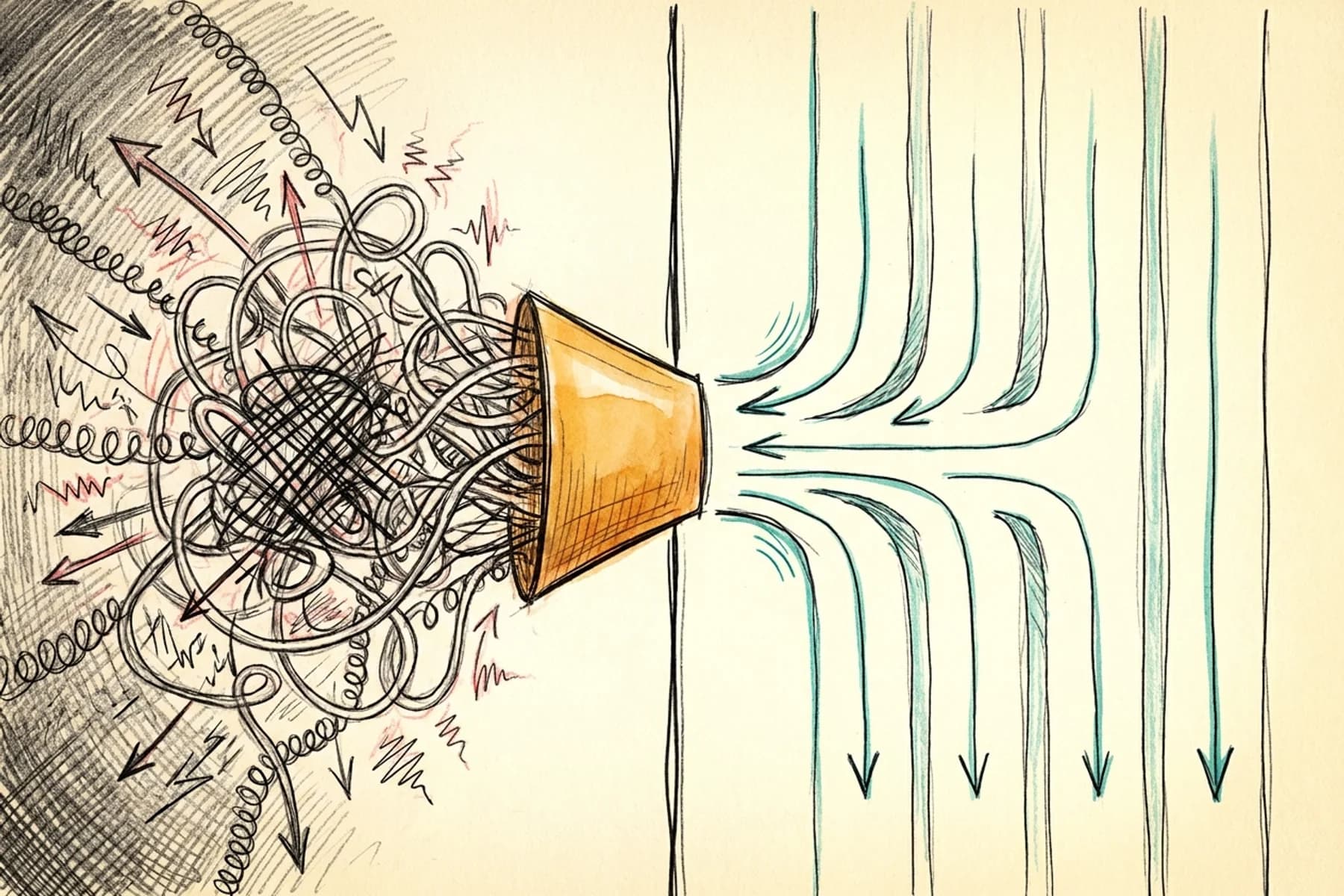
Your HVAC Front Office Will Break Before Your Technicians Do — Here's the Fix
How an HVAC Call Volume Heatwave Breaks Your Front Office First
An HVAC call volume heatwave doesn't climb gradually — it detonates. Contractors see an HVAC call spike summer after summer — up to 340% compared to spring baselines — with the first heat event of the season driving the sharpest surge. About 34% of annual HVAC call volume compresses into just 8 peak weeks. That's not a busy season. That's a concentrated revenue event with a hard deadline.
Most operators spend the off-season adding technicians and trucks. Almost none rebuild their front-office intake. So when the heat hits, the field is ready. The phones aren't. Calls queue. Agents rush. Scripts get abandoned. The dispatch board stays empty — not because the demand wasn't there, but because the calls that should have filled it went to voicemail.
Here's the stat that should keep you up at night: 85% of callers who reach voicemail during a service inquiry don't leave a message. They hang up and call the next shop. That's not a missed call. That's a gifted lead — handed directly to your competitor. Learn how AI answering handles emergency HVAC call surges at the scale this problem demands.
This guide is not about preventing the spike. It's about how to handle HVAC call overflow — building a system that captures it before the temperature hits 100.
What a Real HVAC Call Volume Heatwave Looks Like in the Field
During the June 2025 heat event in Maine, HVAC technicians completed 45 more trips per vehicle than the prior year — a 374% increase, per Samsara fleet telematics data from 65 million HVAC service trips. The field was maxed. ServiceTitan's operator data shows average daily revenue rises 55% during heat wave events — but only if you answered the call. When a tech is already running hard, a fumbled call isn't a delayed booking. That revenue disappears.
HVAC missed calls cost real money: between $285 for a routine service call and $1,200 or more when downstream lifetime value is included, per Invoca research cited by Housecall Pro. During an HVAC call volume heatwave, emergency jobs average $600–$1,200 each. That's not a hypothetical. It's the going rate — and the operators who miss those calls don't have a demand problem. They have a process problem.
Why your current setup breaks under load
HVAC call overflow is what happens when inbound call volume during a heatwave exceeds the handling capacity of a fixed CSR team or per-minute answering service — causing missed calls, abandoned bookings, and lost revenue during peak revenue weeks.
The in-house CSR problem
Your in-house team is built for average volume. A team that handles 40 calls a day has no physical mechanism to handle 160. Agents rush. Scripts get abandoned. Irate customers get hold music. Your HVAC CSR triage system — if it exists at all — collapses exactly when conversion matters most.
This isn't a staffing failure. It's a design failure. You built for normal. Normal doesn't exist in July.
The per-minute answering service trap
Per-minute live answering services look manageable at $300/month in April. They look very different at $1,000+ during a three-week stretch in July. The service was never priced for your peak. It was priced for your average. That gap is your liability — and it compounds every hour the heat holds.
Neither solution has a triage layer. They answer everything with equal urgency. A homeowner asking about hours gets the same handling time as a homeowner with a failed system and a 90-degree house. That's not a call handling strategy. That's a queue. Understand the difference between live answering services, AI voice agents, and AI dispatch before you decide what to fix first.
The operators who survive heatwave spikes without adding headcount have one thing in common: they built a triage system before the temperature hit 100.
How do HVAC companies handle a sudden 300% increase in call volume during a heatwave?
The operators who hold their booking rate during an HVAC call volume heatwave use a four-layer triage system: AI sorts calls at first ring, routes routine requests autonomously, filters low-value calls before they reach a tech's schedule, and escalates high-stakes calls to a coached human. No additional headcount required. Here's how each layer works.
This is the hybrid model in practice: the AI classifies calls at first contact, routes routine requests autonomously, and warm-transfers high-value callers to a coached human agent with real-time coaching support.
Layer 1 — Triage at first ring: sort before you speak
The first question every incoming call should answer: is this an emergency or a routine request? The system — not the agent — makes that determination. Use intake prompts (IVR or AI voice) to classify call type before a human or bot engages. Emergency routes immediately. Routine goes to a self-service or AI booking flow.
This single step is the core of HVAC CSR triage heatwave readiness — it reduces cognitive load on your CSR team by 60–70% during a spike. Agents stop triaging under pressure. The system does it for them.
Layer 2 — Route low-value calls to AI, not humans
"What are your hours?" "Can I get a tune-up quote?" "I want to book a seasonal check." These are not conversations that require a trained CSR. They are transactions. An AI answering service HVAC summer deployment handles these calls autonomously: books the appointment, collects the contact, updates the FSM — while your human team focuses on calls that require judgment. That separation is what keeps an HVAC answering service peak season setup from collapsing under volume.
Layer 3 — Protect tech schedules with front-office qualification
Not every caller who says "my AC isn't working" needs a diagnostic visit. Triage questions on the call — thermostat settings, filter age, circuit breaker status — filter out self-solvable issues before they land on a tech's schedule. During an HVAC call volume heatwave, that filtering is the difference between a tech who completes five profitable diagnostic jobs or one who spends the day on basic resets. Use call qualification frameworks that protect your technician schedule to build this layer before peak season.
How do I protect my technician schedule from low-value calls during a heatwave?
Use front-office triage questions — thermostat settings, filter age, circuit breaker status — to filter self-solvable issues before they reach a tech's schedule. This keeps your highest-earning technicians on diagnostic and replacement jobs, not basic resets that callers could resolve themselves.
Layer 4 — Escalate high-stakes calls to a coached human
A homeowner financing a $12,000 system replacement in a heat event is not a bot conversation. They need confidence, empathy, and a booking commitment. When the AI triage layer identifies a high-value or distressed caller, it warm-transfers — briefing the human agent with context before the customer hears them speak. The human enters the call prepared. The customer never knows the difference.
Most AI systems can't do this. They either handle the call autonomously or drop it. Warm transfer is what separates a triage system from a routing experiment. Read more on when to hand a heatwave call from AI to a human agent.
Emergency service calls convert to booked jobs at rates 73% higher than routine maintenance inquiries. Every routing decision in this blueprint is designed to give those calls the best possible handler — not the first available one.
Key Takeaway: The blueprint isn't complicated. It's four decisions made in sequence before a call ever reaches chaos.
How do I handle the irate caller when my wait is 3 days out?
Give them a plan — fast. Callers aren't irate because your wait is long. They're irate because no one acknowledged the urgency or told them what happens next. A structured response framework books more jobs than a sympathetic one.
During a heatwave, every caller is distressed. The script that holds under pressure has four moves:
- Acknowledge the urgency first. "I understand — no AC in this heat is serious, and I want to get you taken care of."
- Give an honest timeline without hedging. "Our next available slot is Thursday at 10AM. Our techs are running flat out right now."
- Offer an interim action. "While I get you on the schedule, let me walk you through a couple of things you can check right now that might help."
- Confirm with a micro-commitment. "I've got you locked in for Thursday at 10AM — does that work for you?"
The distressed caller is also your highest-converting caller. The goal isn't to manage them down. It's to book them fast and hold the commitment.
This is where real-time AI coaching earns its keep. HVAC dispatcher training summer prep typically takes weeks — but a CSR with an AI co-pilot showing the objection response on screen holds the script on day one. The performance doesn't depend on experience. It depends on the system.
Key Takeaway: Callers aren't irate because your wait is long. They're irate because no one gave them a plan. Give them a plan.
What is the best answering system for HVAC contractors during peak summer demand?
The best HVAC answering service peak season setup is a hybrid model: AI handles routine bookings and after-hours calls autonomously, while coached human agents take over for high-value or distressed callers. Fixed-cost AI infrastructure eliminates the per-minute pricing trap that makes traditional answering services a liability during heatwaves.
Build the system before the forecast changes
Everything in this blueprint requires zero infrastructure changes if built before peak season. Set up the AI intake routing. Pre-build the triage prompts. Train the qualification questions into your CSR scripts. Map the warm transfer triggers. If you're reading this during a heatwave, start with Layer 1 — triage at first ring is the only lever you can pull today.
The operators who capture the 55% revenue upside that an HVAC call volume heatwave delivers are not bigger shops. They are more prepared shops. Preparation is not the same as wanting. It's the system you built in May.
If you're not sure where your current setup breaks, start with a 24/7 lead capture playbook for when your team can't keep up. It's the fastest way to identify your weakest layer before the heat hits.
If you want to see how Tradesly's hybrid model handles the triage problem — AI for the routine, coached humans for the revenue — stop guessing. Get the demo.
Keep reading
 CSR Coaching & Call Handling
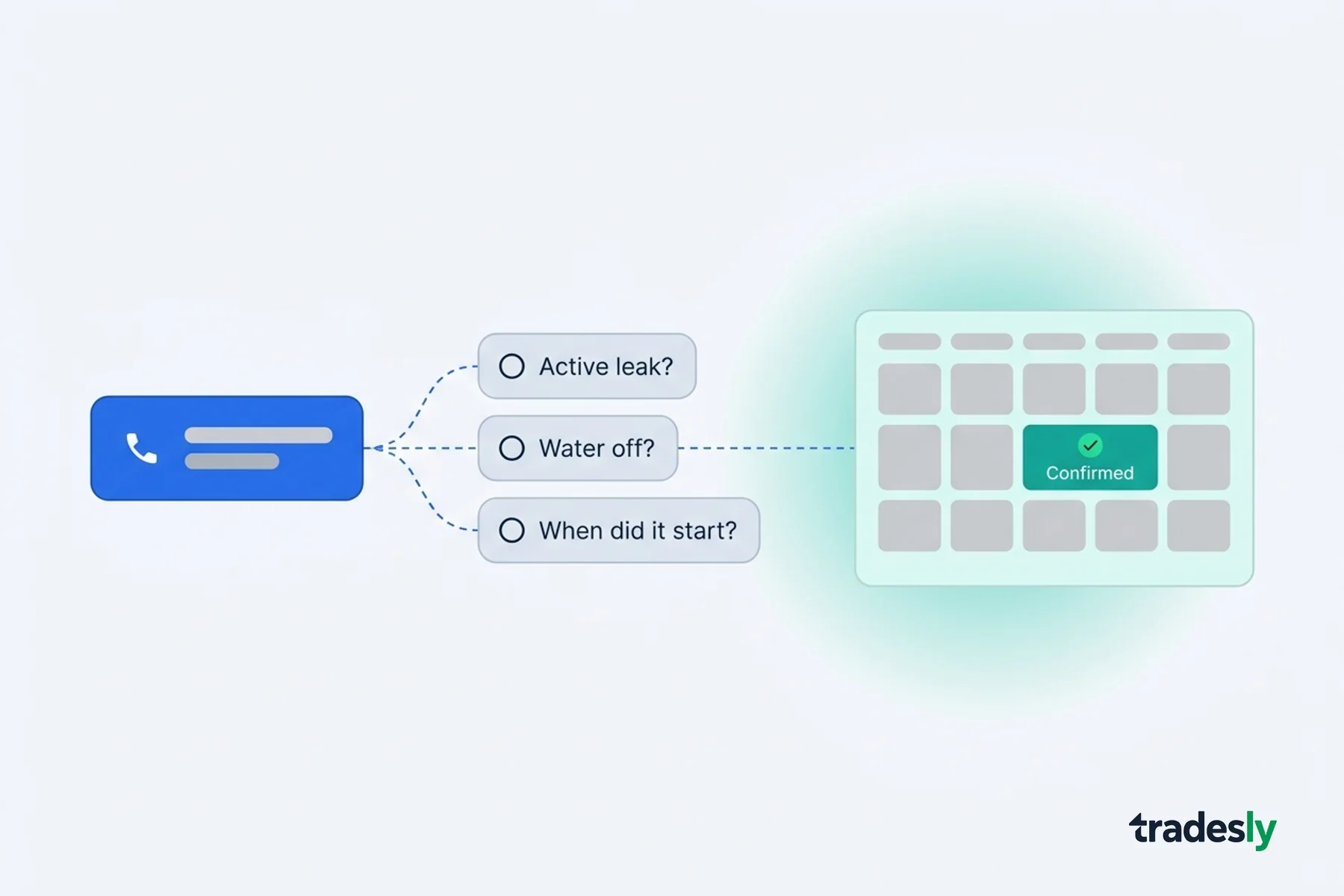
Plumbing Call Center Scripts That Actually Book Jobs
8 min read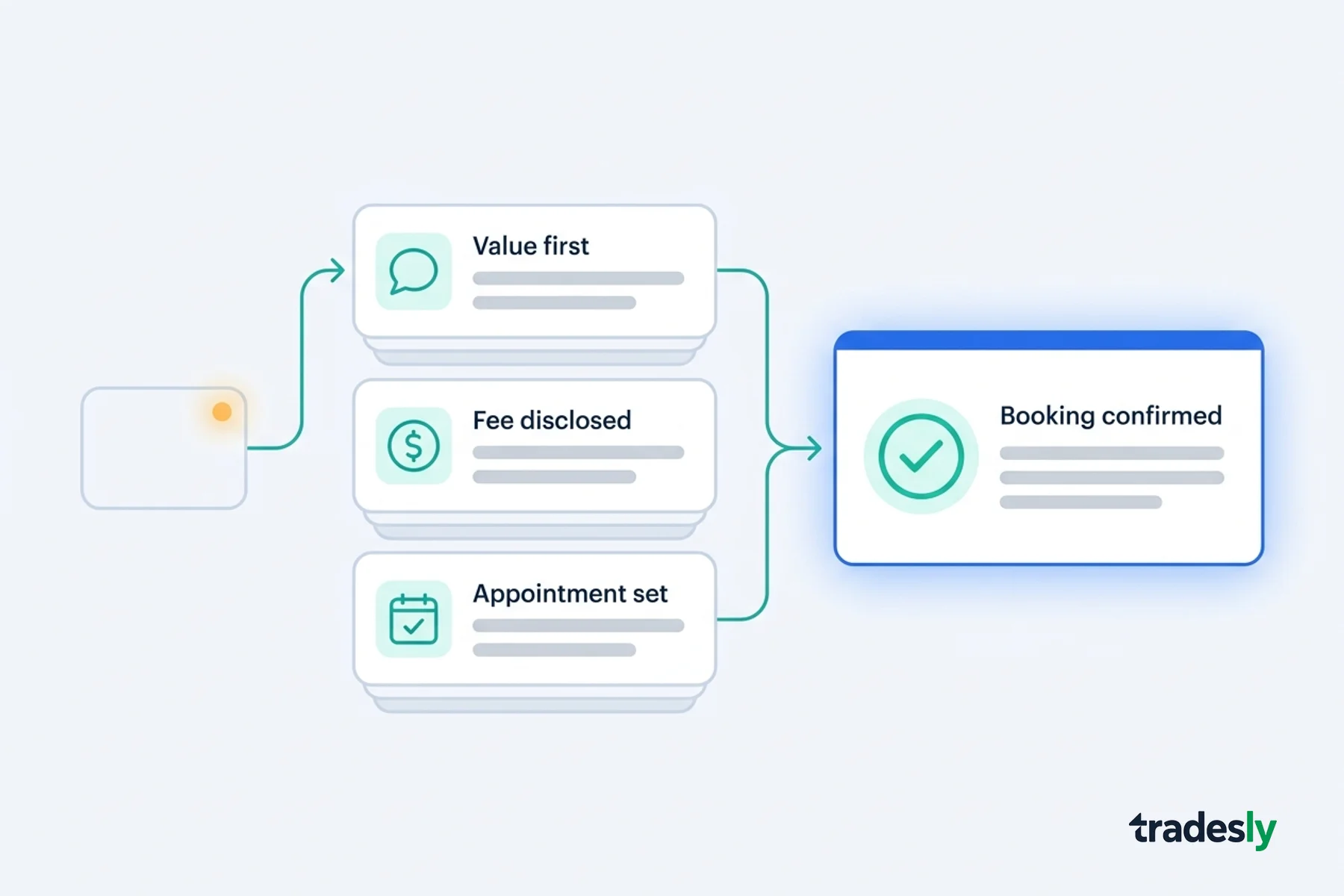 CSR Coaching & Call Handling
The 'Diagnostic Fee' Friction: How to Coach CSRs to Address Trip Charges Without Killing the Booking Rate
7 min read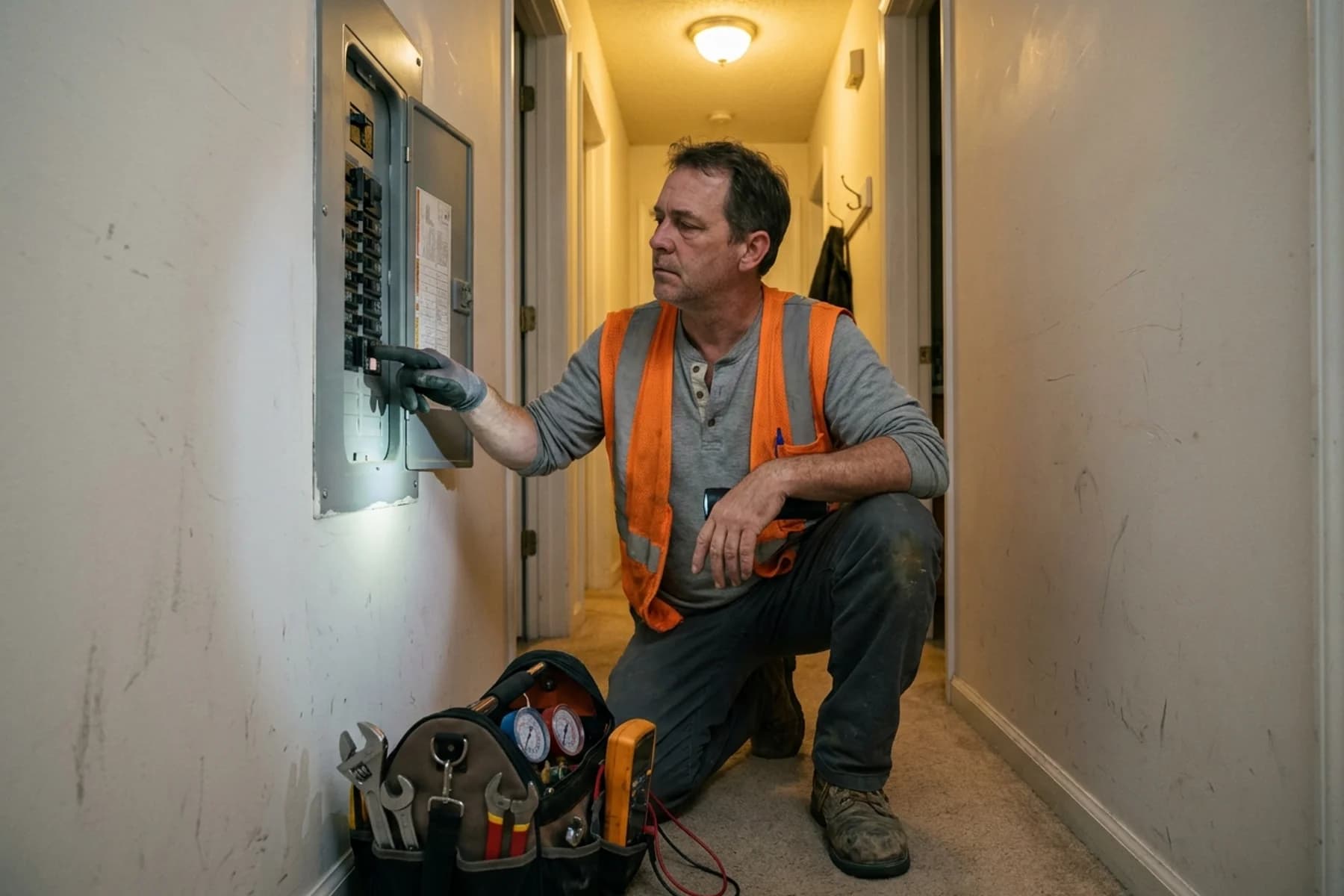 CSR Coaching & Call Handling
The 'Garbage Call' Epidemic: How to Stop Inexperienced CSRs from Misallocating Your Best Technicians
8 min read