


The 'Garbage Call' Epidemic: How to Stop Inexperienced CSRs from Misallocating Your Best Technicians
Your dispatch board isn't broken — your call intake is. Learn how CSR call qualification for home services stops bad dispatches before they happen.

The 'Garbage In, Garbage Out' Guide to Stopping CSR-Caused Dispatch Failures
Your dispatch board is lying to you
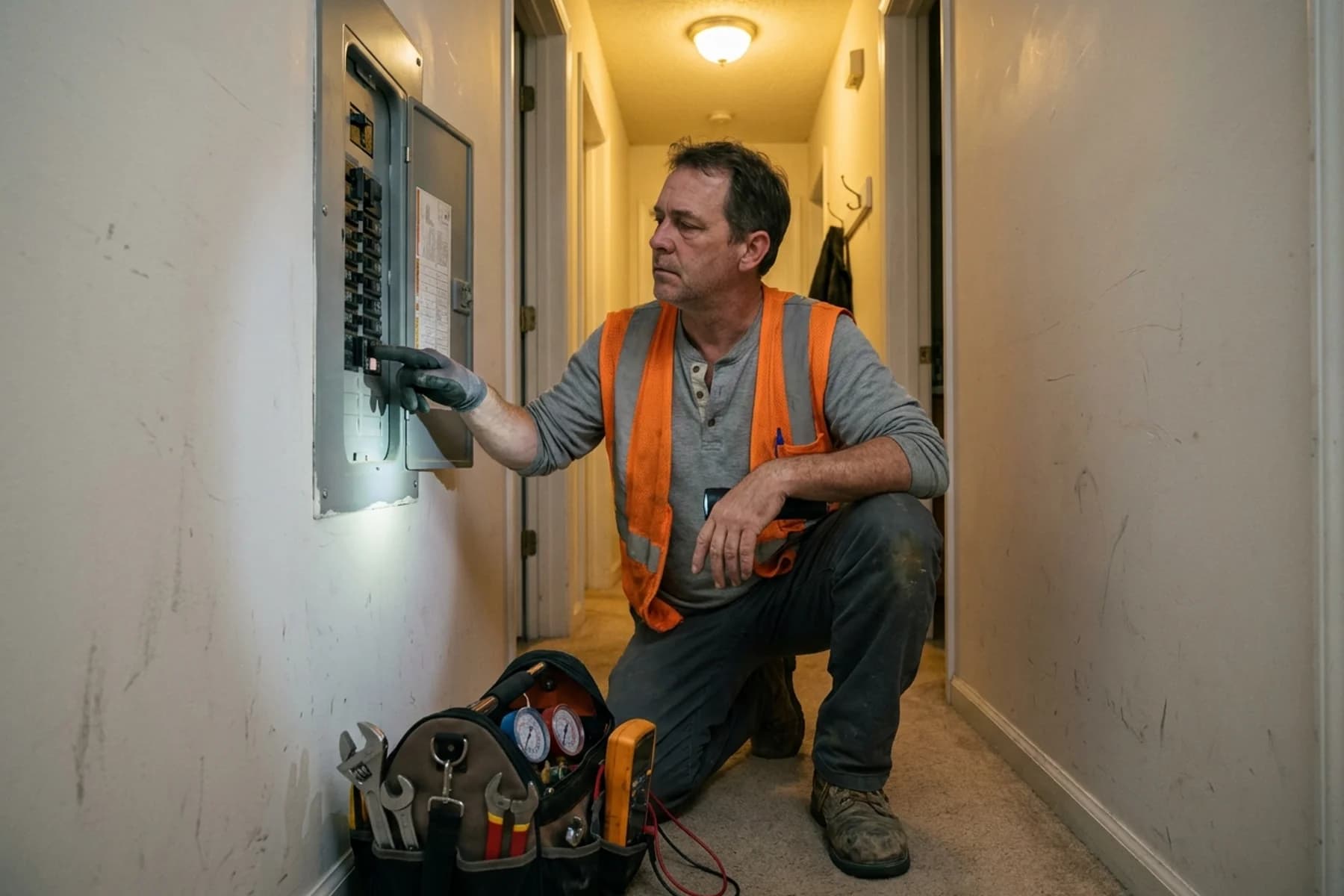
Your senior HVAC tech just drove 45 minutes to a "no heat" call. The fix? A tripped breaker. He reset it in 90 seconds. You burned $90 in fully-loaded labor. Why? Your CSR never asked if the customer had checked the panel.
That's not a dispatch problem. That's a CSR call qualification home services failure — and it's costing you every single day.
The dispatch board is downstream. It reflects what your intake process fed it. Garbage in, garbage out. Every misallocated tech hour, every wrong-tier rollout, every wasted drive traces back to a call where the CSR failed to ask three basic questions. Dispatch call intake training is the lever most operators ignore.
CSR call qualification is the process of gathering specific job details during an inbound service call — system type, symptom description, warranty status, urgency level, and prior troubleshooting — before any technician is assigned or a job is entered into the dispatch board.
Field service companies consider up to 25% of truck rolls to be non-value-added or entirely avoidable, according to TechSee's research on reducing truck rolls. That's not a dispatch scheduling failure. That's a process problem — and it starts on the call.
Operators keep adjusting the board. Reassigning techs. Blaming the dispatcher. The real problem is three calls upstream. Learn more about how dispatch board gaps trace back to call intake.
Why is my HVAC dispatch board always a mess even with good dispatchers?
Because your dispatchers are working with broken data. The board doesn't create bad outcomes — it reflects them. A dispatcher can only route what the CSR captured. If the intake data is incomplete, wrong, or vague, the best dispatcher in the industry can't fix it.
You don't have a dispatch problem. You have an intake problem wearing a dispatch costume.
What makes a call 'garbage'? The five intake failure modes
These aren't random errors. They're predictable failures of an untrained, unguided intake process. The CSR isn't malicious. They simply don't know what they don't know — because the system never told them what to ask or how to qualify HVAC service calls before a job hits the board.
1. Missing symptom detail
The CSR types "not working" into the job notes. Dispatch sees "not working" and assigns whoever's closest. The tech arrives to find a clogged condensate drain — a 15-minute apprentice job. Old behavior: "What's wrong with it?" What dispatch receives: "AC not working." What rolls: senior tech. What it costs: $60+ in labor for a $0 fix.
2. Wrong system identification
The customer says "heat pump" but the CSR hears "heating unit" and books a gas furnace tech. That tech shows up, looks at the equipment, and leaves. A second truck rolls. Old behavior: no system verification. What dispatch receives: "heating issue." What rolls: wrong certification, wrong tools. What it costs: two truck rolls instead of one.
3. Unverified service address
The customer rattles off an address. The CSR types it fast. The tech drives 30 minutes to the wrong street. Old behavior: no address confirmation read-back. What dispatch receives: bad coordinates. What rolls: a truck going nowhere useful. What it costs: an hour of drive time, plus a furious customer who's been waiting.
4. Skipped warranty or service contract check
A customer covered by an active maintenance agreement should get routed differently — different priority tier, different billing path, sometimes a junior tech on a tune-up. If the CSR doesn't check, your most expensive tech handles what a junior should. Old behavior: no contract lookup during intake. What dispatch receives: a standard job. What rolls: senior labor at senior rates for a covered maintenance call.
5. No urgency classification
When every call looks like an emergency, nothing gets prioritized. The CSR who doesn't ask "Is there a health or safety risk?" treats a broken furnace in January the same as a noisy AC unit in June. Dispatch can't triage what isn't classified. Everything urgent means nothing is.
If your CSR doesn't know to ask about system age before dispatching a senior tech for a potential replacement conversation, that's on your intake SOP. Not the CSR. See how AI call qualification for your dispatch board closes these gaps automatically.
How much does a bad service call cost an HVAC company in wasted labor?
More than most operators realize — because most operators are only counting base wages. A senior HVAC technician earns $37.12/hour in base wages. But once you add FICA (7.65%), workers' comp (4–12%), vehicle costs, fuel, and overhead allocation, that tech costs your business $55–$65/hour all-in. According to the Oryx Horn HVAC Job Costing Guide 2026, many contractors undercount labor by 30–40% by omitting these components.
The true fully-loaded cost of a senior tech dispatch
Run the numbers. One bad dispatch: 45 minutes of drive time plus 30 minutes on site for a wrong-tier call. At $60 fully-loaded per hour, that's $75 per incident. It doesn't feel catastrophic in isolation.
Scale it. One bad dispatch per day, five days per week, 50 weeks per year: $18,750 in wasted senior labor annually. Per technician.
That's not a rounding error. That's a salary. That's a marketing budget. That's the cost of doing nothing about your intake process.
Frame it as a training ROI question: what would it cost to fix your CSR qualification process? Compare that number to $18,750. The math is not close. Dispatch board optimization starts at intake — not with better scheduling software. Use our tool to calculate what bad calls are costing you at your specific labor rates.
How do I train my CSR on CSR call qualification home services teams use before scheduling a technician?
Start with a non-negotiable qualification protocol. Five questions. Every call. No exceptions. The CSR doesn't move to scheduling until all five are answered.
What questions should a home service CSR ask before dispatching a tech?
Five questions determine whether a dispatch is profitable or wasteful. They take 90 seconds to ask and save hours of misdirected labor.
The five questions every CSR must ask before a job gets entered into the board
- What system type is involved, and how old is it? Routes to the right tech tier. A 14-year-old unit is a potential replacement conversation — that's a senior tech or comfort advisor, not an apprentice.
- What exactly is happening — not 'it's broken,' but a specific symptom? "No cool air" and "unit running but not cooling" are different dispatches. Get the symptom. Filter the roll.
- Is the system under warranty or a service agreement? Determines billing path, priority tier, and tech assignment. This check takes 20 seconds and changes the entire job routing.
- Has the customer already tried any self-fixes? Flags potential No Fault Found dispatches before the truck leaves. If the customer already reset the breaker twice, that's diagnostic information. Capture it.
- Is this an emergency — health or safety risk — or a comfort issue? Sets urgency tier and tech assignment. A household with no heat in January and elderly residents is a different call than a noisy AC in a vacation home.
How to build this into your intake SOP today
Print the five questions. Post them at every CSR workstation. Build them into your job intake form in your FSM. Reference the dispatcher SOP templates with AI coaching to get a head start on the documentation.
Sounds simple. It is — until the phone is ringing off the hook at 8 AM on a Monday after a cold weekend, and your CSR is on their fourth call in a row with a line holding.
Why a checklist alone fails — and what enforces it in real time
A printed checklist on a CSR's desk gets skipped under pressure. That's not a character flaw. It's how humans work under load. The questions that feel obvious at 9 AM disappear at 11 AM when there are four customers holding.
What enforces the protocol is HVAC CSR training software that surfaces the right questions on screen, in real time, while the customer is still on the phone. Not a post-call QA review. Not a Monday morning coaching session. Live. During the call. Real-time call scripting HVAC tools do this automatically — the screen prompts the CSR on what to ask next, before the call ends.
That's exactly what real-time AI scripting for CSR performance does. It doesn't replace the CSR. It makes sure the CSR never skips a qualification question under pressure.
What is a 'No Fault Found' dispatch and how do I reduce it?
A No Fault Found (NFF) dispatch is when a technician arrives on site and there is nothing to repair — the reported problem either resolved itself, was user error, or was never a mechanical issue. According to CareAR's research on truck roll reduction, a high NFF rate indicates inaccurate customer reporting, inadequate troubleshooting tools, or inefficient dispatching — and identifying the root cause is essential to minimizing wasted technician resources. NFF rate drops when CSRs are trained to capture specific symptoms and ask about prior self-troubleshooting before any job is entered into the board.
What elite HVAC operations do differently with CSR call qualification
The best operators I've watched don't treat intake quality as a CSR metric. They treat it as a dispatch KPI. They review it weekly alongside technician utilization rate home services benchmarks and first-time fix rate.
They track no fault found dispatch rate as the leading indicator of intake failure. If a tech shows up and there's nothing to fix, that's the intake process telling you it broke down. It's not a tech problem. It's not a scheduling problem. It's a qualification problem. Dispatch accuracy — the percentage of calls where the right tech tier was assigned on the first roll, without a revisit or truck swap — is the metric they watch weekly as a direct measure of intake quality.
Elite operators also close the feedback loop. Dispatch outcome data flows back into CSR coaching. When a tech marks an NFF in the FSM, that job gets flagged for intake review. The CSR who took the original call gets coached — not punished — on what question would have caught it.
Post-call QA is retrospective. By the time you review the recording, the truck has already rolled, the senior tech's afternoon is already short, and the customer has already formed an impression. Real-time AI coaching catches the intake error before the board is ever touched. That's the difference between fixing problems and preventing them.
If you're running ServiceTitan, see how ServiceTitan dispatch board gaps start at call intake for a platform-specific breakdown.
When your CSR qualification rate climbs, your dispatch board stops looking like a mess someone else made. It starts looking like a plan you built.
Stop fixing the board. Fix the call.
Here's the chain: bad intake leads to wrong tech assigned, which produces wasted labor, which leaks margin, which frustrates your best technicians, which accelerates turnover. Every link in that chain originates at intake.
Your dispatch board is a mirror. It shows you exactly what your intake process produced.
The fix isn't a new dispatcher. It's not better scheduling software. It's a non-negotiable call qualification protocol — enforced live, on every call, before a single job hits the board.
Tradesly coaches your CSRs through it in real time. Every call. No skipped questions. No pressure-induced shortcuts. The right data goes into the board before dispatch ever touches it. See how AI coaching transforms field service dispatch — then book a demo and watch it work.
Stop guessing. Fix the call. Book your demo now.
Keep reading
 CSR Coaching & Call Handling
Plumbing Call Center Scripts That Actually Book Jobs
8 min read CSR Coaching & Call Handling
The 'Diagnostic Fee' Friction: How to Coach CSRs to Address Trip Charges Without Killing the Booking Rate
7 min read CSR Coaching & Call Handling
The Summer Heatwave Blueprint: Handling a 300% Call Spike Without Seasonal Temps
8 min read