

Dispatcher Training Manual: 7 SOPs That Actually Stick
Your dispatcher training manual isn't bad—it's powerless. Get 7 battle-tested SOPs, templates, and the real reason static manuals fail home services companies. Plus: how AI coaching actually enforces execution.
 Vincent WongFounder & Editor-in-Chief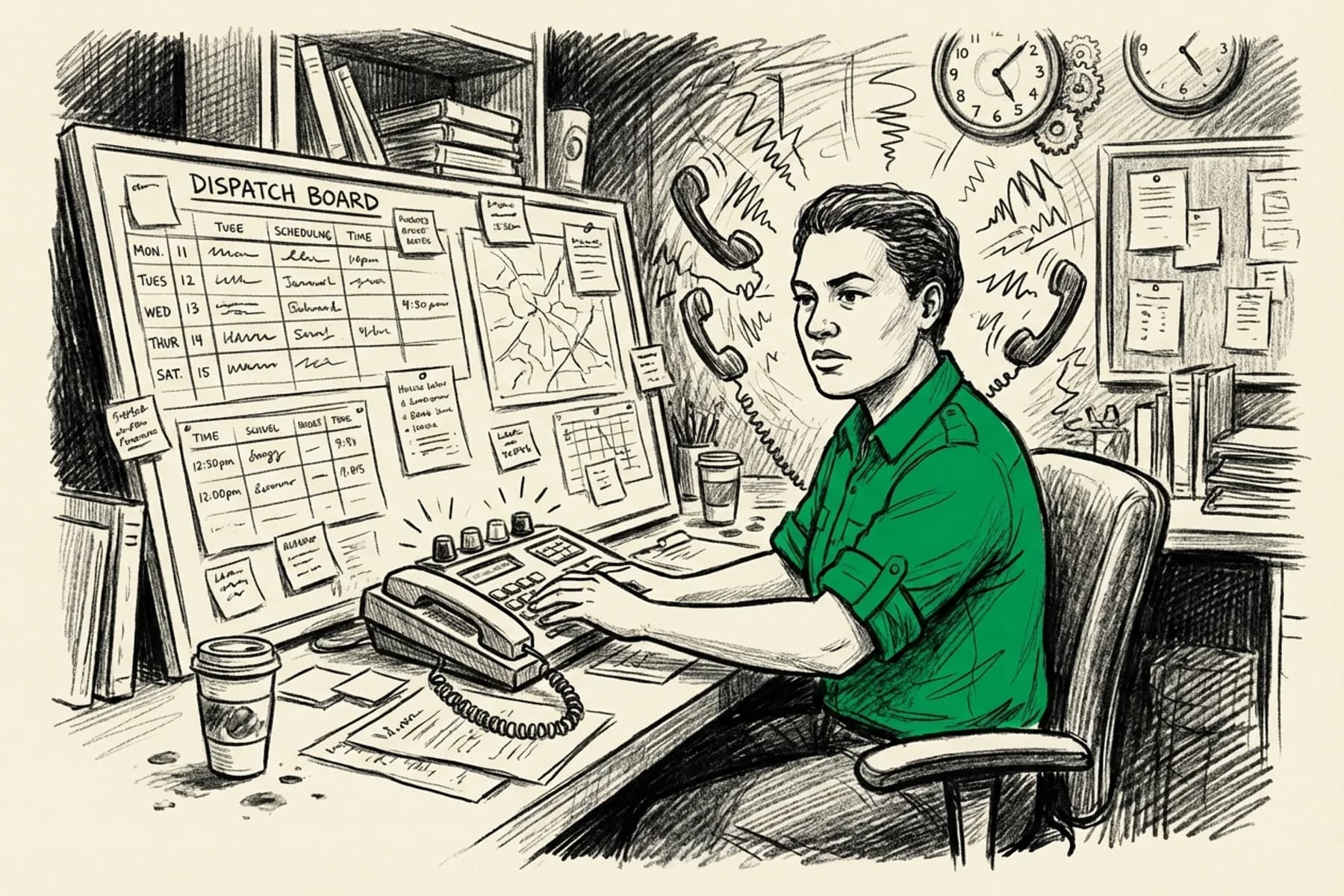
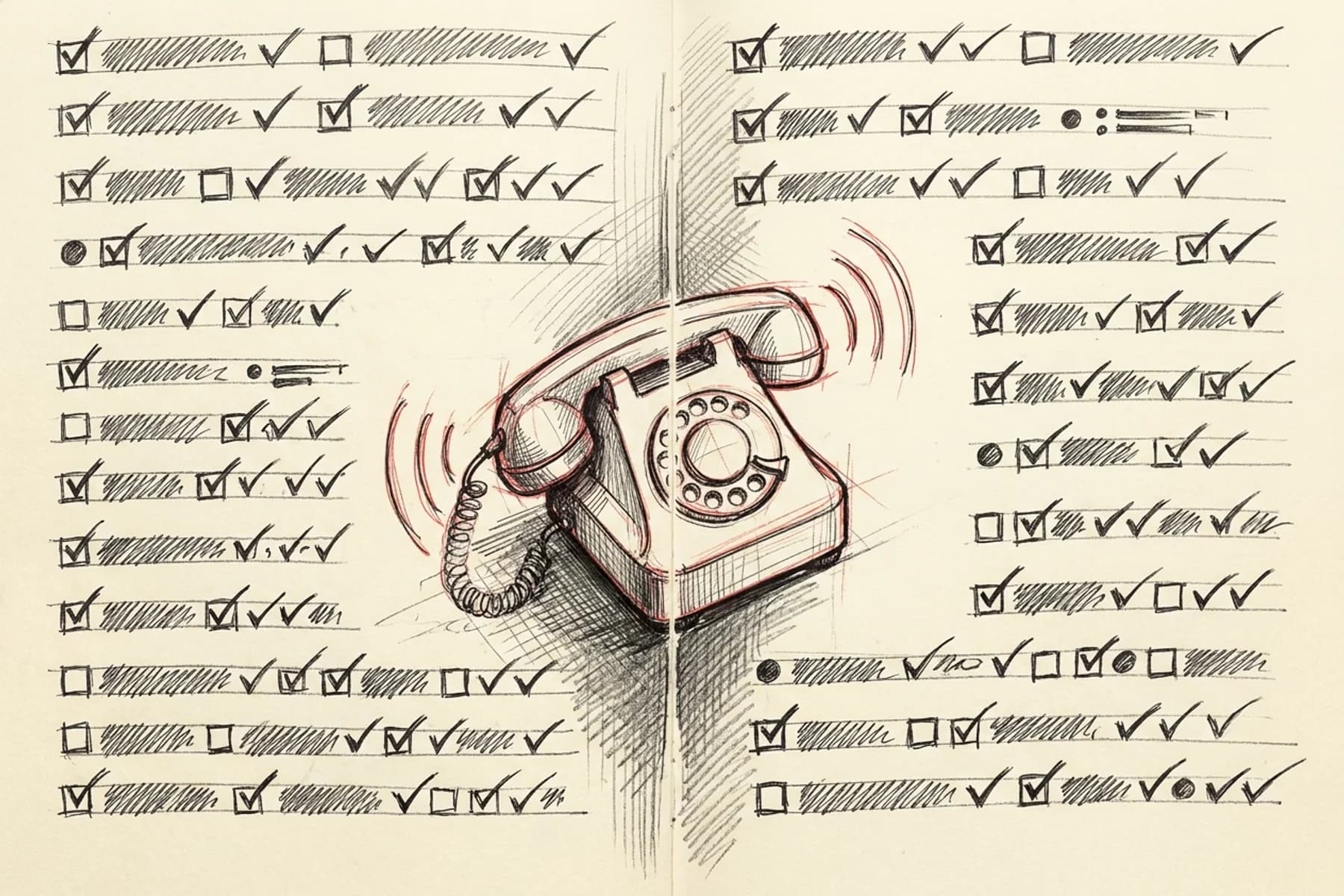
Your dispatch team has a 200-page training manual sitting in a binder somewhere. They've been through the training. They know the protocols. Yet your booking rate is still stuck at 42% and your dispatch board looks like Swiss cheese.
Here's the brutal truth: your dispatcher training manual isn't the problem. The problem is expecting a static document to guide performance in chaotic, real-time situations where every second costs you money.
I've watched HVAC shops spend $10,000 on comprehensive training programs only to see the same mistakes repeated week after week.
The issue isn't knowledge. It's execution under pressure.
What should be included in a dispatcher training manual for home services?
Dispatcher Training Manual is a comprehensive guide that outlines protocols for call handling, emergency triage, technician assignment, and customer service standards specific to home services operations.
A complete dispatcher training manual must include emergency triage protocols, customer information capture standards, technician assignment criteria, scheduling optimization workflows, follow-up procedures, complaint resolution frameworks, and revenue protection protocols. Without these core elements, dispatchers operate without clear guidelines, leading to inconsistent service delivery and lost revenue opportunities.
The home services industry loses approximately 30% of potential revenue through mishandled phone interactions. Your dispatcher is the gateway between leads and booked jobs. When they fumble, your cash flow bleeds.
The $10,000 training manual that nobody follows
Most companies dump serious cash into training materials. Fancy binders. Laminated quick-reference cards. Step-by-step flowcharts.
Then reality hits. Your dispatcher gets a panicked call about a flooded basement at 4:47 PM on a Friday. Three techs are running late. Two customers called to complain. The phone rings again before they finish logging the emergency.
Where's that manual now? Buried under dispatch sheets and coffee stains.
The dispatcher training investment reality
Here's what I see companies spending on dispatcher training:
- Initial training program: $2,500-$5,000
- Ongoing materials and updates: $1,200/year
- Time investment from senior staff: 40+ hours
- Lost revenue during training period: $3,000-$8,000
That's serious money for something that gets abandoned the moment pressure mounts.
Why static SOPs fail in real-world chaos
Static documents can't adapt to unpredictable customer scenarios. Your manual covers standard emergency calls, but what about the customer who's screaming about water damage while their neighbor is honking outside because your tech blocked their driveway?
The manual says "gather all relevant information," but doesn't specify which information matters most when you've got 30 seconds before the customer hangs up to call your competitor.
The gap between knowledge and execution
Knowledge doesn't automatically translate to consistent performance under pressure. Your dispatcher knows they should ask about system age and warranty status. But when a customer is yelling about no heat in January, that CSR training transformation framework goes out the window.
Stress makes people forget. Pressure makes them shortcut. Time constraints force improvisation.
How do you create effective SOPs for HVAC dispatchers?
Effective HVAC dispatcher SOPs prioritize emergency situations by safety and revenue potential, include standardized data collection forms, provide clear technician assignment criteria based on skills and location, establish scheduling protocols that maximize efficiency, and outline specific follow-up procedures that prevent cancellations and ensure customer satisfaction. These elements work together to create a dispatcher workflow that consistently converts leads into booked revenue.
7 Battle-tested dispatcher SOPs that actually work
These aren't theoretical frameworks. I've seen these protocols save companies thousands in lost revenue when properly executed.
1. Emergency call triage protocol
Not all emergencies are created equal. Safety comes first, but revenue priority comes second:
Level 1 (Immediate dispatch): Gas leaks, electrical hazards, water damage
Level 2 (Same day): No heat/AC in extreme weather, complete system failure
Level 3 (Next business day): Partial system issues, maintenance requests
Your dispatcher needs to categorize within 15 seconds or you lose control of the day.
2. Customer information capture checklist
Consistent information capture prevents scheduling errors and callbacks. Every call needs:
- Contact information (primary and secondary)
- Property address and access instructions
- System type, age, and warranty status
- Problem description and symptoms
- Previous service history
- Customer availability window
- Payment method on file
Missing any of these creates a callback. Callbacks kill momentum and annoy customers.
3. Technician assignment decision tree
The wrong tech on the wrong job costs you money. Use this hierarchy:
First priority: Skill match (HVAC specialist for HVAC, etc.)
Second priority: Geographic proximity
Third priority: Current schedule capacity
Fourth priority: Customer relationship history
Your dispatcher scorecard template should track assignment accuracy as a key metric.
4. Schedule optimization workflow
Gaps in your dispatch board are lost revenue. Optimize with:
- Zone-based routing to minimize drive time
- Service type clustering (all maintenance calls in morning)
- Buffer time for emergency calls (15% of daily capacity)
- Same-day booking slots held until 2 PM
This approach improves technician utilization optimization by 20-30%.
5. Follow-up and confirmation procedures
Booking the call isn't enough. You need to protect it:
- Confirmation call/text 24 hours prior
- Morning-of reminder with technician details
- 30-minute arrival window notification
- Post-service satisfaction check within 24 hours
6. Complaint resolution framework
Unhappy customers call your competitors. Handle complaints with:
- Immediate acknowledgment and apology
- Problem documentation in CRM
- Resolution options with timelines
- Manager escalation criteria
- Follow-up verification of satisfaction
7. Revenue protection protocols
Every interaction affects your bottom line:
- Upselling opportunities during scheduling
- Maintenance agreement renewal reminders
- Warranty expiration notifications
- Seasonal service campaign integration
Inadequate training affects only 25% of service organizations prioritizing continuous learning. Don't be the 75% that wings it.
Why do dispatcher training programs fail in home services companies?
Dispatcher training programs fail because they rely on static materials that can't adapt to real-time chaos, overwhelm new hires with too much information at once, and fail to provide ongoing reinforcement when dispatchers encounter stressful situations where they're most likely to abandon protocols. The gap between training room knowledge and dispatch floor reality kills even the best-intentioned programs.
Why static manuals fail when revenue is on the line
Here's what actually happens during a busy Tuesday morning:
The chaos of real dispatching
Your dispatcher has six active calls, two techs calling in sick, one customer threatening to cancel their maintenance agreement, and your biggest commercial account needs emergency service.
The manual says "remain calm and methodical." Reality says you have 90 seconds to prevent a $15,000 account from walking.
Information overload in crisis moments
Static PDFs or paper manuals are difficult to navigate and frequently obsolete, slowing down technicians. Your dispatcher doesn't have time to flip through pages or search documents when the customer is already frustrated.
They need answers now. The manual provides processes later.
The human memory limitations under pressure
Stress hormones literally impair memory access. Your dispatcher knows the protocol when they're relaxed and reviewing materials. But cortisol makes them forget everything they learned when the customer is screaming about a flooded basement.
This is why dynamic dispatch scripts vs static call sheets makes such a difference.
What are the essential protocols for home service dispatchers?
Essential dispatcher protocols include emergency call triage systems that prioritize by safety and revenue impact, standardized information capture processes that prevent costly callbacks, technician assignment matrices that optimize skill matching and routing, scheduling workflows that maximize daily capacity, and follow-up procedures that protect booked appointments from cancellation. These protocols form the backbone of consistent, profitable dispatch operations.
How can AI improve dispatcher training and performance?
AI improves dispatcher performance by providing real-time, contextual guidance during actual customer calls, adapting coaching to specific scenarios rather than generic situations, and eliminating the need to memorize complex procedures by delivering instant access to relevant protocols exactly when they're needed most. This transforms static training materials into dynamic performance support systems.
How AI coaching turns SOPs from paperwork into performance
43 percent of contractors say their biggest IT challenge is training. The solution isn't better manuals: it's intelligent systems that guide performance in real time.
Real-time guidance during calls
AI coaching provides contextual SOP guidance during actual customer interactions. Instead of hoping your dispatcher remembers the emergency triage protocol, AI prompts them with the right questions based on what the customer is saying.
The customer mentions water damage? AI immediately surfaces the Level 1 emergency protocol and guides information gathering.
Adaptive coaching based on scenario
Every call is different. Static manuals provide one-size-fits-all responses. AI adapts to the specific situation:
- Angry customer? De-escalation scripts appear
- Complex scheduling conflict? Optimization suggestions surface
- Payment issues? Resolution workflows activate
This is what our AI real-time call coaching case study demonstrates in action.
Instant access to relevant protocols
No more searching through binders or PDFs. AI delivers exactly what your dispatcher needs, exactly when they need it. The cognitive load drops. Performance consistency improves.
Implementation framework: Making SOPs stick
Even the best SOPs fail without proper implementation. Here's how to make them stick:
SOP rollout strategy
Don't dump everything at once. Roll out protocols in priority order:
- Week 1-2: Emergency triage and safety protocols
- Week 3-4: Information capture standards
- Week 5-6: Technician assignment and scheduling
- Week 7-8: Follow-up and revenue protection
Gradual implementation prevents overwhelm and ensures adoption. This approach works whether you're training dispatchers, CSRs, or service coordinators using the same foundational principles.
Training reinforcement methods
One-time training doesn't create lasting habits. Use:
- Daily scenario practice (10 minutes)
- Weekly protocol review sessions
- Monthly performance feedback
- Quarterly SOP updates based on performance data
Performance measurement and adjustment
You can't improve what you don't measure. Track:
- Booking rate by dispatcher
- Protocol adherence score
- Customer satisfaction ratings
- Revenue per call handled
Booking rates improve from average 42% to 85% with proper training. But only if you measure and adjust based on real data.
Our AI-powered call monitoring and QA system makes this measurement automatic and actionable.
Download: Your complete dispatcher SOP toolkit
These templates aren't theoretical. They're battle-tested frameworks I've seen work in shops ranging from 3-tech plumbing companies to 50-truck HVAC operations.
Emergency protocol checklist
Ready-to-use emergency triage checklist for immediate implementation. Print it. Laminate it. Put it where your dispatcher can see it during every call.
Customer information form
Standardized forms ensure consistent information capture. No more "forgot to ask" callbacks that waste time and frustrate customers.
Technician assignment matrix
Decision matrix simplifies technician assignment process. Match skills to jobs. Route efficiently. Maximize utilization.
Schedule optimization guide
Step-by-step scheduling optimization reduces gaps and maximizes revenue. Your dispatch board should look like Tetris: every slot filled, no gaps.
These SOPs work as a comprehensive service coordinator training manual when combined with proper implementation and ongoing coaching. But static documents only get you so far.
The real breakthrough comes when you layer AI coaching on top of solid SOPs. That's when protocols become performance. When training becomes transformation.
Want to see how AI coaching makes your dispatcher training manual actually work? Check out our ServiceTitan dispatch board optimization guide.
Stop letting static manuals collect dust while revenue leaks through your dispatch process. Book a demo and see how AI-powered coaching turns your dispatcher training manual from paperwork into performance.