

ServiceTitan Dispatch Board Gaps? Your CSRs Are the Problem
Your dispatch board isn't failing because of scheduling software—it's failing because CSRs fumble calls before leads reach your calendar. Here's the fix.


Why does my ServiceTitan dispatch board have empty slots despite marketing spend?
Your ServiceTitan dispatch board stays half-empty because the problem isn't your scheduling software. It's your call intake process. The gaps happen in the first 30 seconds of customer contact, not in the dispatch optimization features you paid $50K to implement.
I've watched shops invest heavily in ServiceTitan's advanced dispatch features only to see the same empty calendar slots. The drag-and-drop scheduling works perfectly. The AI-powered tech matching is solid. Route optimization saves time and fuel.
But none of that matters if your CSRs fumble the booking call.
The $50K software that still leaves your dispatch board half-empty
ServiceTitan delivers industry-leading dispatch capabilities. The platform handles complex scheduling scenarios. Stuff most operators only dream about.
Drag-and-drop appointments between techs. AI recommendations for the best technician match. Route optimization that actually saves fuel costs.
Dispatch Board Gaps occur when scheduling software shows empty appointment slots despite adequate lead generation, typically caused by call intake failures rather than scheduling system problems.
ServiceTitan Dispatch Pro is an advanced scheduling system that uses machine learning to analyze thousands of scheduling scenarios and recommend optimal technician assignments for each job.
Here's the reality: ServiceTitan costs $250-500 per technician per month. Implementation costs range from $5,000-$50,000. That's serious money for a platform that should fill your calendar.
Yet I see dispatch boards with gaps every single day. Empty morning slots. Techs running short routes. Uneven utilization across the team.
The software isn't broken. Your call handling process is.
ServiceTitan's dispatch features only work on successfully booked appointments. If your CSR can't convert the initial call into a scheduled job, there's nothing for the dispatch board to optimize. You're trying to perfect the backend while the frontend leaks revenue.
The hidden bottleneck: what happens in the first 30 seconds
Home services booking rates tell the real story. Plumbing had the highest average booking rate at 43%, with HVAC at 38% and Electrical at 41%. That means 60% of your calls never become scheduled jobs.
Think about that math. You're spending money on Google Ads, LSA, and marketing to drive calls. Those calls reach your office. Your CSR answers. But 6 out of 10 calls end without a booked appointment reaching your ServiceTitan dispatch board.
ServiceTitan assumes perfect inputs. The platform is built for operators who consistently book qualified leads and properly classify jobs. When that assumption breaks down, even the most advanced dispatch features underperform.
I've seen shops blame their scheduling software when the real problem is upstream. They'll upgrade to Dispatch Pro, add more features, integrate new modules. The dispatch board still has gaps because the issue isn't scheduling optimization—it's call booking rate improvement.
What causes gaps in home services dispatch scheduling?
Gaps in home services dispatch scheduling are caused by four front-desk failures: inconsistent call qualification, script abandonment under pressure, poor objection handling, and missed follow-ups. These failures happen before leads reach your ServiceTitan dispatch board.
Inconsistent call qualification
CSRs don't properly separate emergency calls from routine maintenance. They book a "no heat" call for next Tuesday when the customer expects same-day service. The appointment gets canceled. Your dispatch board loses a slot that could have been filled with a maintenance call.
Script abandonment under pressure
When call volume spikes, teams ditch the booking script. Booking rates drop 20-30% during busy periods. CSRs rush through calls, miss qualification questions, and fail to overcome basic objections. Qualified leads hang up instead of booking.
Poor objection handling
Price shoppers call every HVAC company in town. Your CSR doesn't have a consistent response for "How much for a tune-up?" They quote over the phone, the customer says they'll call back, and you never hear from them again. That lead could have been booked if the objection was handled properly.
Missed follow-up opportunities
If you're missing more than 10% of calls, you're likely losing significant revenue. But even answered calls need follow-up. Estimates don't get rehashed. Callbacks don't happen. Potential jobs slip through the cracks instead of filling your dispatch board.
These failures happen before ServiceTitan's dispatch optimization even kicks in. You're trying to schedule jobs that were never properly booked in the first place. HVAC dispatch problems especially show up during seasonal spikes when script abandonment hits hardest.
Why dispatch optimization assumes perfect call handling
ServiceTitan's Dispatch Pro uses machine learning to run thousands of scenarios to find the best technician for every job. The AI needs quality input data to make smart recommendations.
Garbage in, garbage out.
When CSRs inconsistently classify jobs, the AI recommendations fail. A "plumbing repair" could be a 30-minute faucet fix or a 4-hour slab leak. If the job isn't properly qualified during the initial call, Dispatch Pro can't match the right tech with the right skill set.
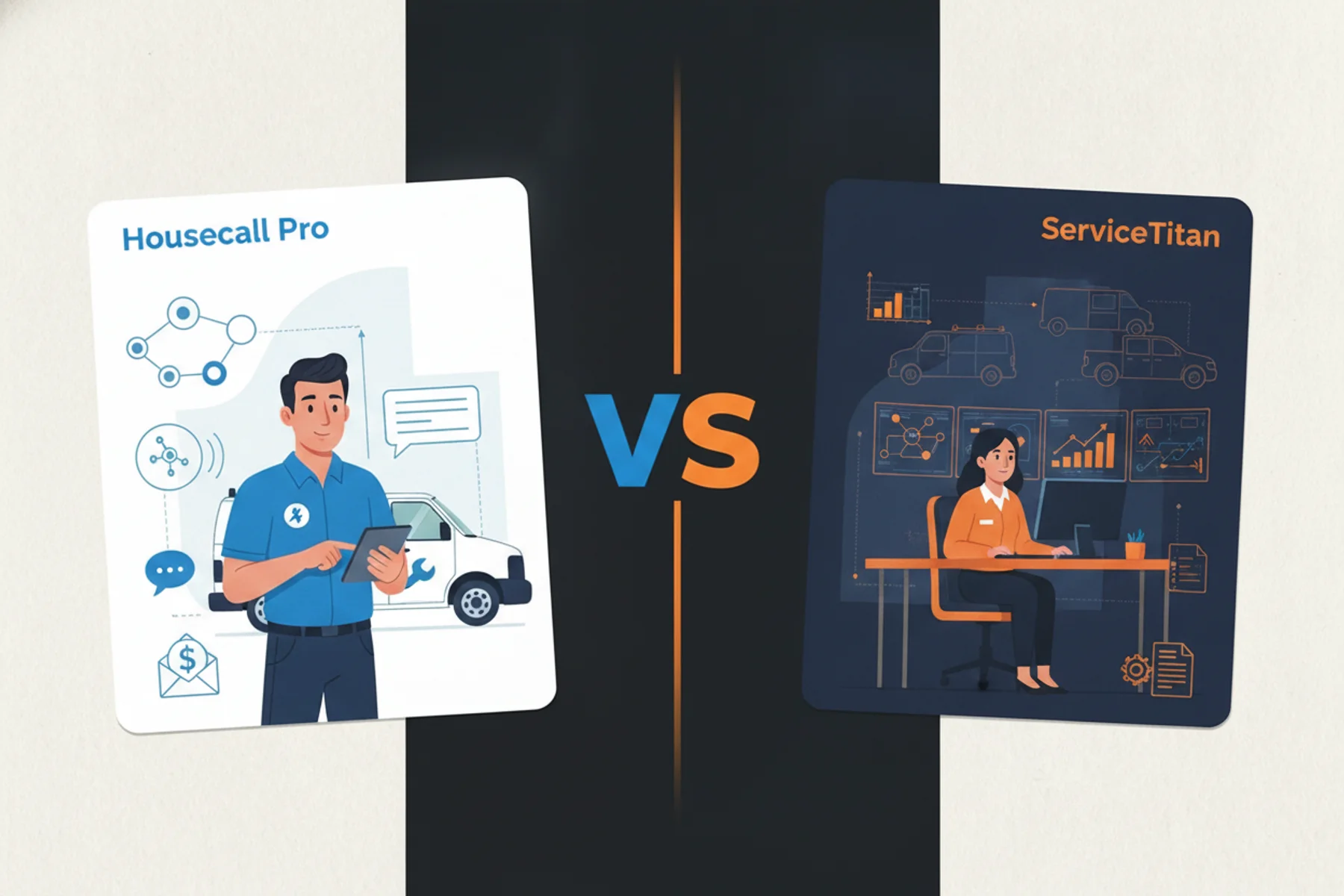
Housecall Pro has the same problem. The scheduling features work great when fed accurate job information and realistic time estimates. But if your CSR books a "quick look" that turns into a major installation, your entire dispatch board gets thrown off.
Both platforms assume your front desk captures complete customer information. Address, contact details, problem description, and proper job classification. Without consistent CSR training framework, that assumption breaks down fast.
I've seen shops try to solve dispatch board gaps by upgrading their ServiceTitan package or switching to different scheduling software. The real fix is upstream—standardizing how calls get handled before they reach the dispatch board.
How can I improve ServiceTitan dispatch board utilization rates?
ServiceTitan dispatch board utilization improves by fixing your call intake process first. Three changes fill your calendar faster than any scheduling feature upgrade:
Standardize call intake with real-time coaching
Every CSR needs to handle calls the same way, regardless of experience level. Real-time AI call coaching system guides agents through qualification questions, objection handling, and booking confirmation. No more script abandonment under pressure.
Implement consistent qualification criteria
Emergency vs. routine. Repair vs. replacement. New customer vs. existing. These distinctions matter for dispatch scheduling. CSRs need clear criteria for properly categorizing jobs so ServiceTitan's AI can make smart tech assignments.
Automate follow-up and callback management
Estimates need rehashing. Missed calls need callbacks. Automated callback management ensures potential jobs don't slip through the cracks. More follow-up calls mean more booked appointments reaching your dispatch board.
The result: qualified leads flow consistently into your ServiceTitan dispatch board. Your scheduling optimization features work as designed because they're fed quality input data.
How do I fix low booking rates with ServiceTitan?
Low booking rates fix from the front desk, not the dispatch board. ServiceTitan tracks the right metrics, but most operators don't watch them:
Booking rate by individual CSR
Track which CSRs consistently convert calls into booked appointments. Identify training opportunities for underperformers. The best CSRs can teach the others what works.
Time from call to scheduled job
ServiceTitan measures this automatically. Fast booking indicates smooth call handling. Long delays suggest objections aren't being overcome or qualification is taking too long.
First-call resolution percentage
How many calls result in booked appointments without requiring callbacks? High first-call resolution means your CSRs are handling objections and closing bookings efficiently.
Dispatch board utilization metrics
Plumbing companies cut missed appointments by 30% using scheduling software. But empty slots indicate upstream problems, not scheduling issues. Monitor utilization rates across techs and time periods.
Use call center QA with AI insights to identify exactly where booking rates drop. Fix the call handling problems and watch your dispatch board fill up.
Why isn't my ServiceTitan investment filling my calendar?
Your ServiceTitan investment isn't filling your calendar because the platform optimizes the wrong part of your process. You're perfecting job scheduling while ignoring lead conversion.
ServiceTitan's advanced features work. The dispatch optimization is solid. Route planning saves time and fuel. Tech matching puts the right person on the right job.
But those features only improve jobs that make it to your dispatch board.
I've watched operators spend months configuring ServiceTitan's advanced dispatch features while their CSRs fumble basic booking calls. They'll optimize routes for empty schedules and wonder why the ROI isn't there.
Fix your call intake process first. Get more qualified leads flowing into your ServiceTitan dispatch board. Then optimize the scheduling.
The gap between your ServiceTitan features and your dispatch board reality isn't a software problem. It's a process problem that happens before leads ever reach your calendar.
Stop focusing on scheduling optimization until you fix the booking conversion. Your dispatch board will fill up fast when every call gets handled correctly the first time.
Want to see how this works in practice? Get the demo and watch real-time call coaching turn empty dispatch slots into booked revenue.