24/7 Lead Capture: Stop Losing $126K/Year to Missed Calls
Home services businesses miss 27% of calls and lose $126K+ annually. Learn the 3-layer system (human + AI + automation) that captures every lead 24/7. Implement in 30 days.

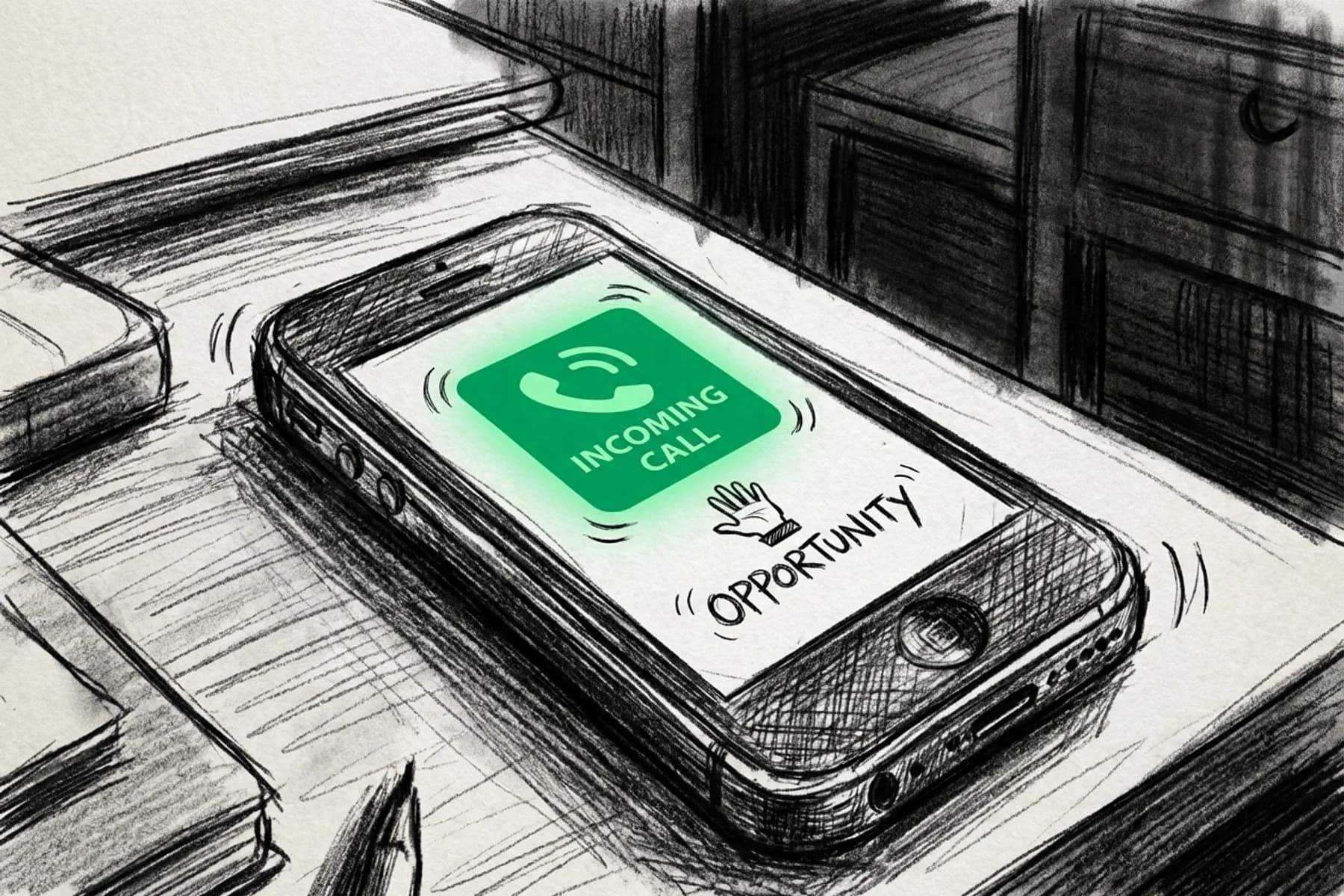

Your phone rang at 9:47 PM last Tuesday. An HVAC emergency. Premium pricing. Easy $3,000 job.
It went to voicemail.
By morning, your competitor had the job.
This happens more than you think. Home services businesses lose $126,000+ annually from missed calls, with each unanswered call representing $1,200 in lost potential revenue. The solution requires a strategic 24/7 answering service home services approach that captures every lead through multiple layers of coverage.
Industry research shows businesses miss 27% of inbound calls on average. 85% of callers don't call back if they reach voicemail, and 78% choose the first company that responds.
Here's the fix. A strategic approach that captures every lead. Three layers that turn after-hours calls into competitive advantage. A system that stops the revenue hemorrhage for good.
24/7 Lead Capture System is a strategic approach using multiple layers of coverage (human agents, AI voice technology, and automated backup) to ensure no customer call goes unanswered, regardless of time or volume.
How much revenue do home service businesses lose from missed calls?
Home services businesses lose $126,000+ annually from missed calls, with each unanswered call representing $1,200 in lost potential revenue. 85% of callers don't call back if they reach voicemail, and 78% choose the first company that responds.
The $1,200 Reality Check
That number isn't marketing fluff. Industry research from Housecall Pro shows the average home service call converts at $1,200 in revenue. HVAC installs, major plumbing repairs, electrical panel upgrades. These aren't $200 service calls.
Emergency calls command 2-3x normal rates. That after-hours furnace repair? $3,000+ easy. Miss that call, lose that premium.
Industry Data That Should Terrify You
The numbers get worse when you dig deeper:
- 18% of weekday calls and 41% of weekend calls go unanswered
- 85% of callers don't call back if they reach voicemail
- 78% choose first company that responds
- Response time matters: customers book within the first conversation 90% of the time
Your competitors aren't missing these calls. They're eating your lunch.
Vincent Wong from Tradesly discovered this firsthand: "A few years ago, we ran a report to see how many missed calls we had for the last month. To our surprise we missed nearly 700 calls. That shocked us."
Why 'I'll Call Them Back' Doesn't Work
Callback strategies fail because buyer intent peaks during the initial call. A burst pipe at 11 PM isn't a "think about it" purchase. It's an emergency with premium pricing attached.
By the time you call back, they've already hired someone else. The moment is gone. The revenue is gone.
What is the best 24/7 answering service for home services companies?
The best 24/7 answering service for home services combines optimized human coverage, AI voice agents for backup, and automated follow-up systems that prevent any lead from falling through cracks. This 3-layer approach scales with business growth without proportional cost increases.
Layer 1: Optimized Human Coverage
Your team handles peak hours and complex sales conversations. Strategic call routing ensures available team members always get the call first. Clear protocols define who answers when.
This isn't about hiring more people. It's about using the people you have smarter.
Layer 2: AI Voice Agents for 24/7 Backup
AI voice agents handle after hours answering service calls your team can't take. Natural conversation flow that customers can't distinguish from humans. Real-time booking integration.
AI receptionists capture 15-20% more appointments outside business hours. They never take bathroom breaks, never call in sick, never miss a call.
Layer 3: Automated Follow-Up Systems
SMS systems respond instantly to missed calls with booking links. Web forms capture leads who prefer digital. Email automation nurtures prospects over time.
Integration prevents leads from falling through cracks between systems. Every touch point is tracked and optimized for conversion.
How can HVAC companies capture leads after hours?
HVAC companies capture leads after hours through AI voice agents that answer instantly, qualify emergencies vs. scheduled service, book appointments in real-time, and escalate complex situations to on-call technicians when needed.
Start with call pattern analysis. When do most calls come in? Peak demand periods need human coverage. Everything else goes to AI backup.
Peak Hour Analysis
Track your call data for 30 days. Most home services see peaks from 8-10 AM and 3-6 PM on weekdays. Evenings and weekends are prime AI territory.
Call Routing Strategy
Smart routing sends calls to available team members first. If no human answers within 3 rings, AI takes over. No dead air. No voicemail. Every call gets a professional response.
Use call forwarding strategically during job sites. Your lead technician doesn't need to handle booking calls while diagnosing a furnace problem.
Team Protocols
Create clear handoff procedures. Who answers during lunch breaks? What about when everyone's on site? CSR training ensures consistent call quality.
Remove the guesswork. Define the system, then execute it.
Coverage Gaps Assessment
Map your current coverage against call volume. Most businesses discover gaps they didn't know existed. Fill the gaps with AI before you lose more revenue.
What percentage of calls do home service businesses miss?
Home service businesses miss 27% of inbound calls on average, with weekend and after-hours periods seeing miss rates as high as 41%. This represents a massive revenue opportunity for companies that implement proper 24/7 coverage systems.
AI voice agents can achieve up to 92% booking rate success. They handle qualification, booking, and escalation without human intervention.
How AI Voice Agents Work
Modern AI voice agents don't sound robotic. They ask qualifying questions, check availability, book appointments, and escalate emergencies to humans. Natural conversation flow keeps customers engaged.
The technology has evolved rapidly. Voice AI market projected to grow from $14.8 billion to $61 billion by 2033. Early adopters get competitive advantage.
Implementation Strategy
Start with after-hours coverage. Test AI response quality with low-stakes calls before rolling out to peak hours. AI vs automation differences matter for natural conversation flow.
Integration with scheduling systems enables real-time booking. Customers get confirmed appointments immediately, not callbacks.
Integration with Existing Systems
AI layers on top of your current phone system and CRM. No rip-and-replace. AI call escalation ensures complex situations reach humans quickly.
Most implementations go live within weeks, not months.
Performance Monitoring
Track booking rates, customer satisfaction, and revenue per call. AI systems provide detailed analytics on every conversation. Optimize scripts based on actual performance data.
Vincent Wong saw immediate results: "When we went to 24/7 coverage we saw a significant lift in revenue in the first month."
How much does each missed call cost a home service business?
Each missed call costs a home service business $1,200 in potential revenue based on industry conversion rates and average job values. When factoring in premium emergency rates and customer lifetime value, individual missed calls can represent $3,000+ in lost opportunity.
Layer 3 systems catch leads that phone calls miss. Phone calls generate 10-15 times more revenue than web leads, but digital backup prevents total loss.
SMS Response Systems
Instant SMS responses to missed calls include booking links and emergency contact options. Text message open rates hit 98%. Customers appreciate immediate acknowledgment.
Simple message: "Hi, this is [Company]. We missed your call but we're here to help. Book online: [link] or text URGENT for immediate response."
Web-Based Lead Capture
Web forms and chat capture leads who prefer digital communication. Integration with phone systems creates unified lead tracking. Lead generation optimization maximizes conversion from every source.
Email Automation
Automated email sequences nurture leads over time. Emergency situations need immediate response, but maintenance and upgrades can be nurtured into future revenue.
Follow-Up Sequences
Multi-touch campaigns increase booking rates. First touch: immediate response. Second touch: service options. Third touch: scheduling availability. Fourth touch: limited-time offers.
Track which sequences convert best and double down on winners.
Getting Your 24/7 System Live in 30 Days
Successful implementation follows a structured 30-day roadmap. Week 1 audit and analysis. Week 2 optimize human coverage. Week 3 implement AI voice agents. Week 4 test full system integration and launch.
Week 1: Audit and Analysis
Track current missed calls and identify patterns. Use call tracking software to see exact numbers. When do most calls come in? Which times see highest miss rates?
Calculate your current revenue loss: Missed calls × $1,200 = Annual loss
Call monitoring with AI insights reveals gaps you didn't know existed.
Week 2: Layer 1 Optimization
Optimize human coverage and call routing. Implement smart forwarding rules. Train team on consistent call handling procedures.
Focus on peak hours first. Nail the basics before adding AI layers.
Week 3: AI System Setup
Deploy AI voice agent with proper training on your services, pricing, and scheduling system. Test with internal calls first, then gradually roll out to live traffic.
Start with after-hours coverage. Lower risk, higher impact.
Week 4: Testing and Launch
Test full system integration and launch 24/7 coverage. Monitor performance closely. Adjust scripts and routing based on real customer interactions.
Businesses achieve ROI from AI reception services within 6-9 months. Most see positive returns within the first month.
ROI Calculator: What This System Actually Returns
ROI analysis shows break-even within the first month for most home service businesses, with annual revenue recovery ranging from $126,000-$300,000+ depending on call volume and average job values.
Cost Analysis
Current loss: 700 missed calls/month × $1,200 = $840,000 annual loss
AI system cost: $200-500/month depending on call volume
Break-even: Recovery of 1 missed call per month covers system cost
Revenue Recovery Projections
Conservative estimate: Recover 50% of missed calls = $420,000 annual recovery
Aggressive estimate: 24% improvement in customer retention from 24/7 coverage adds another $100,000+ in repeat business.
Competitive Advantage Quantification
Vincent Wong experienced this directly: "We knew we would miss less calls. But we ended up handling almost 100% of our calls. The surprising number was increasing booked jobs. The timing matters. Answering when the caller buyer intent was highest consistently led to more bookings."
Average cost reduction of 27% in customer service operations with AI while dramatically improving revenue capture.
The competitive advantage compounds. While competitors miss calls, you capture every lead. While they callback tomorrow, you book tonight. Revenue metrics that matter improve across the board.
Stop the Revenue Leak
The $1,200 missed call isn't a one-time loss. It's a recurring hemorrhage that compounds every month you wait.
Your 3-layer system starts with auditing current missed calls. Then optimizing human coverage for peak hours. Finally, implementing AI backup for 24/7 protection.
The technology exists. The ROI is proven. Your competitors are already implementing these systems.
Don't let another $3,000 emergency call go to voicemail.
Book a demo to see how AI voice agents capture leads while you sleep.
Keep reading
 AI Receptionist & Answering
Why AI Receptionists Lose Your $15K HVAC Calls
7 min read AI Receptionist & Answering
The Best HVAC Answering Service: 4 Tiers That Impact ROI
8 min read AI Receptionist & Answering
The Break-Even Point for an AI Receptionist: When Does Automation Pay for Itself in a Home Service Business?
7 min read