

Jobber vs. Workiz: The One Question That Decides Which FSM Is Right For You
Stuck on Jobber vs Workiz? The feature war is the wrong fight. The real question: what happens when the phone rings? See how to decide and fix the gap.

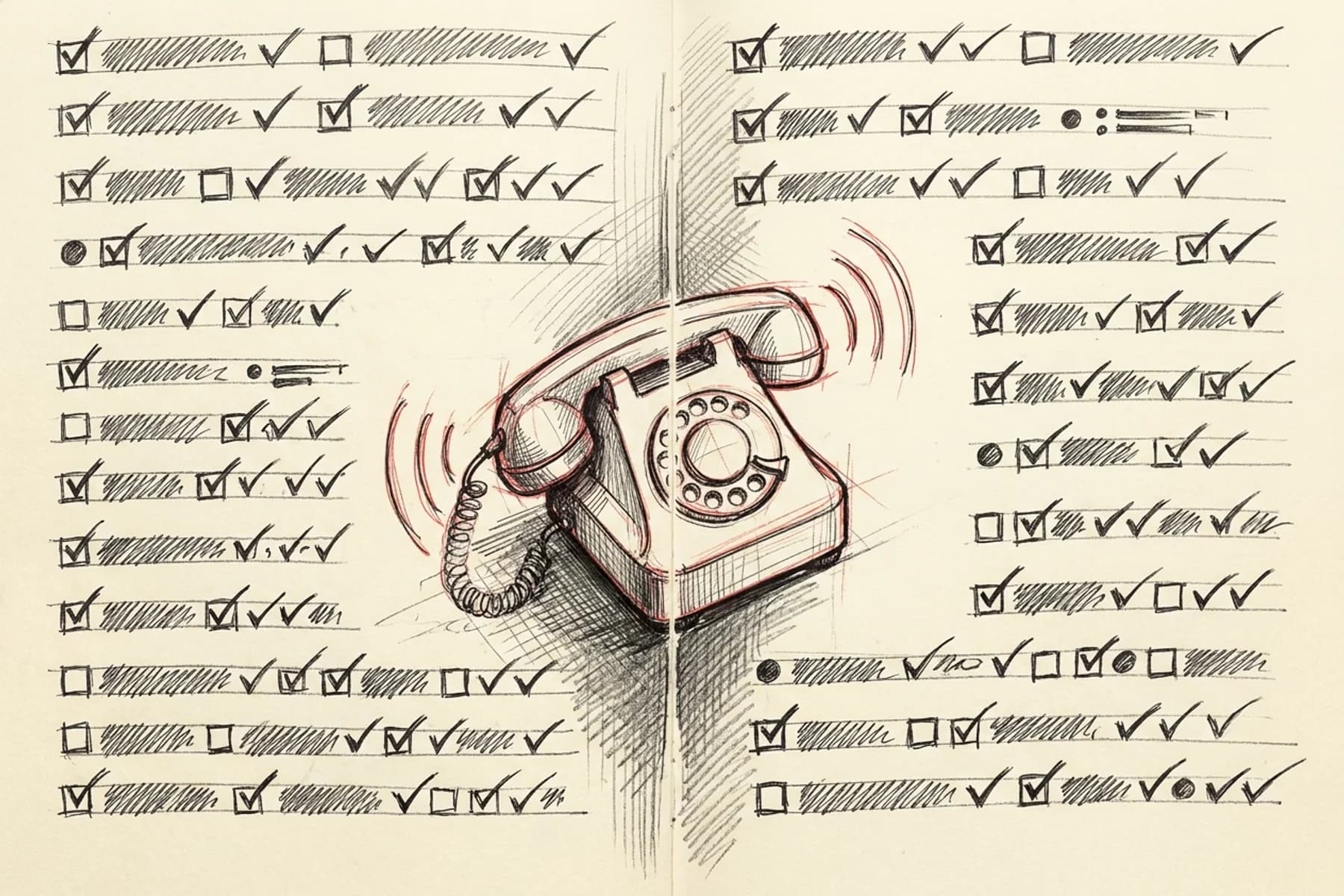
The Real Question Isn't Features. It's What Happens When The Phone Rings.
Every Jobber vs Workiz comparison you've read ranks the same twelve things. Scheduling. Mobile apps. Pricing tiers. Invoice flow. Whether the headline says Workiz vs Jobber or the other way around, the typical field service management software comparison is comparing the wrong layer.
I've watched shops spend three weeks in spreadsheet hell picking an FSM. They pick one. They migrate. They feel productive. Then the same leads keep leaking, and they can't figure out why.
Here's the truth nobody selling FSM software will tell you: the platform you pick barely touches the place where your revenue is actually won or lost. The phone.
By the end of this, you'll evaluate both tools through one question. Not twelve feature rows.
The false win: why a slick dispatch board fools you
A clean dispatch board feels like progress. It isn't. A full-looking calendar does nothing for the lead that hung up at voicemail before it ever became a job on that board. That's the false win.
You're optimizing the back office while the front door leaks. I've seen why dispatch board gaps usually start at call intake play out at shop after shop. The board has holes because the phone process is soft, not because the scheduling software is bad.
Field Service Management (FSM) software is a tool that organizes work after a job exists: scheduling, dispatching, invoicing, and tracking technicians. It does not generate leads or convert the calls that turn into jobs.
Workiz's big differentiator in 2026 is still its built-in VoIP phone system, the only off-the-shelf FSM that logs and links every inbound call natively, according to VertexHub's 2026 field app roundup. Hold that thought. We'll come back to why tracking and catching are two very different things.
1. Jobber: scheduling-first, phone-last
Jobber is built for home service shops and it shows. Clean interface. Dead-simple scheduling. Quote-to-job auto-conversion that just works. If you want the lowest-friction back office on the market, Jobber earns its spot.
The shift
The old way said pick the tool with the prettiest workflow. Jobber wins that fight. Its mobile app is a genuine strength, rated 4.8 on the App Store across 18,000 ratings, with field notes created offline that sync automatically when your tech reconnects, per Jobber's own comparison data.
The context
Here's the gap. Jobber doesn't touch the phone. No built-in call tracking. No answering. The lead that calls at 7 PM and hits voicemail is completely invisible to Jobber. It never enters the system, so it never shows up as a missed opportunity. You don't even know you lost it.
Does Jobber have a phone system? No. Not built in. If you want the full picture on small-shop options, here's our deeper look at small-shop FSM comparisons.
The action
Pick Jobber if simplicity and mobile quality are your top priority and you've got a plan to handle inbound calls separately.
Key Takeaway: Jobber runs your jobs beautifully. It does nothing for the call that never became a job.
2. Workiz: it tracks the call. It doesn't catch it.
Workiz's real edge is the built-in Workiz phone system, a VoIP setup baked right into the platform. Every inbound call logged, recorded, and tied to a job record. For attribution nerds, this is gold. You finally see which marketing dollar drove which call.
The shift
The Workiz pitch is: stop guessing where your calls come from. Fair. No other off-the-shelf FSM does call attribution this cleanly out of the box.
The context
Now the catch. As of 2026, Workiz sells its phone system separately as an add-on. Core plans include a local number, but full call management and AI features cost extra, per Tofu's 2026 breakdown. On Jobber vs Workiz pricing, Workiz base plans also run higher than Jobber for comparable management tools, and HVAC and plumbing shops hunting for the best FSM software for HVAC need real flat-rate price books, which Workiz often comes up thin on.
But the pricing isn't the real problem. The real problem is this: tracking a missed call is not catching it. Workiz tells you the lead leaked. It doesn't answer the call or convert it. A call that goes to voicemail is still a lost lead, as VertexHub points out. That's the true cost of missed calls in home services, and Workiz documents it without stopping it.
The action
Pick Workiz if in-platform call attribution matters and you'll pay the premium for it.
Key Takeaway: Workiz hands you the autopsy. It doesn't save the patient.
What happens in the 30 seconds after the phone rings?
In the 30 seconds after the phone rings, a lead either gets answered, qualified, and booked, or it bleeds out to voicemail. This is the one question that actually decides your revenue, and neither Jobber nor Workiz answers it. The FSM you pick has almost nothing to do with which one happens.
Reframe the whole decision around that moment. There are two kinds of calls, and both break the standard FSM model.
The routine call
"What are your hours?" A $99 seasonal tune-up. After-hours overflow. These shouldn't pull a paid human off revenue work. Yet neither Jobber nor Workiz autonomously answers and books them. Someone on your team eats the interruption, or the call dies at voicemail.
The high-ticket call
A flooded basement at 9 PM. A $15K system replacement. These need a human to close, and the human needs help in real time. Neither FSM coaches that person live during the call. They're on their own with a price-shopper while $15K hangs in the air.
Why neither FSM solves it
This is where a hybrid-AI layer comes in. AI handles the routine and after-hours volume, books the simple stuff, and warm-transfers the complex or high-value calls to a coached human, briefing that human with full context before they pick up. Most AI systems on the market can't warm-transfer at all. They dump the caller cold or just take a message. Here's how warm transfers between AI and humans actually work.
Hybrid AI call handling is a model where AI answers, qualifies, and books routine and after-hours calls autonomously, then warm-transfers high-value calls to a human agent who gets real-time coaching to close the job.
The key thing: this layer sits on top of whichever FSM you pick. It's not a replacement. It's the lean stack small shops are moving toward, the same shift behind the lean stack model small HVAC shops are moving to. No lock-in.
Key Takeaway: Pick the FSM that fits your back office. Then fix the phone separately, because no FSM does it for you.
How to actually decide Jobber vs Workiz (and what to fix either way)
Strip away the noise and the decision is simple:
- Choose Jobber if you want the simplest, lowest-cost back office and a rock-solid mobile app.
- Choose Workiz if in-platform call attribution and a built-in phone matter, and you'll pay the premium for it.
- Either way: the dispatch board only fills when the inbound call gets answered, qualified, and booked.
The vision of the winner
Picture the owner who isn't the one answering the phone. Dispatch board full. Routine calls running on autopilot. The big jobs landing on a coached human who closes them. That's the shop that wins, and the FSM choice was the smallest part of getting there.
Before you spend another dollar on software, look at the true cost of missed calls in home services. The number usually dwarfs the price difference between Jobber and Workiz.
Stop guessing. Fix the phone.
The Jobber vs Workiz debate gets settled the day you stop losing leads on the phone. Pick whichever FSM fits your back office. Then go fix the layer neither of them touches.
Stop guessing. See how it works and watch the hybrid-AI layer run on top of Jobber or Workiz. Book the demo at try.tradesly.ai.
And if you switch FSMs next year? It moves with you. No lock-in.