


The $126K Voicemail Problem: How AI Voice Agents Capture Revenue While Your Competitors Sleep
Home service businesses lose $126K annually to missed calls. See how AI voice agents capture 100% of after-hours emergencies 24/7—and why your competitors are already winning. Calculate your revenue exposure.

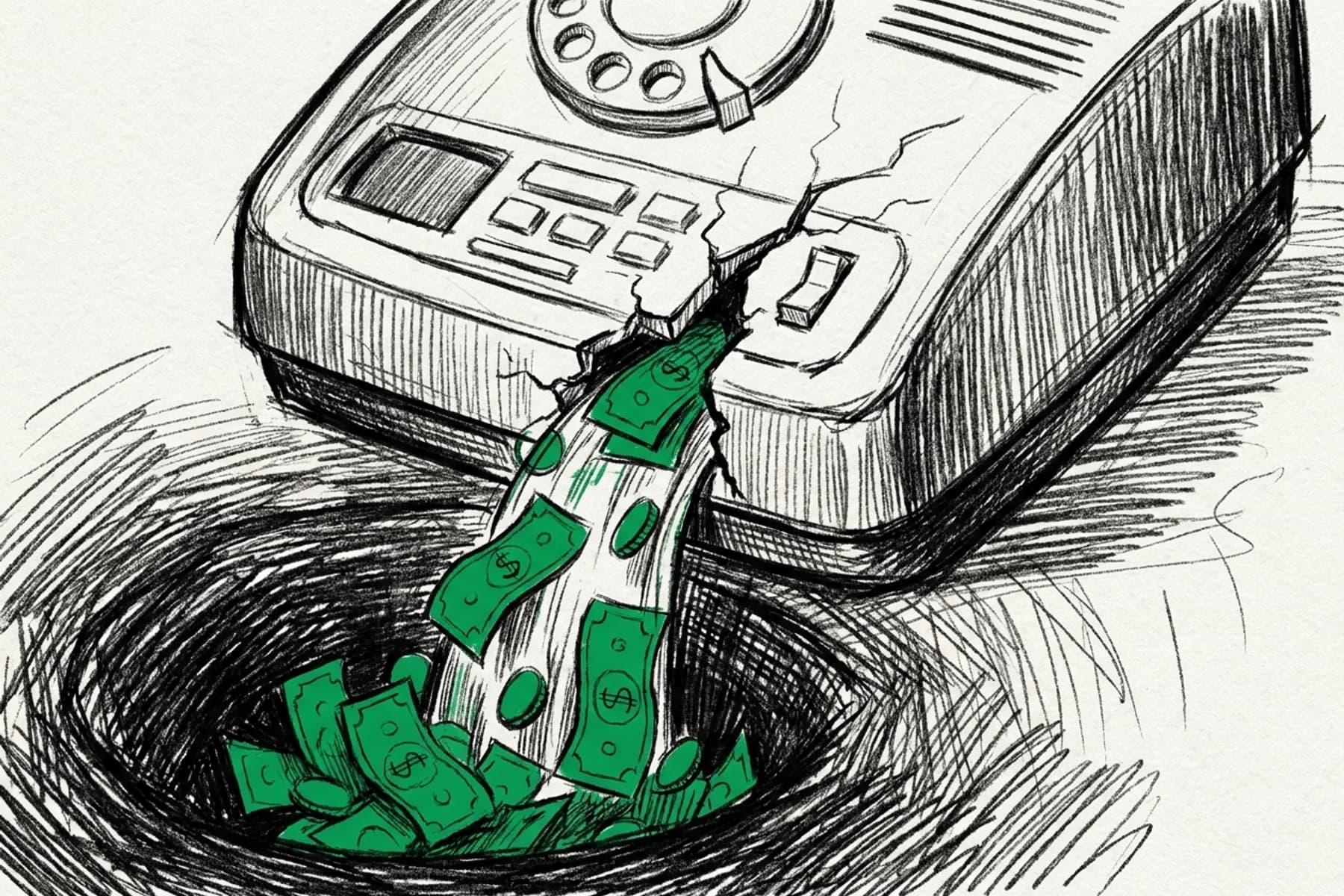
Your phone is ringing at 11 PM. It's a homeowner with a flooded basement, ready to pay emergency rates for immediate service. The call goes to voicemail. By morning, they've hired someone else.
This scenario plays out 27% of the time in home services businesses. While you're working in the field or sleeping, AI voice agents are capturing every one of these calls for your competitors. The result? You're bleeding $126K annually to the voicemail abyss.
AI Voice Agents are autonomous software systems that answer, qualify, and book service calls using conversational AI, handling routine inquiries while transferring complex situations to human staff with full context.
Stop the leak and turn missed calls into competitive advantage.
How much revenue do home service businesses lose to missed calls?
Home service businesses lose an average of $126,000 annually to missed calls. That's $10,500 walking out the door every month because your phone went unanswered.
Industry data shows the bleeding is worse than most operators realize. 27% of calls to home services businesses go unanswered. Each missed call represents $285-$1,200 in lost revenue.
The $126K annual bleed
Let's do the math. If your shop gets 50 calls per week:
- 13-14 calls go unanswered (27% miss rate)
- 11-12 of those won't call back or leave voicemail (85% non-callback rate)
- Average job value: $285-$1,200
- Monthly loss: $8,550-$36,000
- Annual loss: $102,600-$432,000
The $126K figure is conservative. Most shops miss more than they track.
Why 27% missed call rate is industry standard
You're in the field. Your dispatcher is handling three other calls. The phone rings during lunch break. The pattern repeats daily because humans can't be everywhere.
The real killer? 85% of callers won't leave voicemail or call back. They're calling the next company on Google.
The compound effect of lost lifetime value
That missed $600 HVAC repair wasn't just $600. It was the $15K system replacement next year. The maintenance contract.
The referral to their neighbor.
You're not just losing jobs. You're losing customers.
What makes after-hours calls so valuable for contractors?
After-hours calls convert at 85-92% booking rates and command 50-100% premium pricing. Emergency calls are the highest-value opportunities in home services, yet most businesses hand them over to voicemail.
73% of calls to home services businesses come outside traditional 9-5 hours. Your competitors with 24/7 AI voice agents are mining this gold while you sleep.
73% of calls happen outside business hours
Think about when homeowners call for service:
- Evening: After work, when they notice the problem
- Weekend: When they're home to deal with issues
- Emergency: When the water heater dies at midnight
If you're only answering during business hours, you're missing 7 out of 10 opportunities.
Premium pricing for emergency calls
Emergency calls aren't just volume plays. They're value plays:
- After-hours service: 50-100% premium
- Emergency dispatch: $150-$300 extra fee
- Immediate need: No price shopping
- High urgency: Fast decision-making
A $300 regular service call becomes $600-$900 after hours. These calls convert at 85-92% rates because customers need solutions, not quotes.
Weekend revenue opportunity
Weekend calls alone represent $18K monthly opportunity for a typical 5-tech shop. That's $216K annually sitting in your voicemail box.
Your competitors aren't smarter. They just answer the phone.
How do AI voice agents work for contractors?
AI voice agents answer in 30 seconds, handle unlimited concurrent calls, and warm transfer complex situations to humans with full context. They eliminate the 4-ring delay that sends callers to competitors.
The technology isn't science fiction. It's working right now. AI voice agents reduce operational costs by 65-90% while capturing 100% of calls.
24/7 availability advantage
AI voice agents never:
- Take breaks
- Call in sick
- Get overwhelmed during peak hours
- Miss calls while handling other customers
They answer every call. Every time. At 2 PM or 2 AM.
Instant response time
Speed to lead is everything in home services. AI answers in 30 seconds vs the average 4-ring human response. In emergency situations, 30 seconds is the difference between booking and losing the job.
Most callers hang up after 20-25 seconds. AI voice agents beat that threshold every time.
Warm transfer capabilities
AI voice agents separate from basic answering services because when a call requires human expertise, AI voice agent warm transfers don't just pass the call.
They brief your tech: "This is Mrs. Johnson at 123 Oak Street. Her water heater is leaking, she has hardwood floors, and she needs service tonight. She's approved for emergency rates."
Your tech starts the conversation three steps ahead. Voice agents achieve 70-80% containment rates with seamless handoffs when needed.
Most AI systems can't do warm transfers. They dump calls or fumble handoffs. That's why hybrid AI customer service beats pure automation.
Cost efficiency vs human staff
24/7 human coverage costs $15,000-$25,000 monthly for quality staff. AI voice agents cost 90% less and handle unlimited volume.
The ROI math is simple: Save $180K annually on staffing while capturing $126K in missed revenue.
How do AI voice agents compare to traditional answering services?
AI voice agents capture 100% of calls at 90% lower cost than human answering services while providing warm transfers and instant response. Traditional answering services cost $800-$2,500 monthly, miss peak volume, and transfer calls cold without context.
Traditional answering services have human limitations:
- Handle 1-2 calls simultaneously during emergencies
- Cost $15,000-$30,000 annually for 24/7 coverage
- Transfer calls without briefing your team
- Can't access your scheduling system in real-time
- Miss calls during shift changes and breaks
AI voice agents eliminate these bottlenecks with unlimited capacity, integrated scheduling, and contextual handoffs that make your team more effective.
What's the real revenue impact of AI voice agents?
Rodriguez Plumbing added $4,000 monthly just from after-hours emergencies captured by AI voice agents. Average emergency job value jumped to $450-$600 vs $275 for regular calls, with 100% call capture rate replacing their previous 30-40% miss rate.
Real operators are seeing real results. These aren't marketing projections. They're P&L impacts.
HVAC company case study
A 3-tech HVAC shop in Phoenix tracked these results after implementing AI voice agents:
- Before: 35% missed call rate, $180K annual revenue
- After: 3% missed call rate, $260K annual revenue
- Difference: $80K additional revenue, $45K net profit
The AI paid for itself in 6 weeks. The missed revenue never came back.
Plumbing business transformation
Rodriguez Plumbing's owner put it simply: "We went from losing emergency calls to competitors to owning Friday nights and weekends. The AI books jobs while I'm sleeping."
Emergency calls now represent 40% of their monthly revenue. Before AI voice agents, they captured maybe 10% of after-hours opportunities.
Emergency service capture
Emergency calls convert differently:
- Regular calls: 30-40% booking rate, price shopping
- Emergency calls: 85-92% booking rate, immediate need
- Average job value: Emergency calls worth 60-120% more
Every captured emergency call is worth 2-3 regular service calls.
How to calculate your missed call revenue and get started
Formula: Monthly missed calls × $285 average × 85% non-callback rate = annual loss. AI voice agents can be live within 48 to 72 hours, starting with after-hours only to prove ROI before expanding coverage.
Revenue exposure calculator
Track these numbers for one week:
- Total incoming calls
- Missed calls (voicemail, no answer)
- Callbacks from missed calls
- Average job value
Your annual loss formula:
(Weekly missed calls × 52) × (Average job value × 85% non-callback rate) = Annual revenue loss
Most shops discover they're losing 2-3x more than they estimated.
Implementation timeline
AI voice agents aren't 6-month software implementations:
- Day 1-2: Configure scripts and integrations
- Day 3: Test calls and refinements
- Day 4-5: Go live with after-hours coverage
- Week 2: Expand to peak hours if results prove ROI
Start small. Prove the concept. Scale fast.
Getting started steps
Your next move is simple:
- Calculate your missed call revenue exposure using the formula above
- Decide if $126K annual loss justifies action
- See how AI voice agents work in real home service scenarios
Stop guessing about your revenue leaks. Get the demo and see exactly how AI voice agents capture the calls you're losing to voicemail.
Your competitors already know this secret. The question is whether you'll act before they build an unbeatable lead.
Keep reading
 AI Receptionist & Answering
Why AI Receptionists Lose Your $15K HVAC Calls
7 min read AI Receptionist & Answering
The Best HVAC Answering Service: 4 Tiers That Impact ROI
8 min read AI Receptionist & Answering
The Break-Even Point for an AI Receptionist: When Does Automation Pay for Itself in a Home Service Business?
7 min read