

Beyond the Voicemail: How 24/7 AI Voice Agents Capture $260K in Lost Revenue
Home service businesses miss 27% of calls. Learn how 24/7 AI voice agents answer in <5 seconds, book jobs automatically, and recover $260K annually. ROI breakdown included.

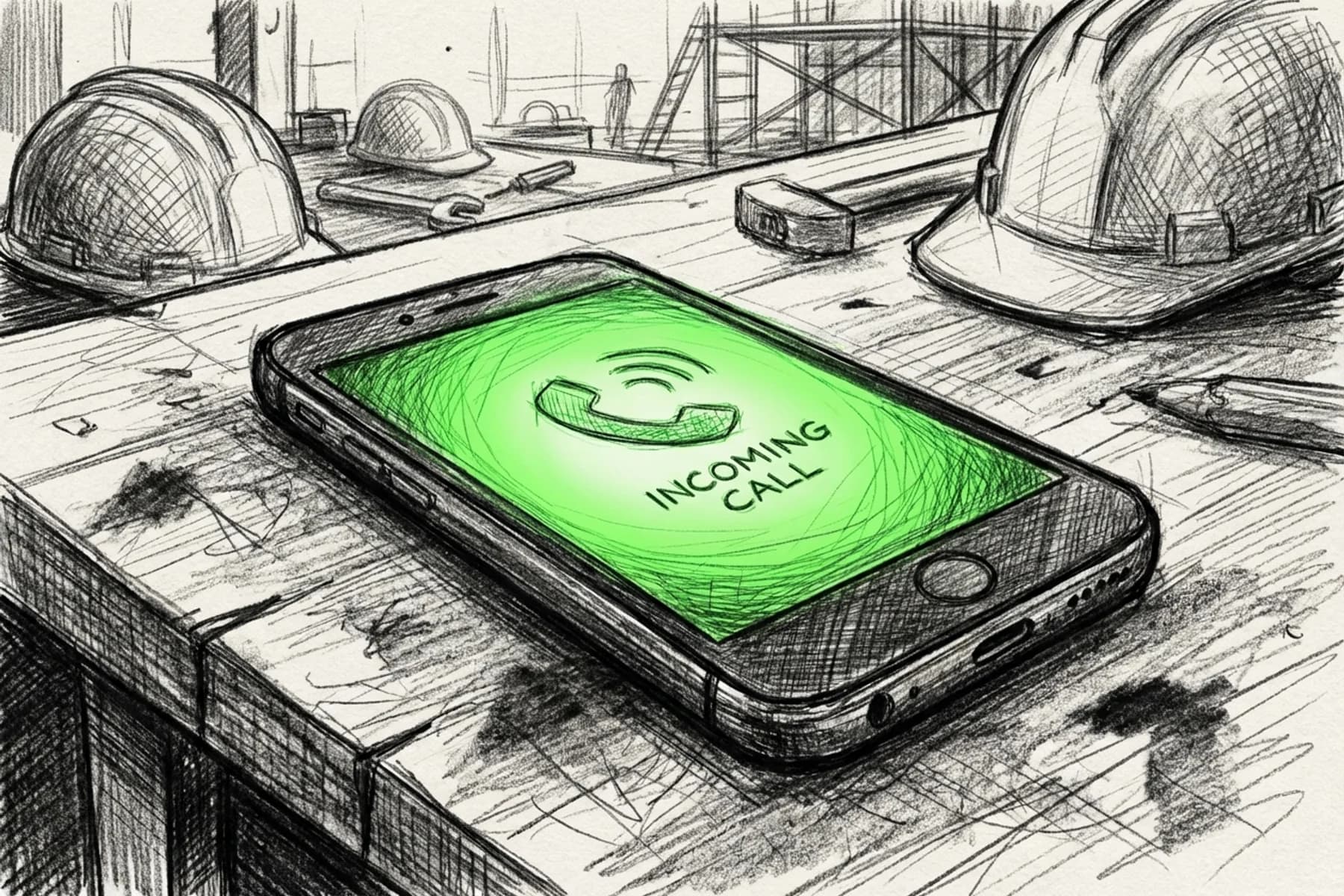
Your phone rang 42 times last week while you were on job sites. Twelve of those calls went to voicemail. Only one person left a message.
That's not just poor customer service. That's $14,400 walking out your door every single month.
Home services businesses miss around 27% of their inbound calls, and each missed opportunity costs an average of $1,200 in immediate revenue. For a typical contractor generating 115 leads monthly, that miss rate creates a $260,000 annual revenue leak.
The fix isn't hiring more dispatchers or carrying a second phone. It's deploying 24/7 AI voice agents home services that answer in under 5 seconds and book jobs while you sleep.
How much revenue do home service businesses lose from missed calls?
Home services contractors lose $260,000 annually from missed calls. With a 27% miss rate on 115 monthly leads and $1,200 average job value, you're bleeding 31 opportunities every month that never get callbacks.
Let's break down where this money disappears:
The brutal math of missed opportunities
Take a typical HVAC shop getting 115 leads monthly. Miss 27% of those calls and you're looking at 31 lost opportunities. Multiply by the average job value of $1,200, and you're hemorrhaging $37,200 monthly.
But emergency calls hit different. After-hours furnace failures and burst pipes average $4,200 per job versus $275 for routine maintenance. Miss one emergency call and you just handed your competitor a week's worth of revenue.
Why voicemail is a revenue killer
Here's the reality about voicemails: only about 3% of callers actually leave a voicemail. The other 97% hang up and call your competitor.
Even if they do leave a message, you're already behind. That homeowner with a flooded basement isn't waiting 4 hours for you to call back. They're booking with whoever answers first.
Revenue Leakage is the measurable loss of potential income from operational gaps like missed calls, delayed responses, or poor lead qualification that allow opportunities to flow to competitors.
The emergency call premium
Emergency calls represent the highest-value opportunities in your pipeline. A Saturday night furnace failure in January? That's premium pricing territory.
But emergency calls also have the shortest patience window. A burst pipe at 11 PM won't wait for your Monday morning callback. Every missed emergency call is $4,200 in guaranteed revenue that walks to the competitor who answers.
The math is simple but painful: miss 3 emergency calls monthly, and you've lost $151,200 annually to competitors who just pick up their phones.
What are 24/7 AI voice agents and how do they work for contractors?
24/7 AI voice agents are autonomous phone systems that answer every call in under 5 seconds, qualify leads, book appointments, and handle routine questions without human intervention. For complex situations, they gather context and warm-transfer to your human team.
The average B2B lead response time is a staggering 42 hours. Meanwhile, 78% of customers choose the first company that responds to them.
That's the gap killing your revenue.
Your potential customers aren't sitting around waiting for callbacks. When their water heater fails, they're calling every plumber until someone picks up.
The 5-second vs 42-hour gap
Responding within the first minute can boost lead conversions by a staggering 391%. Miss that window, and your expensive Google Ads and LSA leads are booking with faster competitors.
This speed to lead home services advantage separates winners from losers in today's market.
Why customers won't wait
Home service emergencies create urgency that marketing funnels can't match. A flooded basement or broken AC in July doesn't have time for your "we'll get back to you within 24 hours" promise.
Customers call multiple contractors simultaneously. The first one to answer gets the job. Period.
The first-responder advantage
Speed beats price in emergency situations. A homeowner with no heat in January isn't shopping around for the cheapest quote. They want their problem fixed now.
This is where how AI dispatcher transforms lead generation becomes critical. AI voice agents don't sleep, don't take breaks, and never miss a call.
How do AI voice agents compare to traditional answering services for HVAC companies?
AI voice agents answer instantly 24/7 and cost $199-400 monthly versus $3,500+ for human answering services. Unlike traditional services that take messages, AI agents book appointments directly into your calendar and handle routine questions autonomously.
Traditional answering services are just expensive voicemail systems with humans. They take messages and promise callbacks. AI voice agents actually solve problems.
What AI voice agents actually do
AI voice agents aren't chatbots reading scripts. They're conversational AI systems trained on your specific business:
- Answer immediately: Every call gets picked up in under 5 seconds
- Qualify leads: Ask the right questions to understand urgency and budget
- Book appointments: Check your calendar and schedule service calls on the spot
- Handle routine calls: Answer pricing, hours, and service area questions
- Escalate smartly: Transfer complex situations to humans with full context
Learn more about what is an AI CSR and how they differ from basic phone automation.
The 5-second response advantage
AI answering service answers calls instantly, day or night. No hold music. No "please wait for the next available representative." Just immediate, professional response.
That 5-second answer time is your competitive moat. While competitors' phones ring endlessly, your AI agent is already qualifying the lead and booking the appointment.
How they handle complex situations
AI voice agents know their limits. For routine calls—pricing questions, scheduling maintenance, checking availability—they handle everything autonomously.
But when a homeowner describes unusual symptoms or needs technical diagnosis, the AI agent gathers context and warm-transfers to your human team. The customer never feels like they're talking to a robot that can't help.
See how Tradesly AI dispatcher actually closes deals 24/7 with this hybrid approach.
Hybrid AI Customer Service is a model where AI handles initial call response, qualification, and booking while human agents take over for complex diagnosis and high-ticket sales conversations.
What is the ROI of implementing AI voice agents for plumbing businesses?
AI voice agents deliver 3,900% ROI by recovering $129,600 in annual missed revenue at a cost of $3,588 yearly. For plumbing businesses specifically, an AI CSR for plumbing operations captures emergency calls worth $4,200 each while reducing operational costs by 89%.
Here's the step-by-step playbook to stop hemorrhaging revenue:
Step 1: Audit your current call performance
Track every call for one week. Log missed calls, voicemails, and response times. Most contractors are shocked to discover they're missing 30+ opportunities monthly.
Use your phone system's call logs or install call tracking to get accurate data. Don't guess—measure.
Step 2: Set up call routing rules
Define which calls need humans versus AI handling:
- AI handles: Pricing questions, appointment scheduling, service area inquiries, hours of operation
- Human takes: Complex diagnostics, warranty claims, customer complaints, high-value installations
- AI escalates: Emergency situations, technical problems beyond scope, upset customers
Step 3: Train your AI on your business
Upload your service menu, pricing structure, service areas, and common scripts. The AI learns your business language and policies.
Include seasonal information (emergency rates, holiday hours) and specific qualifications for different service types. The more context you provide, the better it performs.
Check out how to choose the right AI tools for your trades business for implementation best practices.
Step 4: Test and optimize
Start with a 30-day pilot. Monitor call recordings and booking rates. Adjust scripts and routing rules based on real performance data.
Use call center monitoring review 10-minute calls in 10 seconds to quickly identify improvement opportunities.
How can home service companies capture after-hours emergency calls?
After-hours emergency calls generate $4,200 average revenue versus $275 for routine calls, but 89% go to voicemail without AI coverage. 24/7 AI voice agents capture 100% of these high-value opportunities while competitors sleep.
The revenue recovery formula
For a typical contractor with 115 monthly leads:
- Current state: Miss 31 calls monthly (27% miss rate) = $37,200 monthly loss
- With AI: Capture 29 of those 31 missed calls = $34,800 recovered monthly
- Annual recovery: $417,600 in captured revenue
- Net gain after AI costs: $414,012 annually
The math works because Voice AI costs roughly $0.40 per call, compared to $7 to $12 per call for human agents.
Cost comparison breakdown
Voice AI costs $199-400 per month depending on features, while 24/7 human coverage runs $3,500+ monthly.
That's a savings of $3,100-3,300 per month, or $37,200-39,600 annually in operational costs alone—before counting recovered revenue.
Payback timeline
Month 1: AI agent captures 3 previously missed jobs = $3,600 recovered revenue vs $300 monthly AI cost = 1,200% ROI
Month 12: $417,600 total recovered revenue vs $3,600 annual AI cost = 11,500% ROI
See 5 revenue metrics that actually matter for trades to track your progress.
Your next move: Stop the revenue leak today
Every day you wait costs $712 in lost revenue from missed calls. Choose a hybrid AI system that escalates complex situations to humans while capturing 100% of routine opportunities.
The revenue leak is real. The solution exists. The only question is how much money you'll lose while deciding.
Why waiting costs you daily
That $260K annual loss breaks down to $712 daily. Every day without 24/7 coverage is another $712 walking to competitors who answer their phones.
Peak seasons multiply this damage. Miss calls during January heating emergencies or July AC breakdowns, and you're losing premium-priced revenue that won't come back.
What to look for in AI voice agents
Not all AI voice systems are equal. Look for:
- Hybrid capability: AI handles routine, humans handle complex
- Calendar integration: Books appointments directly, not just messages
- Industry training: Understands home services terminology and urgency
- Local awareness: Knows your service areas and seasonal patterns
- Escalation intelligence: Recognizes when human expertise is needed
Read our answering service vs AI voice vs AI dispatch guide for detailed comparisons.
Getting started checklist
Ready to stop the revenue bleed? Here's your action plan:
- Calculate your loss: Track missed calls for one week
- Map your requirements: Define AI vs human routing rules
- Choose hybrid AI: Avoid full-replacement systems that frustrate customers
- Start small: 30-day pilot to prove ROI
- Scale up: Expand coverage as performance validates investment
Learn the difference between AI vs automation vs chatbots key differences to make the right choice.
The revenue leak stops today. Stop guessing. Get the demo.
Keep reading
 AI Receptionist & Answering
Why AI Receptionists Lose Your $15K HVAC Calls
7 min read AI Receptionist & Answering
The Best HVAC Answering Service: 4 Tiers That Impact ROI
8 min read AI Receptionist & Answering
The Break-Even Point for an AI Receptionist: When Does Automation Pay for Itself in a Home Service Business?
7 min read