


The Ultimate 2026 HVAC Technician Salary Guide (State-by-State Data)
Complete 2026 HVAC technician salary guide by state. Alaska leads at $80,940. Learn how geographic moves and certifications boost pay 30-50%.

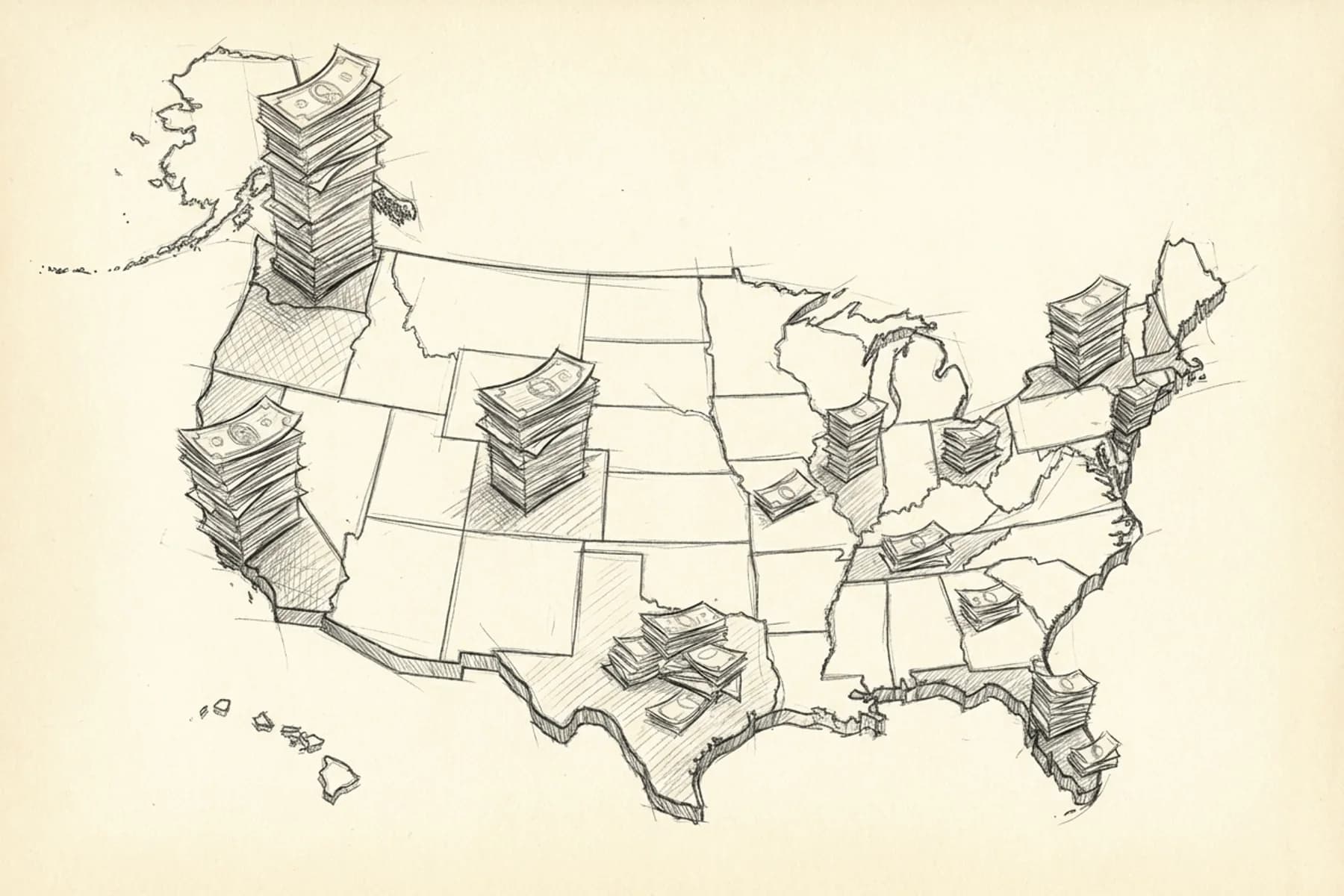
State-by-State Salary Breakdown: Where HVAC Techs Actually Make the Most in 2026
The national median HVAC technician salary hit $59,810 in 2026, but that number tells you nothing about where the real money is. With a 110,000-technician shortage nationwide and five techs retiring for every two entering the field, geographic arbitrage and strategic certification can boost your earnings by 50%+ if you know where to look.
The HVAC salary landscape shifted hard in 2026. Data center demand exploded. Heat pump mandates created premium installation work. The skilled labor gap is projected to reach 225,000 by 2027. This shortage isn't just pushing wages up—it's creating leverage you haven't had in decades.
Here's the state-by-state breakdown that matters, plus the strategic moves that actually move your income.
The 2026 HVAC Salary Landscape: What Changed
The national median HVAC technician salary reached $59,810 in 2026, up 8% from last year. But the real story is supply and demand. We're facing the worst technician shortage in industry history—110,000 open positions with no relief in sight.
HVAC Technician Shortage is the gap between available technician positions (currently 110,000+ nationwide) and qualified workers to fill them, driven by an aging workforce where five techs retire for every two new ones entering the field.
The HVAC industry is growing at 8% annually through 2034—nearly double the national average for all occupations. Three forces are driving this:
- Data center boom: AI infrastructure requires specialized cooling. BlackRock launched a $100M skilled trades initiative to address the shortage
- Heat pump mandates: State-level electrification policies create premium installation opportunities
- Workforce aging: The average HVAC tech is 40+ years old with retirement acceleration
This isn't temporary market tightness. It's structural change that puts skilled technicians in the driver's seat.
Smart operators are already adjusting. They're investing in better CSR training challenges to convert more leads because finding good techs is harder than finding good customers.
Which states pay HVAC technicians the most?
Alaska leads at $80,940 annually, followed by Washington, New Hampshire, and Massachusetts. But raw salary numbers lie—purchasing power tells the real story.
Here are the top 10 states by HVAC technician salary in 2026:
- Alaska: $80,940 (extreme weather premium, pipeline work)
- Washington: $78,200 (tech sector demand, no state income tax)
- New Hampshire: $75,830 (Boston spillover, tax benefits)
- Massachusetts: $74,650 (dense commercial market)
- Hawaii: $73,480 (island premium, limited competition)
- New Jersey: $72,910 (NYC proximity, strong union presence)
- Connecticut: $71,560 (wealthy residential market)
- California: $70,200 (regulation-driven demand)
- Nevada: $67,850 (casino/hospitality sector)
- Oregon: $66,940 (green building mandates)
But here's what the numbers don't show: Texas and Florida offer middle-tier wages ($55,000-$58,000) with zero state income tax. That's an immediate 5-10% effective raise compared to high-tax states.
I've watched techs make strategic moves from California to Texas and pocket an extra $8,000/year after taxes, even with slightly lower gross pay. The math matters more than the headline number.
Want to benchmark your local market? Compare your area against dispatcher salary benchmarks—they often track closely with tech wages in the same region.
The Real Story: Salary vs. Purchasing Power
Hawaii's $73,480 HVAC salary sounds impressive until you factor in housing costs that run 88% above the national average. Your real purchasing power drops below what you'd have earning $55,000 in Texas with zero state income tax.
Cost-of-living adjustments reveal the hidden gems:
- Texas: $55,200 gross = $63,800 purchasing power equivalent
- Florida: $54,900 gross = $61,200 purchasing power equivalent
- Tennessee: $52,100 gross = $59,400 purchasing power equivalent
- North Carolina: $51,800 gross = $58,200 purchasing power equivalent
Zero state income tax states deliver an immediate 5-10% effective pay increase. No skill upgrade required. Just geography.
Union membership creates another layer of complexity. Union HVAC technicians earn a 23% premium over non-union in states with strong labor organizations. But union density varies wildly—88% in New York construction trades vs. 3% in South Carolina.
Seasonal overtime opportunities can add $15,000-$25,000 annually in extreme climate zones. Alaska techs work 60-hour weeks during winter months. Phoenix techs crush it during 115-degree summers. Plan your calendar around weather patterns and bank the difference.
What is the average HVAC technician salary by experience level?
Entry-level HVAC technicians earn $44,000-$54,100 nationally in 2026, with new techs averaging $54,100 after completing basic training. Progression follows predictable patterns if you hit the right milestones.
Here's the experience-based salary breakdown:
- Entry-level (0-2 years): $44,000-$54,100
- Intermediate (2-4 years): $65,700 average
- Senior (4-7 years): $77,200 median
- Master/Supervisor (7+ years): $90,800+ with advanced certifications
The jump from intermediate to senior level represents the biggest percentage increase—17.5% average bump. This is where most techs plateau if they don't pursue specialized certifications or commercial work.
Master-level technicians with supervisory responsibilities cross the $90,000 threshold consistently. But this requires more than time served. You need the right certifications, leadership capability, and often some business development skills.
Smart companies are investing in AI CSR training frameworks to support their senior techs better. When your CSR team can handle complex scheduling and customer objections, your master techs spend more time on high-value work instead of fixing dispatch mistakes.
Entry-Level Expectations
New techs start around $44,000 in lower-cost markets, $54,100 in competitive areas. EPA 608 certification is mandatory—no negotiation. Most companies provide on-the-job training for 6-12 months before expecting full productivity.
Journeyman Benchmarks
The 2-4 year range is where earnings acceleration happens. Intermediate techs average $65,700 because they can work independently on most residential calls. This is also where certification investments start paying off.
Master Technician Earnings
Master techs earning $90,800+ typically handle commercial work, supervise junior staff, or specialize in controls/automation. The pay reflects both technical expertise and business responsibility.
How much does NATE certification increase HVAC salary?
NATE certification delivers a 15-20% immediate salary bump, with certified technicians earning up to 20% more than non-certified peers in the same markets. EPA 608 is just the entry ticket—NATE is where the money starts.
Here's what different certifications actually pay:
- EPA 608: Mandatory baseline—no premium, just employability
- NATE certification: 15-20% salary increase immediately
- Commercial/controls specializations: 30-40% premium over residential
- Master electrician crossover: 40-60% premium in industrial settings
The certification ROI math is straightforward. NATE costs $185 per test, takes 2-3 months of study. On a $55,000 base salary, 15% increase = $8,250 annually. That's a 44x return on investment in year one.
But timing matters. Get NATE certified before you have 2-3 years experience and leverage it during your next job negotiation. Companies pay premiums for certified techs who can work independently.
EPA 608 Baseline
Environmental Protection Agency Section 608 certification is legally required to handle refrigerants. It's not a salary booster—it's the minimum to get hired. Focus on Universal EPA 608 to handle all refrigerant types.
NATE Certification Premium
North American Technician Excellence certification proves competency in specific HVAC areas. Installation, service, gas heating, heat pumps—each specialty adds credibility and pay potential. Stack multiple NATE certifications for compounding returns.
Specialty Credentials
Commercial refrigeration, building automation, industrial controls—these niches command premium rates because fewer techs pursue them. The work is more complex but the pay differential justifies the learning curve.
How does the HVAC technician shortage affect wages?
The shortage gives skilled technicians unprecedented leverage. With 110,000 open positions and an industry projected to face 225,000 technician gaps by 2027, supply-demand dynamics are pushing wages up 8% annually—far above general wage inflation.
Three shortage drivers are accelerating wage growth:
Workforce aging crisis: The average HVAC tech is over 40 with five techs retiring for every two entering the field. Baby boomer retirements aren't slowing down.
Data center demand: AI infrastructure requires specialized cooling expertise. Hyperscale data centers pay premium rates for techs who understand precision cooling, redundancy, and 24/7 uptime requirements.
Heat pump transition: State electrification mandates create premium installation work. Heat pumps require different expertise than traditional HVAC—techs with both skills command higher rates.
Smart business owners are adapting. They're investing in AI automation in customer service to maximize technician productivity. When AI handles routine calls and scheduling, your skilled techs focus on revenue-generating work instead of administrative tasks.
The shortage also creates negotiation leverage. Skilled techs can demand better benefits, flexible scheduling, and professional development opportunities. Companies that ignore this dynamic lose their best people to competitors who get it.
Strategic Moves: Maximizing Your 2026 Earning Potential
Commercial work consistently pays 30-50% more than residential with less customer drama and more predictable schedules. Strategic relocation can boost real income without skill changes. The right certification sequence creates compounding returns.
Here's how to maximize your 2026 earning potential:
Geographic Arbitrage Opportunities
Move from high-tax to no-tax states for an immediate 5-10% effective raise. California to Texas, New York to Florida, Massachusetts to New Hampshire. Same skills, better take-home pay.
Target secondary markets near major metros. Austin suburbs, Tampa Bay, Charlotte metro. You get big-city demand with lower cost of living. The math works in your favor.
Certification Timing
Get NATE certified before year 3 in the field. Use it as leverage for your next role. Stack multiple NATE specializations for compounding premiums. Commercial refrigeration, gas heating, heat pumps—each adds value.
Pursue commercial/industrial certifications if you can handle the complexity. The pay differential justifies the learning curve.
Industry Segment Selection
Commercial work pays more with less drama. Data centers pay premium rates for specialized cooling knowledge. Industrial work requires more skills but delivers higher compensation.
Avoid residential service calls if possible. The money is in new construction, commercial maintenance contracts, and industrial troubleshooting.
Companies with strong operational processes make your job easier and more profitable. Look for shops that invest in revenue optimization strategies instead of just chasing volume.
The 2026 HVAC salary landscape rewards strategic thinking. Know the numbers. Make the right moves. Bank the difference.
Ready to leverage these insights for your business? Get the demo and see how AI-powered customer service helps you maximize every technician's productivity.
Keep reading
 Salary & Workforce
Revenue Per Technician: The Ultimate Guide to Benchmarking and Increasing Your Team's Output
7 min read Salary & Workforce
Your Best Techs Are Quitting Because Your CSRs Are Booking Bad Jobs
7 min read Salary & Workforce
What to Pay Your Powerhouse Dispatcher: 2026 Salary Benchmarks & How AI Boosts Their Value
7 min read