The Revenue Fumble Index: How 8-Second Call Defects Kill $150K+ Annually
Your CSRs sound professional but fumble in 8-15 second windows that kill bookings. Discover the 5 revenue-killing moments AI detects—and how to stop losing $150K+ annually.

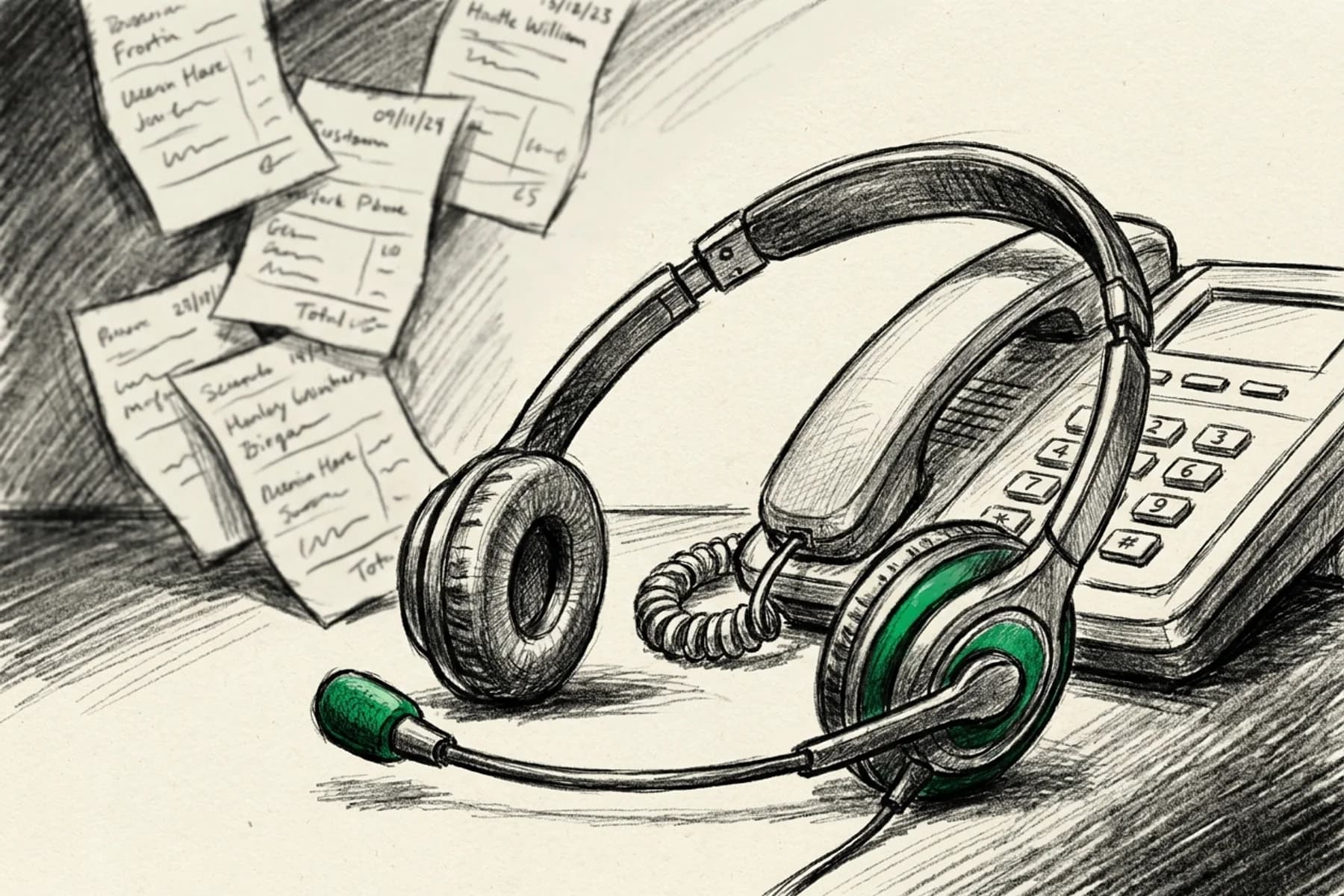
Your CSRs sound professional. They follow the script. They score 85% on QA reviews. And they're costing you $150K+ annually in fumbled bookings. The brutal reality? Revenue isn't lost over entire calls—it's lost in predictable 8-15 second "fumble windows" where CSRs mishandle objections, miss urgency cues, or botch booking confirmation.
Here's what kills me about traditional call quality: we measure politeness when we should measure profit. We celebrate script compliance while bookings slip away in micro-moments that human QA never catches. Revenue leakage detection calls require AI-powered precision, not clipboard checklists.
The hidden revenue killer: Your 'professional' CSRs are costing you $150K+
Home services businesses lose 27% of calls to no-answer, but here's the kicker: they lose another 30-40% of answered calls to conversational fumbles that sound "fine" to human ears. The average fumbled call costs $350-$1,200 in lost revenue, and it happens in windows so brief that traditional QA misses them entirely.
Revenue Fumble Windows are predictable 8-15 second conversational moments where CSR responses directly cause booking failures, typically occurring during price quotes, objection handling, and booking confirmations.
The 27% missed call myth vs. the answered call fumble reality gets all the attention. We obsess over answering more calls while ignoring the revenue bleeding out of the calls we do answer. Research shows 27% of calls to home services businesses go unanswered, but the bigger problem hides in plain sight: the "professional" conversation that sounds good but books nothing.
Why traditional QA scores hide revenue disasters comes down to measurement bias. QA forms rate politeness, script adherence, and call resolution. They don't measure the 3-second pause after a price quote that signals uncertainty. They don't catch the defensive tone that turns objections into arguments. They miss the weak booking confirmation that leads to no-shows.
The true cost per fumbled call in home services ranges from $350 for basic service calls to $1,200+ for emergency repairs. Studies confirm 85% of callers who can't get through on their first try won't call back, but what about the 85% who get through and talk to a CSR who fumbles the booking? That's where the real money disappears.
The 5 revenue-killing 'fumble windows' AI detects (that human QA misses)
AI call scoring defects happen in five predictable windows where human QA consistently fails to identify revenue-critical moments. Each window lasts 8-15 seconds and costs an average of $400-$800 per fumbled call.
Window #1: The 3-second price quote pause
Price hesitation creates customer doubt and competitor shopping. When a CSR pauses longer than 3 seconds after stating a price, it signals uncertainty. Customers hear that uncertainty and start shopping around. AI detects the pause duration and prompts confidence-building language in real-time.
Window #2: Defensive objection handling
Defensive responses to objections signal lack of confidence to customers. Instead of addressing the concern, CSR fumbles occur when agents defend the company or get argumentative. Price objection handling scripts work only when delivered with conviction, not defensiveness.
Window #3: Missed emergency urgency signals
Missing emergency cues loses premium pricing opportunities. When customers use words like "flooding," "no heat," or "dangerous," CSRs often miss the urgency and quote standard pricing instead of emergency rates. That's a $200-$500 fumble per call.
Window #4: Weak booking confirmation
Soft booking confirmations lead to no-shows and cancellations. "Someone will be there Tuesday" sounds different than "Mike will arrive Tuesday at 2 PM with all the parts needed to fix your system." Specific confirmation language reduces no-shows by 40%.
Window #5: Failed upsell recognition
Upsell opportunities slip by in predictable conversation moments. Customers who mention "old system," "frequent problems," or "thinking about replacing" are signaling readiness for larger solutions. CSRs trained only on the immediate problem miss these revenue multipliers.
QA scores average 85% for trained agents vs 72% for new hires, but neither group consistently catches these revenue-critical windows. AI real-time call scripting identifies and prevents these fumbles as they happen.
What's the true cost of daily call fumbles?
Five fumbled calls per day costs home services businesses $45,000-$120,000 annually. Emergency calls carry 2-3x revenue premium when handled correctly. Peak season fumbles cost 40% more due to demand surge.
Daily fumble rate calculation:
- 5 fumbled bookings × $350 average ticket = $1,750 daily loss
- $1,750 × 250 business days = $437,500 potential annual loss
- CSR fumbles typically account for 25-35% of this loss = $109,375-$153,125
Average ticket impact analysis shows fumbles hit hardest on higher-value calls. The $99 maintenance call that gets fumbled costs $99. The $1,200 emergency repair that gets fumbled costs $1,200 plus the customer lifetime value of $2,500-$8,000.
CSRs fumble high-value calls at the same rate as low-value calls. The financial impact multiplies dramatically on premium services.
Seasonal variation in fumble costs peaks during high-demand periods. Summer HVAC emergencies and winter heating failures carry premium pricing, but only if CSRs recognize and capture the urgency.
Revenue loss from missed calls in home services can reach $150,000 to $400,000 annually. Add answered-but-fumbled calls and you're looking at $300K+ in total revenue leakage.
Lifetime customer value multiplier effect compounds fumble costs beyond the immediate booking loss. Small businesses lose an average of $126,000 annually to calls that simply went unanswered. Fumbled calls that were answered but poorly handled represent an equal or greater loss because the customer had engagement intent but received poor execution.
Why do traditional QA systems miss revenue-critical moments?
Traditional QA reviews 1-3% of calls while missing 97% of revenue leaks. Human reviewers focus on compliance and politeness, not revenue moments. Discovering fumbles after calls end can't recover lost bookings.
The sampling problem shows traditional QA's fatal flaw: 1-3% coverage vs. 100% reality. AI automatically analyzes 100% of your team's conversations, catching fumbles in real-time rather than hoping the 2% sample includes the revenue-critical calls.
Human bias in revenue-critical moment identification stems from QA reviewers trained in customer service excellence, not sales psychology. They hear a polite, professional CSR following the script and score it high. They miss the subtle hesitation that killed the booking. Traditional QA is manual and based on a tiny, often unrepresentative sample of calls.
Retrospective analysis vs. real-time intervention highlights QA's fundamental limitation. Finding fumbles three days after the call helps with training but can't save the lost booking. Revenue recovery requires intervention during the fumble window, not documentation after the damage is done.
I've watched shops celebrate 90% QA scores while bleeding $10K monthly to fumbled bookings. The disconnect between QA metrics and revenue results isn't a measurement problem. It's a timing problem. 100% call monitoring with AI catches what human sampling misses.
How does AI detect revenue leaks in customer service calls?
AI detects revenue leaks by analyzing conversation patterns, vocal hesitation, response timing, and keyword triggers in real-time. Home services conversational analytics identify fumble moments as they happen, providing on-screen prompts to prevent booking losses and generating detailed forensics for systematic team improvement.
Live conversation analysis and coaching prompts work by listening for revenue-critical triggers: price discussions, objection language, emergency keywords, and booking confirmation patterns. When AI detects a fumble-prone moment, it displays specific response guidance on the CSR's screen. Semantic accuracy in the 80–85% range for initial enterprise deployments means AI catches most fumbles that humans miss entirely.
Predictive fumble detection before they happen analyzes conversation flow and customer language patterns to anticipate revenue-critical moments. If a customer mentions cost concerns early in the call, AI prepares value-focused prompts before the price discussion. If emergency keywords appear, premium pricing language gets queued automatically.
Post-call revenue forensics and team training identify systematic fumble patterns across the entire team. While real-time coaching prevents individual fumbles, forensics reveal training gaps that need addressing. AI delivers expert-level accuracy in call evaluations focused on revenue outcomes rather than politeness metrics.
The difference between traditional call monitoring and revenue-focused AI is simple: traditional systems ask "Was the CSR polite?" while AI asks "Did the CSR book the job?" AI vs automation differences matter because rule-based automation can't adapt to conversational nuance like AI can.
The revenue recovery action plan: Stop the bleeding in 30 days
Call revenue optimization requires systematic implementation over four weeks to establish baseline fumble patterns, deploy AI analytics, activate real-time coaching, and ensure continuous monitoring prevents fumble recurrence. This approach helps you plug revenue leaks call center operations create.
Week 1: Baseline fumble audit
Start with 100% call recording to establish fumble baseline across your entire team. Record everything for one week. No sampling, no cherry-picking. The goal is fumble pattern identification, not individual blame. Calculate your exact revenue leak using actual call data, not industry averages.
Week 2-3: AI system implementation
Deploy AI analytics to identify team-wide fumble patterns and revenue-critical moments your human QA missed. This phase focuses on pattern recognition and coaching script development. AI call quality monitoring starts with data gathering before intervention.
Week 4: Real-time coaching activation
Activate real-time coaching for revenue-critical moments identified in weeks 2-3. CSRs see specific prompts during price discussions, objection handling, and booking confirmations. AI coaching transformation case study shows 40% improvement in booking rates within the first month.
Ongoing: Systematic fumble elimination
Continuous monitoring ensures fumbles don't return and identifies new patterns as they emerge. Hybrid AI customer service approach combines AI precision with human judgment for maximum revenue recovery.
Key takeaway: Revenue fumbles happen in predictable windows that AI can detect and prevent. Traditional QA measures the wrong things at the wrong time. Fix the fumbles, fix the revenue.
Your CSRs aren't failing because they're bad people. They're failing because they lack real-time support during revenue-critical moments. Stop measuring politeness and start measuring profit. Get the demo and see your fumble patterns in action.
Keep reading
 CSR Coaching & Call Handling
Plumbing Call Center Scripts That Actually Book Jobs
8 min read CSR Coaching & Call Handling
The 'Diagnostic Fee' Friction: How to Coach CSRs to Address Trip Charges Without Killing the Booking Rate
7 min read CSR Coaching & Call Handling
The Summer Heatwave Blueprint: Handling a 300% Call Spike Without Seasonal Temps
8 min read