

California AB 2905: Why AI Disclosure Is Killing Your Bookings
California AB 2905 forces full-bot AI receptionists to disclose upfront — or face criminal liability. See how home services operators are structured to avoid both risks.

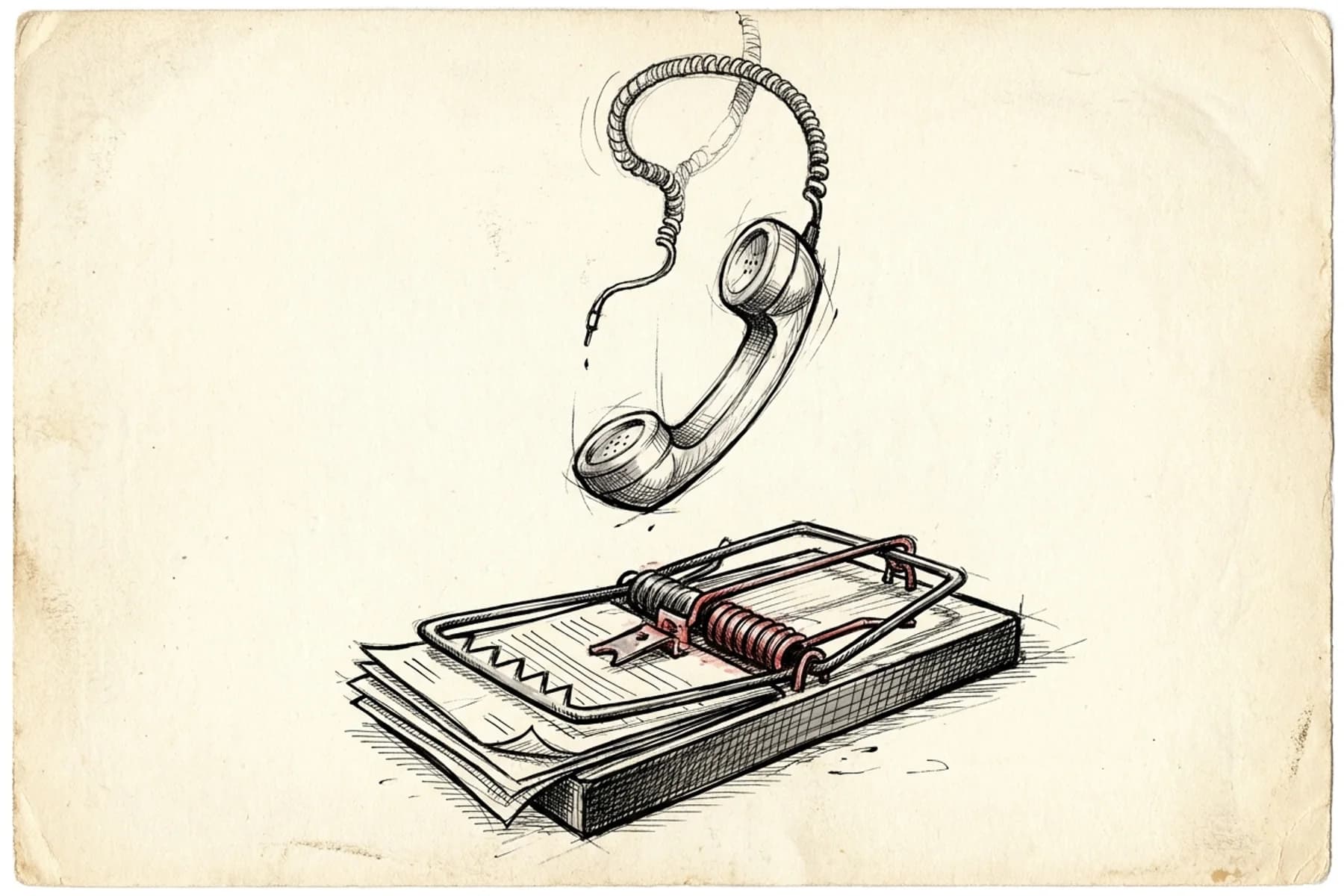
California AB 2905 Forces a Choice: Lose the Lead or Break the Law
A homeowner calls about a $6,000 HVAC system replacement. The first thing they hear: "This call is handled by an artificial intelligence system." They hang up. That is not a UX problem you can A/B test your way out of. Under California AB 2905, that disclaimer is a legal requirement — and it fires in the first three seconds of every covered call. AI voice agent compliance is no longer optional. For operators running full-bot inbound stacks in California, the law has already created a binary trap: comply and absorb the booking-rate damage, or skip the disclosure and face criminal liability.
Neither option is acceptable. Here is what the law actually says, what the research confirms about caller behavior, and how smart operators are restructuring their inbound stack to sidestep the problem entirely.
AI voice agent compliance refers to the legal and operational requirements governing when, how, and to whom businesses must disclose that a caller is interacting with an artificial intelligence system rather than a human agent — including timing mandates, penalty structures, and the specific call types covered under each statute.
The disclaimer that costs you the job
An industry survey by Answering Service Care ("Robots Reveal Yourself: The AI Call Report") found that more than half of consumers — 55% — react negatively when AI identifies itself on a call. 22% hang up immediately. Another 28% demand a transfer to a human representative. That is a vendor-affiliated survey, so take the exact figures with appropriate skepticism. But the directional finding is consistent with what peer-reviewed research shows, and it is consistent with what operators are seeing in their own booking data.
That is the compliance tax full-bot operators are paying right now. And most of them do not know it yet.
Does California AB 2905 require AI voice agents to disclose they are artificial intelligence at the start of a call?
Yes — for covered call types. California AB 2905 AI disclosure requirements are set by AB 2905, which amends California Public Utilities Code § 2874, to require that any call using a voice generated or significantly altered by AI must disclose that fact upfront — before the automated message plays. The disclosure timing is not flexible. It accompanies the opening announcement. It cannot be buried mid-call.
Here is where it gets complicated for inbound stacks. The bill's statutory text explicitly covers outbound automatic dialing-announcing devices — what the law calls ADADs, commonly known as robocalls. Its direct application to inbound AI voice agents — where a homeowner dials your number and reaches a bot — is not expressly settled by the bill text or any authoritative agency ruling as of mid-2026. That ambiguity is not a safe harbor. The regulatory direction is clearly heading toward inbound coverage. Operators running inbound AI voice in California should treat this as an active legal question and get counsel involved now.
See our AI disclosure law compliance templates for home services for a starting framework while you work through the legal review.
What are the penalties for violating California's AI voice disclosure law for home service businesses?
Violate a covered PUC order and it is not a civil fine — it is a crime. This mandatory AI voice disclosure law has real teeth. One PUC complaint triggers an investigation. A pattern triggers enforcement. That is the actual exposure.
Does the AI disclosure requirement under AB 2905 apply to inbound calls or only outbound robocalls?
California tends to set the floor. FCC has active NPRM rulemaking on AI-generated voice calls. Multi-state operators face a different compliance variable in every state they add. Check the state-by-state AI disclosure requirements for home services operators to assess your footprint.
Why the Big Jobs Hang Up First
The Higher the Ticket, the Faster They Hang Up
The hang-ups are not random. They cluster on your highest-value call types — the replacements, the installs, the emergency overnights.
AI receptionist compliance for home services is not just a legal question. It is a conversion question. The disclosure friction is most damaging exactly where your margin lives.
What the Research Actually Shows
How does mandatory AI voice disclosure affect booking rates for HVAC and plumbing companies using AI receptionists?
Disclosure triggers a measurable drop in booking engagement — peer-reviewed research shows upfront AI disclosure reduces purchase rates by up to 79.7%, with industry surveys finding 22% of callers hang up immediately when AI identifies itself. The data comes with important context caveats: a field experiment published in INFORMS Marketing Science (Luo et al.) studied more than 6,200 customers using outbound sales chatbots in a B2C context — not inbound voice AI for home services. Do not extrapolate it as a direct HVAC booking-rate benchmark. Use it for what it actually shows: that upfront disclosure of AI involvement creates a statistically significant and substantial drop in engagement, driven by lower perceived empathy and competence.
The Answering Service Care survey adds directional corroboration in a closer context — call handling rather than chat — but it carries vendor affiliation. Both sources point the same direction. Disclosure hurts engagement. The question is whether your inbound architecture forces that disclosure on every call or only on the ones where it is legally required.
To understand the psychology behind why homeowner trust erodes quickly in these moments, read more on how homeowner trust erodes when the first voice they hear is a bot.
What Is the Difference Between TCPA Compliance and AB 2905 Compliance for AI Voice Agents?
Three separate laws. Three separate penalty structures. They do not stack cleanly:
- AB 2905 (PUC criminal liability): Applies to outbound AI voice calls using ADADs. Violation of a PUC implementing order is a crime. Inbound applicability is unresolved.
- California SB 942: $5,000 per violation civil penalty for AI-generated content disclosures in other applicable contexts. Different trigger, different enforcement mechanism.
- TCPA: $500 to $1,500 per call in statutory damages for qualifying violations — primarily outbound automated calls without proper consent. Federal jurisdiction. Note that AI call recording laws (state wiretapping statutes) are a fourth compliance layer entirely separate from all three above.
For a deeper breakdown of the full risk exposure when autonomous call handling goes wrong, see our piece on liability exposure when your autonomous voice agent mishandles a call.
AI Voice Agent Compliance Is Not a One-Time Setup
Two failure modes. Both hurt you.
The first: skipping disclosure on a covered call type — that is where the criminal PUC liability under AB 2905 lives.
The second: delivering a legally adequate disclaimer that still drives hang-ups. A vendor telling you their platform is "compliant" does not transfer liability to them when regulators come asking. Compliance is ongoing exposure management, not a one-time configuration.
What full-bot vendors cannot fix
The structural problem with full-bot AI receptionists is not configuration. It is architecture. The disclosure requirement — for covered call types now, and likely for inbound as regulation expands — attaches to the AI voice. The more AI you put at the front of the call, the more disclosure friction you create. The disclaimer is the problem.
The structural exit is an inbound model where a real human voice answers first. AI receptionist compliance home services operators actually need isn't a better disclaimer — it is moving the AI behind the scenes, qualifying, booking, dispatching, while the caller's first contact is human. No disclosure trigger on the first three seconds. No hang-up spike before anyone has even heard the caller's name.
Two versions of that model are available:
- Full-Service CSRs: Tradesly's AI-coached human CSRs answer as your brand, on your scripts. Zero payroll. The voice the homeowner hears is always a trained human.
- Whisper Coaching: Your own reps stay on the phone. Tradesly's AI coaches them live with talk tracks and rebuttals.
Both put a human voice first where disclosure friction is most damaging. Read more on why high-ticket trades calls still need a human voice on the line.
What to do this week
Four concrete steps. Do them in order.
Step 1: Audit your current inbound call flow. Identify every touchpoint where an AI-generated or AI-altered voice hits a caller — map which are outbound (covered now) versus inbound (pending regulatory clarity).
Step 2: Assess your state exposure. AB 2905 is live now for covered outbound AI voice in California — check the legislative environment in every other state you serve.
Step 3: Get legal eyes on inbound AI applicability. Do not rely on vendor reassurances — ask your attorney specifically about inbound AI voice agent exposure in your operating states.
Step 4: Ask your AI receptionist vendor the hard questions. If they cannot clearly explain how their platform handles AB 2905 compliance and who bears liability when a disclosure is omitted, that is your answer.
Operators who want to see how a human-first inbound model handles the compliance layer without sacrificing call quality: book a demo and we will walk through exactly how it works for your specific call volume and service area.
Keep reading
 Compliance & Industry Insights
When Your AI Agent Makes a Mistake: Understanding Liability for Autonomous Call Handling in Home Services
7 min read Compliance & Industry Insights
AI Disclosure Laws for Home Services: State-by-State Compliance 2026
6 min read Salary & Workforce
2026 HVAC Dispatcher Salary Guide: What It Really Costs (Base Pay, Overtime & Turnover)
9 min read