


Legal Intake Services Calculator: See What Missed Consultations Cost Your Firm
Most law firms don't lose clients in the courtroom. They lose them before the first consultation. The legal intake services calculator below quantifies exactly what that gap is worth — in dollars, per month, per year — based on your firm's own numbers.
Most firms convert 25–35% of intake calls to consultations (TalkRoute, 2026). The gap between where you are and where you could be is your opportunity.
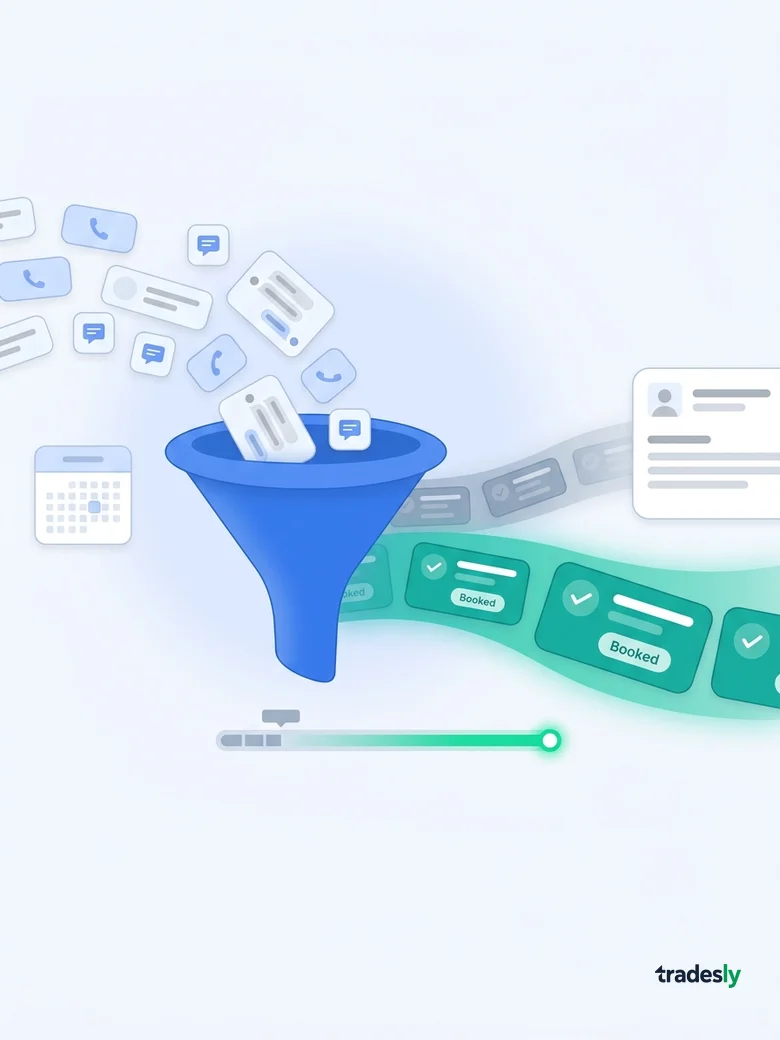
Plug in your firm's numbers
Enter your monthly inquiry volume, booking rates, and close rate. Add your average retained-client value. The calculator does the rest — live.
Total inbound inquiries per month across phone, web form, and chat. Count every new potential-client contact.
The percentage of inquiries that currently result in a scheduled consultation. Book 12 of 60? That's 20%.
The booking rate you believe is achievable with improved intake. Use it to model improvement scenarios.
The percentage of consultations that result in a signed retainer. Sign 4 of every 10? That's 40%.
The $12,500 pre-filled value is a sample illustrative figure only — not an industry benchmark. Use your own firm-specific number for accurate results.
Illustration based only on the values entered. It is not a guarantee of results and does not predict case outcomes.
Capture This OpportunityLegal intake conversion rate is the percentage of inbound inquiries that result in a scheduled consultation — the single most controllable metric in law firm revenue growth.
Why Intake Conversion Is Your Highest-Leverage Metric
The average law firm converts only about 14% of leads into retained clients. Top performers hit 40–50%. That figure is widely reported across legal intake platforms (MyCase, 2026).
That gap isn't a marketing problem. It's an intake problem.
Retained-client values vary widely. Employment matters can be several thousand dollars. Personal injury often runs well above $20,000.
Enter your own firm-specific number in the calculator above. Don't rely on any published average.
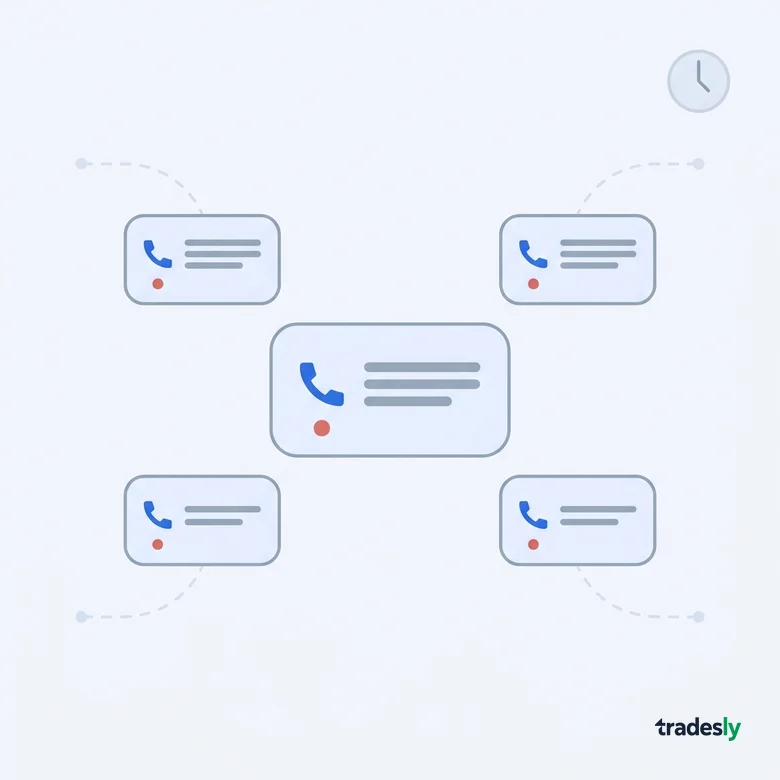
35% of calls to small and mid-sized law firms go unanswered during business hours (Law Leaders, 2025).
Here's the math. Take the calculator's default scenario: 60 monthly inquiries, a 20% current booking rate, and a 55% potential rate. That 35-point improvement produces 21 additional consultations per month.
At a 40% consult-to-client rate and a sample illustrative value of $12,500, that's $105,000 in additional monthly opportunity. Annualized, that's $1,260,000. Same inquiry volume. Zero additional ad spend.
A 10-point improvement in booking rate compounds fast. Run 100 monthly inquiries instead of 60, and the same math produces $175,000 per month. Intake is a leverage point, not a back-office function.
The data is blunt. Clio's 2024 Legal Trends Report found only 33% of firms responded to email inquiries.
Before you spend another dollar on Google Ads, LSA, or SEO: how many of your current leads are you actually working?
The Real Cost of a Missed Call
Google's updated Local Services Ads billing policy has made a bad intake problem worse. Starting October 1, 2026, missed calls during business hours will be charged as valid leads when a caller stays on the line for more than 20 seconds — with some exceptions.
One key exception: if your call routing requires the caller to press a key to connect, the timer doesn't start until they press it, and you're not charged if they never do. But for firms with no routing menu and no one picking up, the clock runs from the first ring. For law firms running LSAs, a missed intake call now hits your firm three times.
Google bills you for the call
Under the new policy, a call that rings unanswered past the 20-second threshold during business hours is treated as a valid lead. You pay for silence. Read more about how Google's new LSA policy charges you for missed calls.
The caller books a competing firm
Legal shoppers move fast. Personal injury callers often contact multiple firms immediately after an incident. The firm that picks up first wins the case. Research consistently shows responding within five minutes dramatically increases the probability of qualifying a lead — studies cite a 21x improvement in lead qualification rates versus a 30-minute delay (MIT/InsideSales Lead Response Management Study).
Your responsiveness score drops
Google's LSA ranking algorithm rewards businesses that answer calls. Every missed call degrades your responsiveness score, which drives up future cost-per-lead and pushes your ad placement down. You pay more for fewer leads, and you answer fewer of those too. The spiral compounds.
Cross-industry studies find average web form response times of 42 hours; law firm-specific data from Hennessey Digital (2025) found a median 13-minute response among firms that do respond — but a significant share never respond at all. The calculator above shows the upside of capturing calls. This section shows the compounding downside of missing them. Both sides of that equation are real.
Intake Dynamics by Legal Practice Area
Not all intake calls are the same. The right response depends on practice area. Generic scripts fail across the board — and a bot reading from a static FAQ is worse than no answer at all on a high-stakes legal call. What converts a PI caller will kill a civil litigation relationship.
Personal Injury
High urgency. Emotional callers. Statute of limitations pressure means every hour matters. Speed and empathy are both non-negotiable. A caller who reaches voicemail after an accident calls the next firm on the list.
Medical Malpractice
Complex intake. Long sales cycles. High average case value. Callers need to feel heard before they trust you with their story. Screening for viable claims requires structured qualifying questions — not a chatbot that asks for a callback number.
Employment Law
Often a caller's first experience with the legal system. They need clarity, empathy, and plain-language explanations of how the process works. Only 36% of law firms explain process and next steps during phone consultations (Clio). That's a massive opening for firms that do.
Real Estate Law
Time-sensitive closings, multiple stakeholders, and callers who are often mid-transaction and stressed. Intake needs to triage urgency fast and route to the right attorney without friction.
Civil Litigation
Sophisticated clients. Relationship-driven intake. These callers are evaluating you as much as you're evaluating them. Intake that feels bureaucratic or impersonal kills the relationship before it starts.
Mass Tort
High inquiry volume with wildly varying case quality. Fast triage and consistent qualifying frameworks are critical. A human who knows your criteria books the right cases. A generic AI books everything — or nothing.
Tradesly's human CSRs are trained on practice-area nuance. They answer as your firm, on your SOPs, knowing which questions to ask for each case type. That's not a feature a bot can replicate.
Why Tradesly's Hybrid Beats the Alternatives
Tradesly's hybrid model pairs autonomous AI triage with real, trained human CSRs. They answer as your firm. No hiring, no payroll, no coverage gaps.
Law firms running intake have three real options. Here's what each actually delivers.
In-house intake staff
Full payroll. Benefits. Turnover — and in legal, turnover is constant. Training takes weeks. Quality is inconsistent until it isn't.
After-hours gaps are real. Roughly 40–50% of legal leads arrive outside business hours (Ruby Receptionists, 2025). Those calls go to voicemail while competitors answer.
You're also managing a team instead of practicing law.
Pure AI or chatbot
AI legal intake tools promise speed. Most deliver a script and a callback request. That's not enough for a scared PI caller or a confused employment client.
Legal callers want to feel heard. A bot that reads a script doesn't do that. Callers hang up and call the firm down the street.
The nuance of a PI caller describing an accident requires a human response. Bots fail exactly where it matters most.
Tradesly Full-Service CSRs
No hiring. No payroll. No management overhead. Our CSRs answer as your firm — and they're better because AI coaches them internally. You never see the coaching. You just see booked consultations.
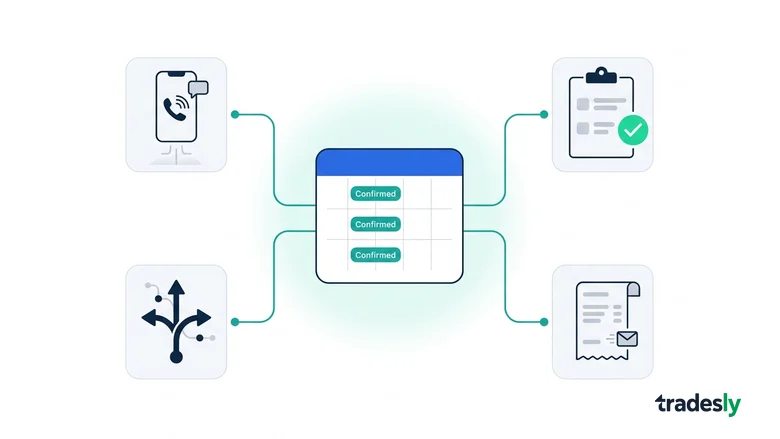
On the LSA angle: starting October 1, 2026, answering every call before the 20-second threshold is the only way to avoid paying for silence. Tradesly's coverage model is built for exactly that. Every call, every hour, answered fast enough to protect your ad spend and your ranking.
Learn more about our AI Receptionist and how it works alongside our human CSR team to close the coverage gap.
Frequently Asked Questions
What is a legal intake services calculator?
What is a good consultation booking rate for a law firm?
How much does a missed intake call actually cost?
What is the difference between AI intake and a human CSR for law firms?
How does legal intake affect Google LSA performance?
Run the Legal Intake Services Calculator. Then Capture What You're Missing.
You've run the numbers above. If the output shows six figures in monthly opportunity, that's not a projection — it's an illustration of what your current booking gap is worth, using your own inputs. The math is simple. The gap is real.
Starting October 1, 2026, under Google's updated LSA policy, every missed intake call is a paid miss. You're charged for the call whether or not you book the client. The only way to stop paying for silence is to answer before 20 seconds — every time, every day, after hours included.
Tradesly's Full-Service CSRs do exactly that. No hiring. No payroll. Just answered calls, booked consultations, and retained clients.
Disclaimer: Illustration based only on the values entered. It is not a guarantee of results and does not predict case outcomes.