

FSM Call Integration: The #1 Evaluation Criterion (Not Features)
Most FSM evaluations miss what actually drives ROI. Here's why call integration is your hidden revenue multiplier—and how to evaluate FSM platforms that actually book jobs.


Most FSM evaluations focus on the wrong metrics. Features, pricing, user interface: none of that matters if leads aren't making it to your dispatch board.
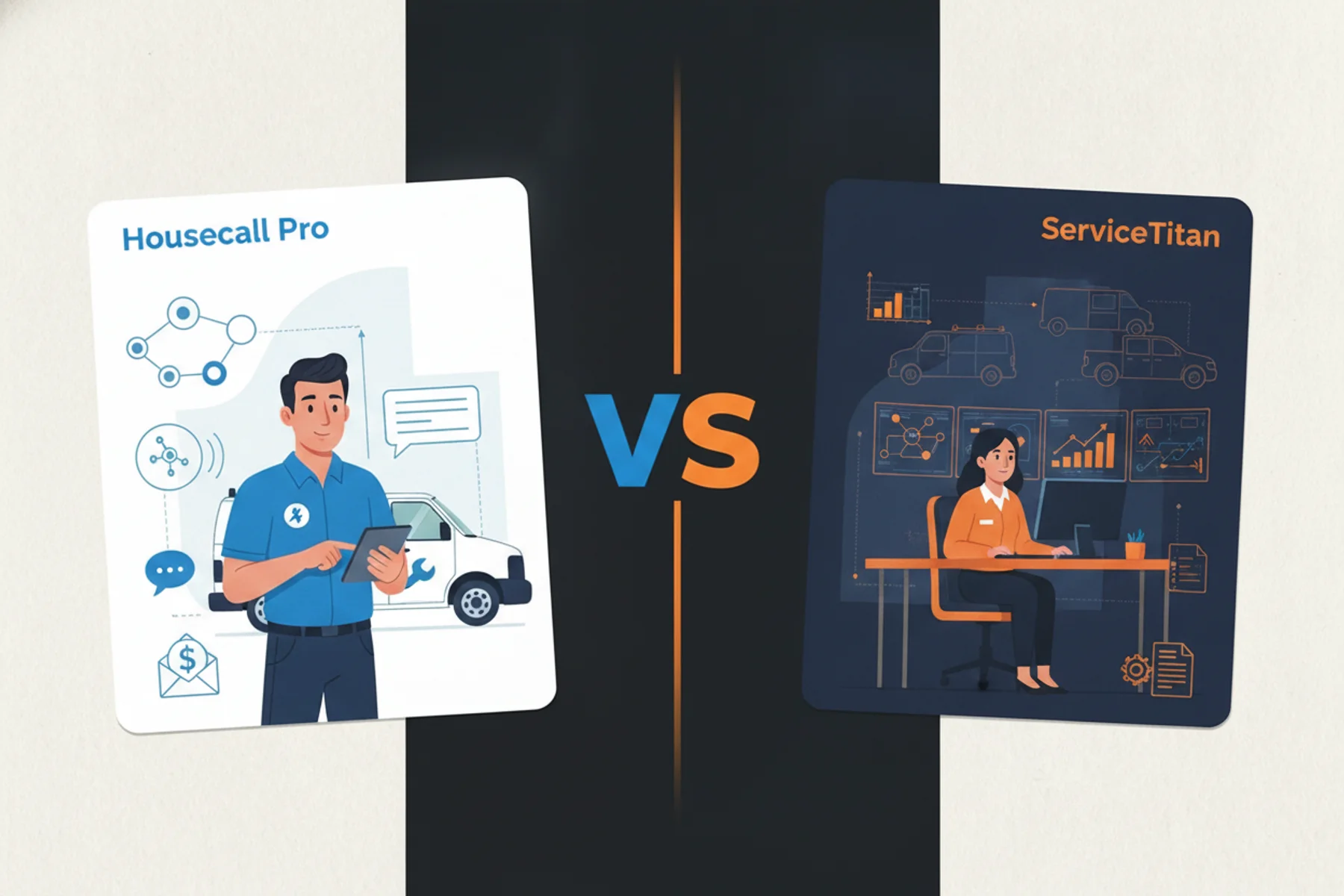
I've watched shops spend months comparing ServiceTitan's invoice templates against Housecall Pro's mobile app. They completely miss the fact that 30-40% of their phone leads never convert to booked jobs.
They optimize what happens after booking while ignoring the booking process itself.
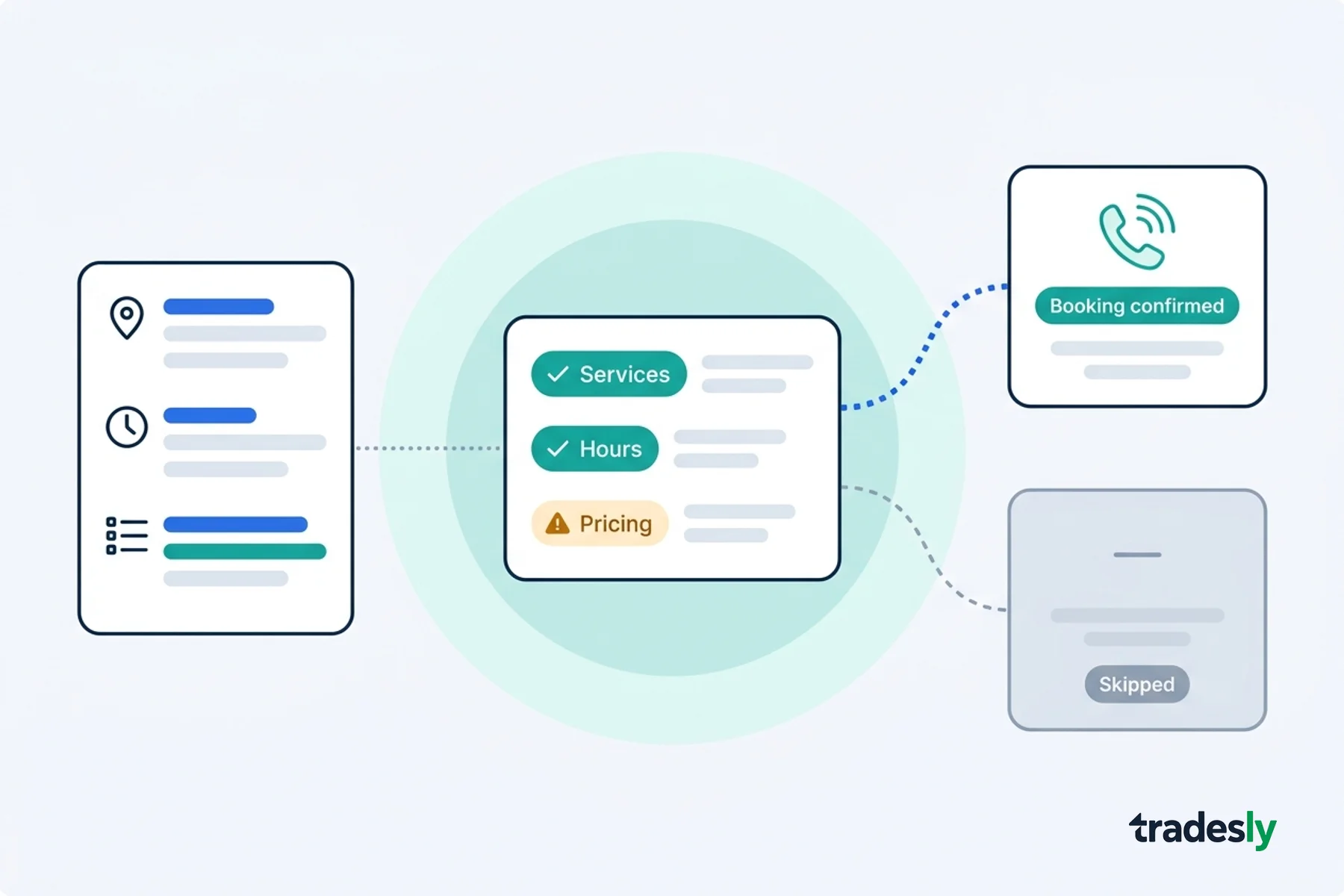
FSM call integration is the seamless connection between your phone system and field service management platform that automatically captures, qualifies, and routes leads directly to your dispatch board without manual data entry or handoff gaps.
The FSM platforms that drive real revenue aren't the ones with the most features. They're the ones that ensure every qualified lead becomes a job on your board.
What's wrong with how we evaluate FSM platforms?
Traditional FSM selection criteria don't predict ROI. Standard evaluations focus on automated dispatch, technician productivity tools, and travel time reduction instead of lead conversion capabilities.
You can have perfect dispatch optimization and technician scheduling, but if leads are dying at intake, your board stays empty.
Here's what I see happening: Companies evaluate FSM software based on features like automated dispatch, technician productivity tools, and travel time reduction. These matter, but they're solving the wrong problem first.
Why most FSM comparisons miss the point
Standard FSM vendor demos focus on what happens after someone books a job. They show you beautiful dispatch boards, mobile apps for techs, and invoice automation.
What they don't show you is how leads get onto that board in the first place.
I watched a 15-tech HVAC shop implement a $40K FSM platform and still lose jobs. Their CSRs couldn't handle price objections on $8,000 install calls. Perfect dispatch workflow doesn't fix fumbled phone calls.
The hidden revenue leak between marketing and dispatch
Your marketing team reports 200 qualified leads per month. Your dispatch board shows 120 booked jobs. Where did 80 leads go?
Most shops can't answer this question because their call system doesn't talk to their FSM. The revenue leak from poor call handling is invisible until you connect the dots between phone rings and booked jobs.
Those missing leads represent $30K-$50K in lost revenue monthly for a mid-size shop. That's more than most FSM platforms cost annually.
How does call integration multiply FSM success?
FSM call integration delivers 3x higher platform adoption rates and 20-40% booking rate improvements because data flows automatically from phone to dispatch board with complete lead context preserved. When your call system feeds qualified lead data directly to your FSM, booking rates improve and dispatch decisions get smarter.
No manual entry. No lost context. No gaps where leads disappear.
The revenue math: What happens when leads actually become jobs
Let's run real numbers. A plumbing shop with $2M annual revenue typically:
- Gets 300 phone leads monthly from all sources
- Books 180 jobs (60% conversion rate)
- Averages $850 per job
AI call qualification can push that conversion rate to 75%. That's 45 additional jobs monthly at $850 each. $38,250 in extra revenue. Annually, that's $459,000.
No FSM feature delivers that kind of revenue impact. Efficiency improvements might save you 10-15% in operational costs. Revenue improvements from better call handling can grow your business by 20-30%.
Why AI-powered call intake changes everything
AI doesn't just book calls. It qualifies them intelligently and routes high-value work to your best techs.
I've seen shops use AI to automatically identify emergency calls, high-ticket opportunities, and routine maintenance. Then route each type to the appropriate resource. Technician utilization from better call intake improves because the right tech gets the right job with complete context.
How do you evaluate FSM call integration capabilities?
Score call integration using four criteria: API depth, real-time sync, context preservation, and quality monitoring. Most FSM vendors claim they "integrate with phone systems" but that could mean basic call logging or full AI-powered qualification and routing.
When evaluating FSM platforms, you need to dig deeper.
Critical questions to ask FSM vendors
Here's what I ask every FSM vendor about call integration:
- "Show me how a phone lead becomes a job on the dispatch board every step"
- "What happens when your system can't reach our CRM during a call?"
- "Can your platform handle warm transfers with full call context?"
- "How do you score call quality and tie it to booking rates?"
If they can't demo the full flow or start talking about "future roadmap features," that's a red flag.
Red flags in FSM call integration
Watch for these warning signs:
- "We integrate with most phone systems" (but can't name specific ones)
- Manual data entry required between call and job creation
- Batch sync only (no real-time lead flow)
- No AI voice agent warm transfer capabilities
- Call recording without call quality monitoring integration
Integration depth scoring rubric
Score each FSM platform 1-5 on:
- API richness: Read/write access to all relevant data objects
- Real-time sync: Sub-second data flow from call to FSM
- Context preservation: Call notes, customer history, qualification data transfer intact
- Quality integration: Call scoring feeds back to improve dispatch decisions
Platforms scoring below 15/20 will create revenue gaps, no matter how good their core FSM features are.
How do major FSM platforms handle call integration?
Here's the honest assessment of major FSM platforms and their call integration capabilities in 2026.
ServiceTitan: Strong CRM, limited call AI integration
ServiceTitan primarily supports high-volume service environments and multi-location service divisions, and their CRM is excellent for managing customer data post-booking.
But ServiceTitan's call intelligence is basic. They record calls and track some metrics, but there's no real-time AI coaching or intelligent qualification during the call.
You get great workflow after booking, but dispatch board gaps persist because leads still die at intake.
The ServiceTitan and Tradesly integration solves this by layering AI call intelligence on top of ServiceTitan's solid FSM foundation.
Salesforce Field Service: Enterprise integration, high complexity
Salesforce has the API depth for sophisticated call integration, but requires expensive customization. Unless you're already deep in the Salesforce ecosystem with dedicated developers, the integration complexity exceeds the benefit for most home service shops.
Jobber/Housecall Pro: Simple but limited call intelligence
Mid-market platforms like Jobber and Housecall Pro excel at ease of use but lack APIs for advanced call system integration. You get basic call logging, but no AI qualification, real-time coaching, or intelligent routing.
These platforms work well if your call handling is already solid and you just need simple FSM functionality. But they won't fix revenue leaks from poor phone performance.
The hybrid approach: Best-of-breed call + FSM integration
The smartest shops use a hybrid approach: keep your preferred FSM platform and layer on specialized call intelligence. This avoids vendor lock-in while getting best-in-class capabilities for both call handling and field service management.
Most leading FSM platforms have already added AI features like basic scheduling suggestions built for the average customer. But call AI is specialized. You want the platform built specifically for that problem.
The CRM and FSM integration gaps get filled by purpose-built call intelligence that connects to your existing stack.
The ROI math: Why call integration pays
A 20% improvement in booking rate generates more revenue than 50% dispatch efficiency gains. The numbers prove call integration should be your top FSM selection criterion.
Missed calls cost $150-500 per incident in home services, depending on your average ticket. A missed emergency plumbing call can cost $2,000+ in lost revenue. Dispatch efficiency improvements might save you $50-100 per job through reduced drive time.
Revenue capture vs. operational efficiency
Here's the math for a $3M HVAC shop:
- Revenue impact: 15% booking rate improvement = $450K additional annual revenue
- Efficiency impact: 20% dispatch optimization = $90K annual cost savings
Revenue capture beats operational efficiency 5:1. Your FSM evaluation should reflect that priority.
Cost per missed lead calculation
Use our cost per missed call calculator to quantify the revenue impact of poor call handling. Most shops discover they're losing more revenue to missed calls than they'd spend on FSM software annually.
Track your profit per call metric to understand the true cost of call integration gaps. When you see $300 profit per call, missing 10 calls monthly costs $36,000 annually.
Your FSM selection action plan
Before you evaluate any FSM platform, audit your current call-to-booking conversion rate and identify where leads are falling through cracks. This baseline determines how much call integration capabilities should influence your FSM decision.
Step 1: Audit your current call-to-booking conversion
Track these metrics for 30 days:
- Total inbound calls from all lead sources
- Calls that result in booked appointments
- Calls that result in completed jobs
- Average revenue per booked call
Use a CSR scorecard template to standardize measurement across your team.
Step 2: Define call integration requirements
Based on your audit, prioritize call integration features:
- If conversion rate < 50%: Real-time AI coaching and objection handling are critical
- If after-hours calls go unanswered: AI voice agents for 24/7 coverage
- If leads get lost between call and dispatch: Automated data flow and job creation
Step 3: Vendor evaluation with call integration scoring
Weight your FSM vendor scorecards:
- Call integration capabilities: 40%
- Core FSM features: 30%
- Price and implementation: 20%
- User experience: 10%
Set up call center monitoring setup to track improvement after FSM implementation.
Key takeaway: The FSM platform with the strongest call integration capabilities will drive more revenue growth than the one with the most features. Choose based on how leads become jobs, not just how jobs get managed.
Stop evaluating FSM platforms like they're all equal. The one that captures and converts every phone lead will outperform the feature-rich platform that lets leads slip through cracks. Get the demo to see how AI call integration multiplies FSM ROI.