


CSR Coaching for Home Services: How to Use Real-Time AI Coaching Without Alienating Your Best CSRs
Your CSR freezes on a price objection and you see the score two days later. Learn how real-time call coaching works and how to pilot it on your hardest calls.

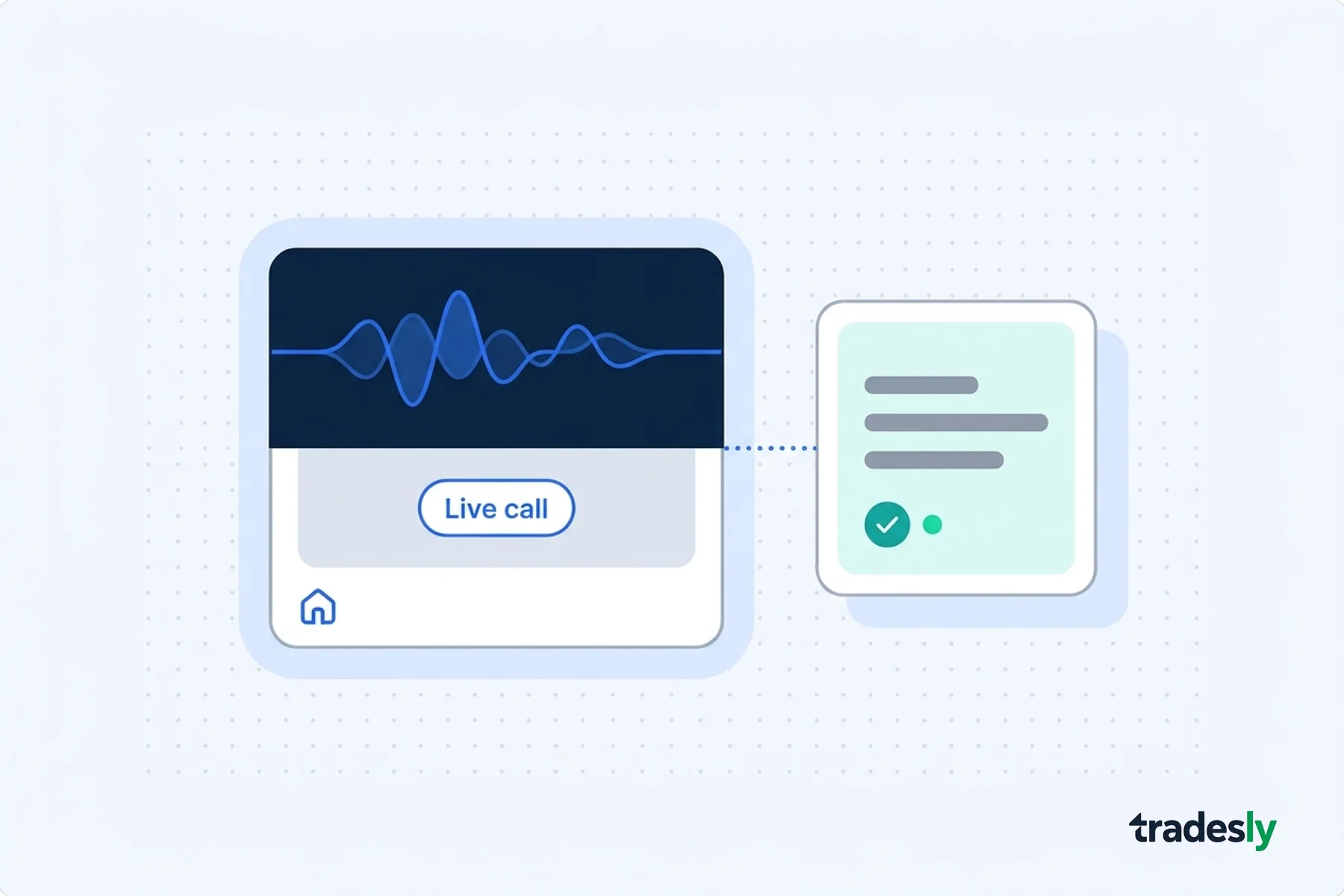
Stop Grading Calls After the Lead Is Gone: Coach Your CSRs While They Talk
A homeowner calls about a $9K system replacement and says, "I got a cheaper quote." Your CSR freezes and the caller hangs up. Two days later you see the score on a spreadsheet, and the lead is already booked with a competitor.
That is the problem with call monitoring. It judges the call after it is lost. CSR coaching software works on a different clock: it helps your rep while the caller is still on the line. This guide is for home services companies, including HVAC, plumbing, roofing, garage door, and general contractor teams.
Why does call monitoring feel like spyware to your dispatchers?
Monitoring feels like spyware because feedback arrives after the damage is done and is tied to a score. Reps hear about mistakes they can no longer fix. If that is your only coaching, the process is the problem, not the rep.
CSR coaching software is a tool that listens to a live call and shows the rep on-screen guidance, such as talk tracks and rebuttals, while the conversation is still happening. Post-call scoring only reviews the call afterward.
A Cornell ILR School survey found that heavy electronic monitoring is associated with stress, lower job satisfaction, and higher turnover intentions. Associated with, not proven to cause. It is general call center research, not home services research.
Callforce, relaying QATC data, puts call center attrition at roughly 30-45% a year. A small trades desk will not match that. Owners still feel it when a top CSR walks, and it helps to know why your best CSRs quit.
Why timing is the real problem
Scoring a call tells the rep what went wrong. It cannot fix the call. The fix has to land in the moment the caller says the hard thing.
What is the difference between post-call scoring and live CSR coaching software?
Post-call scoring reviews recorded calls after the customer is gone. Live CSR coaching software shows guidance during the call while the lead can still be saved. They do different jobs, and you should not ask one to do the other.
| Question | Post-call scoring | Live whisper coaching |
|---|---|---|
| When feedback arrives | Hours or days after the call | During the call |
| Can it save the lead? | No | Yes, if the rep uses it |
| How the rep experiences it | A grade on a call that is over | Backup on screen when the call gets hard |
| What the manager reviews | Scores and sampled recordings | Where reps needed help and which talk tracks worked |
| Best use | Spotting patterns and training themes | Winning hard calls in the moment |
What post-call QA is still good for
Retrospective QA is still good for spotting patterns, training themes, and compliance issues. The mistake is making it your only coaching layer. If you want to evaluate review methods, see how 100% AI call QA compares to sampling.
Here is how Whisper Coaching works. Your rep answers the call. Tradesly's AI listens and shows talk tracks and rebuttals on screen in real time.
The rep stays in control, and the caller never hears the prompts. This is your own team, made better.
What is the best CSR coaching software? Look for live on-screen prompts, not after-the-fact scores. Look for talk tracks built for the trades. Make sure it is optional for veterans and the rep stays in control of what gets said.
What to ask in a demo
Whether you run an HVAC, plumbing, roofing, or garage door desk, or a general contractor office, run the same checks before you buy:
- Show me a live call. Ask to see a prompt appear mid-call, and how long it takes.
- Can a rep turn prompts off? Veterans should be able to.
- Whose talk tracks are these? Ask whether you can edit them to your shop's SOPs.
- What happens to the data? Ask who sees it and whether it feeds write-ups.
- How do you define booking rate? Get the numerator and denominator in writing.
Which calls should get real-time call coaching?
Use live prompts on the calls that break people: price-shopper objections, high-ticket replacements, upset callers, and any call where the CSR must ask for the booking. Leave routine scheduling calls quiet, because prompts on every call turn help into noise.
Call types that deserve live help
- Price shoppers: "I got a cheaper quote."
- High-ticket replacements: the $9K system, full roof, or garage door calls where hesitation costs real cash.
- Upset callers: tone and next steps matter most here.
- The ask: any call that needs a clear request to book.
What to leave alone
Routine scheduling, address checks, and reschedules do not need a prompt, so keep the screen quiet there.
What good booking behavior looks like
The ask is a process gap. One vendor-reported figure says only about 35% of CSRs ask for the booking. Here, "ask" means the CSR makes a direct request to schedule before the call ends. The vendor does not publish a range we can verify, so treat 35% as a single data point.
The behaviors to coach are specific: offer two appointment times, restate the caller's concern before pricing, and close with a direct request to book. Here is an example of what to track. The labels are placeholders for your own numbers.
| Behavior | Before pilot | After pilot |
|---|---|---|
| Offered two appointment times | [your %] | [your %] |
| Asked directly to book | [your %] | [your %] |
| Booking rate on price-objection calls | [your %] | [your %] |
Example layout only. Fill in your own figures.
Why veterans should have control
Veterans gain less from constant prompting, so let them choose when to use it. Does real-time coaching help? It is associated with gains, causation is unproven, and the research is not trades-specific.
The best-known evidence is the Brynjolfsson, Li and Raymond study of 5,172 support agents, published in the Quarterly Journal of Economics. As summarized in a vendor explainer, AI assistance raised issues resolved per hour by about 15% on average and about 30% for less experienced agents. It covered chat support at a software company, not home services phone work.
Gains concentrated among novices, so make prompts optional for veterans. Do not promise big gains for your top CSRs.
Price shoppers hit HVAC, plumbing, roofing, and garage door desks daily. The caller says, "I got a cheaper quote," a talk track appears, and the rep picks the words that fit. Build your tracks from this 5-step script for HVAC price objections.
How do you roll out CSR coaching software without a revolt?
Roll it out in five steps: tell the team, pilot one call type, collect rep feedback, separate coaching from discipline, and review after two to four weeks. Treat it as support on hard calls, not a new scorecard.
1. Tell the team what it is and what it isn't
Be blunt. This is backup on hard calls.
Do this: consider a short team meeting before anything goes live. About 15 minutes is a reasonable starting point.
2. Start with one call type and a small group
Pick price objections first. Ask for volunteers, including a veteran.
Do this: try 3-5 reps, including your strongest. This is a suggestion, so adjust to your desk size.
3. Let reps give feedback on the prompts
Reps know when a line sounds off. Tune each talk track to your shop's SOPs and tone.
Do this: collect rep notes weekly.
4. Separate coaching data from discipline
Live coaching helps on calls and is not used for write-ups. I am not making legal claims here. Check your state rules on call monitoring disclosure.
Do this: put the rule in writing.
5. Review after two to four weeks and expand
Ask the reps what helped and what got in the way. Then add the next hard call type.
Do this: schedule the review before the pilot starts.
One caution. No source I know of shows live coaching lowers turnover on home-services teams. The case is reasoning, not a promise.
How do you measure CSR coaching software without turning it into a scoreboard?
Measure outcomes that show whether the help works: booking rate on the pilot call type, ask-for-the-booking rate, and ramp time for new reps. State your booking rate definition up front. Skip metrics that punish.
Metrics that coach
- Booking rate on the pilot call type, before and after.
- Ask-for-the-booking rate on hard calls.
- Ramp time for new reps, a key measure of home services CSR training.
Metrics that punish
Be careful with handle-time targets and strict script-compliance scores. Cornell research ties discipline-focused management to lower satisfaction and higher turnover intentions.
Making the ROI case to leadership
A paid lead that calls in and does not book is wasted spend. Compare booking rate on the same call type before and after the pilot. If it moves, that is your ROI. To go further, read how to improve your HVAC booking rate with real-time coaching.
The bottom line: help your reps win the call in front of them
Key Takeaway: Don't grade the call after the lead is gone. Help your own reps win it while the customer is still on the line.
CSR coaching software only works if your reps see it as backup. Here is the recap:
- Timing matters more than data.
- Live help belongs on the hardest calls.
- Make prompts optional for veterans.
- Separate coaching from discipline.
- Measure outcomes, not compliance.
If you want to keep your own CSRs and make them better, look at Tradesly's Whisper Coaching for your own CSRs. Pilot it on price objections first. Stop guessing. Get the demo.
FAQ
What is real-time CSR coaching software?
Real-time CSR coaching software listens to a live call and shows the rep on-screen guidance. With Tradesly's Whisper Coaching, your own reps take the call. The AI shows talk tracks and rebuttals live, and the customer never hears them.
Will live prompts annoy experienced CSRs?
They can if you force them, so make prompts optional, since research found gains concentrated among less experienced agents.
How is live coaching different from call scoring?
Call scoring reviews a call after it ends and cannot save the lead. Live coaching helps while the caller is still on the line. Scoring is still useful for spotting patterns and training themes.
What should I coach first on a home services desk (HVAC, plumbing, roofing, garage doors, or contractors)?
Start with price-shopper objections. They are hard and common, and they cost real money. Pilot with a few volunteer reps, including a veteran, and expand to the next hard call type after two to four weeks.
Keep reading
 CSR Coaching & Call Handling
Plumbing Call Center Scripts That Actually Book Jobs
8 min read CSR Coaching & Call Handling
The 'Diagnostic Fee' Friction: How to Coach CSRs to Address Trip Charges Without Killing the Booking Rate
7 min read CSR Coaching & Call Handling
The Summer Heatwave Blueprint: Handling a 300% Call Spike Without Seasonal Temps
8 min read