

Smart Dispatch AI: Stop Wasting Tech Time on Bad Leads
Full dispatch boards don't equal profit. Learn how AI qualification filters out bad leads, protects technician time, and fills your board with jobs your team actually closes. Real ROI in 3-6 months.

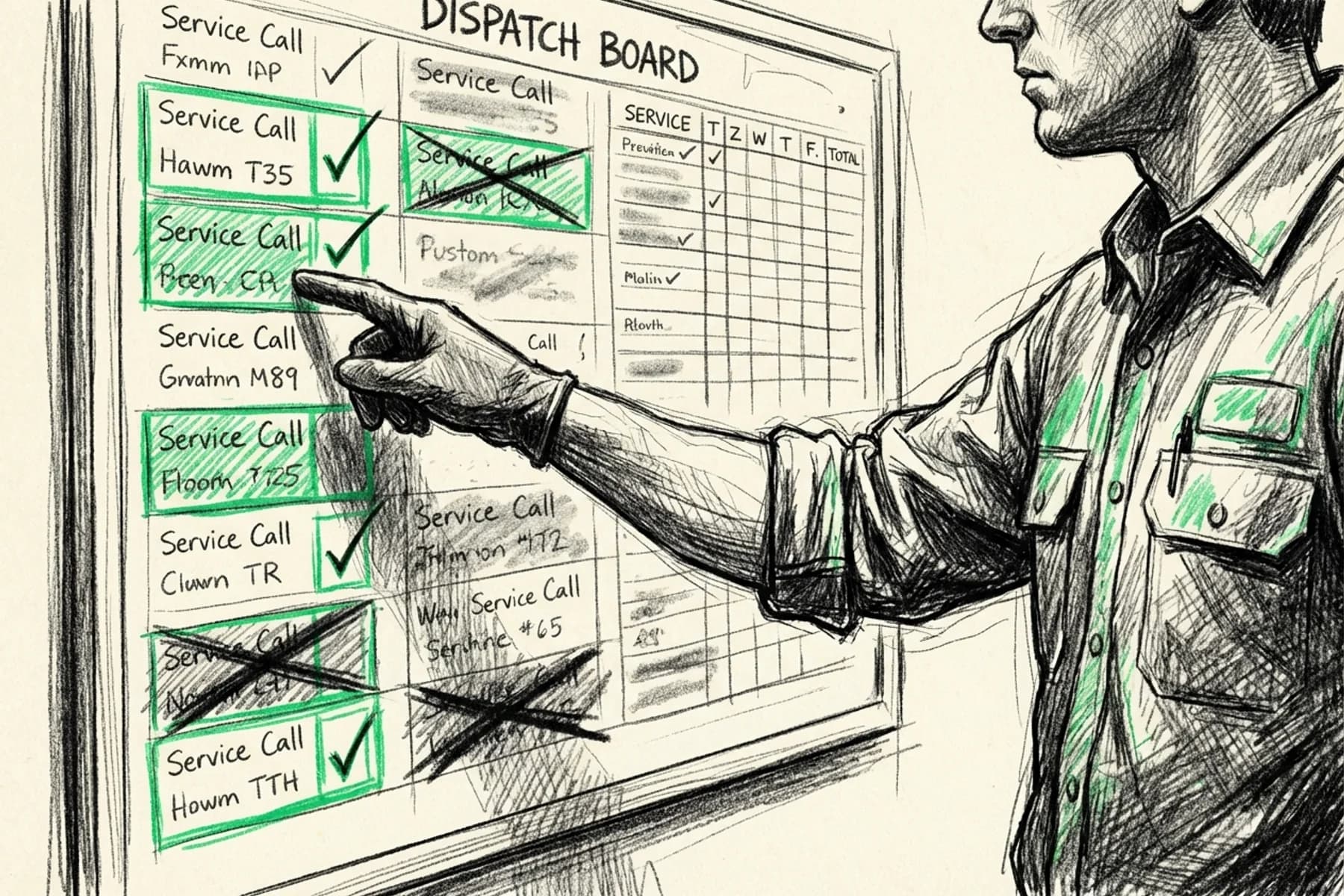
Your dispatch board looks full. Sixteen calls scheduled, trucks rolling, everyone busy.
But here's what you can't see from the board: half those calls are tire-kickers, price shoppers, or "just checking" calls that waste your techs' time and kill your utilization rates.
I've watched shops with packed dispatch boards run 45% technician utilization because they're sending $75/hour techs to quote $200 jobs for people who aren't buying. That's not dispatch efficiency. That's expensive theater.
Smart dispatch AI qualification fixes this by filtering leads before they hit your board. Only qualified, revenue-ready jobs get dispatched. Your techs close more. Your board stays full of real work.
The hidden cost of "busy" dispatch boards
A busy dispatch board costs you money when it's filled with the wrong calls. Your techs drive across town to quote someone shopping five companies, or they spend an hour diagnosing a furnace for someone who "needs to think about it."
Smart Dispatch AI Qualification is a system where AI evaluates leads for budget, urgency, and decision-making authority before they reach your dispatch board, ensuring technicians only visit qualified prospects ready to buy.
Why full dispatch boards don't equal profitable dispatch boards
I've seen this pattern at dozens of shops: packed schedule, busy techs, disappointing revenue. The problem isn't volume. It's qualification.
When your CSRs book everything that calls, you're not managing demand. You're just moving unqualified leads from the phone to the truck. Your dispatch board becomes a to-do list of maybes instead of a revenue pipeline.
The math is brutal. Send a tech to five unqualified calls per day at $75/hour loaded cost. You've burned $375 on leads that weren't buying anyway.
The qualification gap that's killing your utilization rates
Most shops measure dispatch board fill rates but ignore what matters: qualified dispatch rates. Technician utilization ranges between 60 and 80 percent are considered strong, but I see shops running 45-50% because they're not qualifying before dispatching.
The qualification gap happens between the initial call and the dispatch. Your CSR books the appointment. Your dispatcher assigns the tech. Nobody asks the hard questions about budget, urgency, or decision-making authority.
This gap kills utilization rates and burns tech time on calls that were never going to close.
What smart dispatch actually means in 2026
Smart dispatch isn't just scheduling software. It's qualification-first dispatching where AI evaluates every lead before it hits your board.
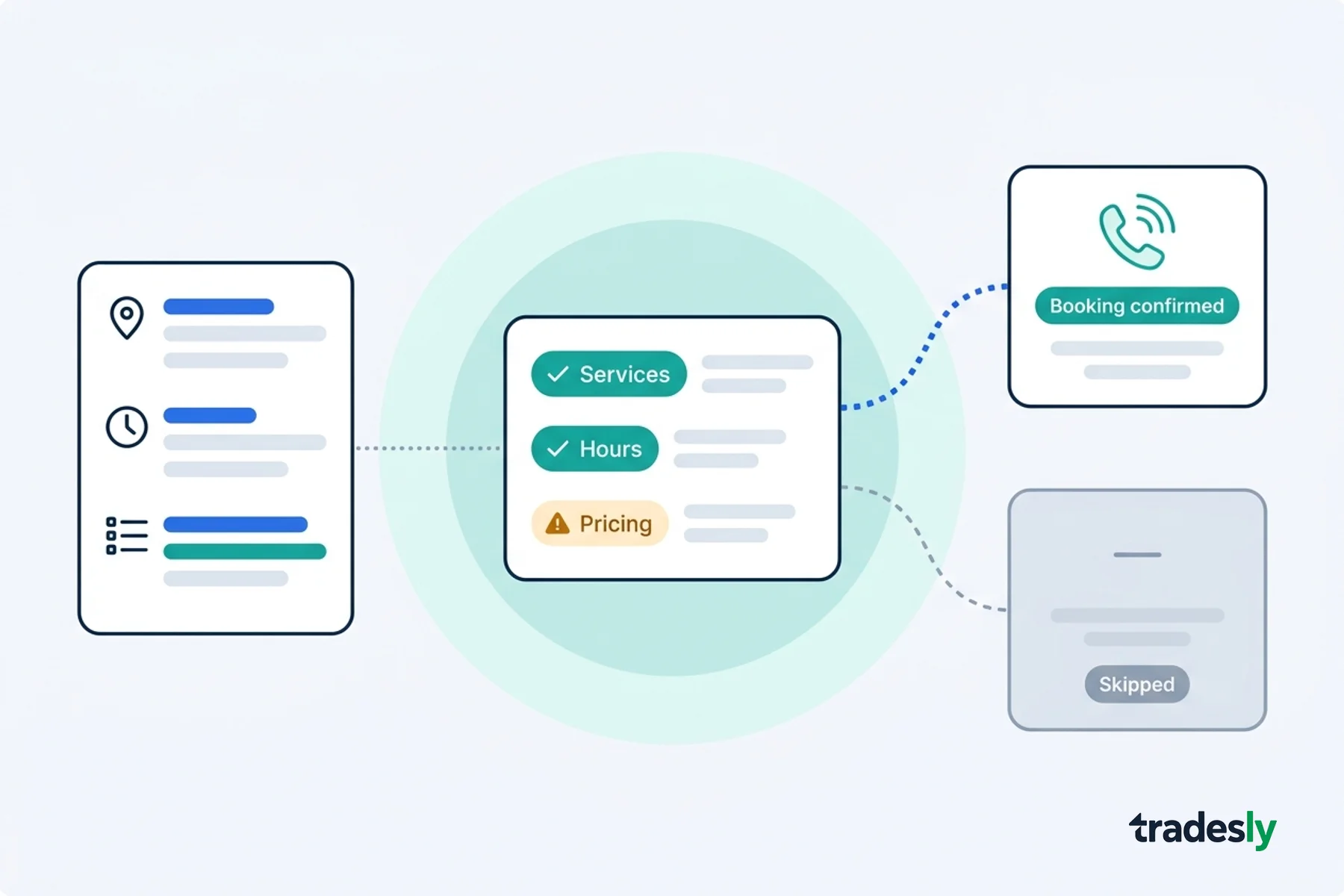
The system asks budget questions, confirms decision-maker authority, and assesses urgency. Only leads that pass the qualification filter get dispatched to techs.
Everything else gets routed to inside sales for follow-up, nurturing, or disqualification. Your dispatch board shows qualified opportunities, not busy work.
How does AI qualification improve dispatch board efficiency?
AI qualification improves dispatch board efficiency by evaluating leads for budget, urgency, and decision-making authority before they reach technicians, increasing utilization rates from 45-50% to 70-80%. Companies implementing intelligent scheduling see 20-30% improvements in technician utilization.
How AI qualification works in real-time
Modern qualification AI runs during the initial customer interaction. When someone calls, texts, or submits a web form, the AI immediately starts the qualification process.
The system asks qualifying questions naturally: "What's your budget range for this repair?" "When do you need this fixed?" "Are you the homeowner or renter?"
Based on the responses, AI routes qualified leads to dispatch and flags unqualified leads for different handling. AI agents qualify leads instantly by phone, SMS, or web so only the most qualified get passed to experienced agents.
The qualification criteria that protect tech time
Smart qualification AI evaluates four key areas:
- Budget Authority: Can they afford the typical repair range?
- Decision Authority: Can they say yes without consulting others?
- Urgency: Do they need it fixed now or "eventually"?
- Fit: Is this within your service area and expertise?
Leads that score high across all criteria get dispatched immediately. Marginal leads get routed to inside sales. Clear no-gos get politely declined or referred.
Integration with existing dispatch software
The best qualification systems layer on top of your existing FSM platform. Whether you're running ServiceTitan, Housecall Pro, or Jobber, the AI feeds qualified leads directly into your dispatch workflow.
Your dispatchers see pre-qualified opportunities with notes about budget, urgency, and decision authority. They're dispatching revenue-ready calls instead of guessing about qualification.
What is smart dispatch and how does it work?
Smart dispatch is a qualification-first system where AI evaluates leads before they reach your dispatch board, ensuring technicians only visit prospects who are ready to buy. The system integrates with your FSM platform to route qualified leads directly to dispatch while filtering out time-wasters.
Step 1: Audit your current qualification process
Start by tracking your current numbers for one month:
- How many calls hit your dispatch board daily?
- What percentage result in closed jobs?
- What's your average technician utilization rate?
- How many dispatches are "no sale" callbacks?
Most shops discover they're dispatching 40-50% unqualified leads. That's your baseline for improvement.
Step 2: Set up AI qualification criteria
Configure your qualification criteria based on your service offerings and market:
- Minimum budget thresholds for different service types
- Geographic boundaries for cost-effective service
- Urgency requirements (emergency vs. maintenance)
- Decision-maker identification questions
Be specific. "Can afford HVAC repair" is too vague. "Has $500-2,000 available for furnace repair" gives the AI clear qualification parameters.
Step 3: Integrate with dispatch software
Connect your AI qualification system to your FSM platform. ServiceTitan integration lets qualified leads flow directly into your dispatch board with qualification notes attached.
Your dispatchers see which calls are pre-qualified and why. They can prioritize high-value opportunities and handle marginal leads differently.
Step 4: Train your team on the new workflow
Train dispatchers to recognize and prioritize qualified vs. unqualified leads. Train techs to handle pre-qualified prospects differently than cold calls.
Pre-qualified leads should have higher close rates because the qualification work is already done. Track these metrics separately to prove the system is working.
How can AI prevent technicians from being sent to unqualified leads?
AI prevents technicians from being sent to unqualified leads by evaluating budget, urgency, and decision-making authority during the initial customer interaction, before leads reach the dispatch board. Only prospects who pass all qualification criteria get scheduled for technician visits.
This qualification happens automatically through conversational AI that asks the right questions naturally and routes qualified leads to dispatch while sending unqualified leads to inside sales or gentle decline.
How do you measure technician utilization in field service operations?
Technician utilization is measured by dividing billable hours by total hours worked, with industry benchmarks ranging from 60-80% for strong performance. Revenue metrics for trades show that qualified dispatch leads to higher utilization rates than volume-based dispatch.
Dispatch board density metrics
Track these dispatch-specific metrics:
- Qualified dispatch rate: Percentage of dispatches that meet qualification criteria
- Board fill rate: Percentage of available tech time that's scheduled
- Dispatch-to-close rate: Percentage of dispatches that result in closed jobs
- Revenue per dispatch: Average job value per dispatch
A healthy dispatch operation shows 75%+ qualified dispatch rates and 65%+ dispatch-to-close rates.
Technician utilization improvements
Measure utilization before and after implementing smart dispatch. Most shops see 15-25 point improvements in utilization rates within 90 days.
The improvement comes from sending techs to qualified prospects instead of tire-kickers. Lower-performing teams show 24% avoidable dispatch rates, compared to only 3% among top performers.
Revenue per dispatch tracking
Your revenue per dispatch should increase with better qualification. If AI qualification is working, you'll see higher average job values and close rates from dispatched calls.
Track this monthly. Revenue per dispatch improvements of 20-30% are common when qualification improves.
What are the best practices for dispatch board management?
Best practices for dispatch board management include qualification-first dispatching, real-time utilization tracking, and integration between AI qualification systems and FSM platforms. Focus on board quality over board volume.
Companies using these practices report significant improvements in both efficiency and revenue.
Case study: HVAC company improves utilization by 25%
I worked with a 12-tech HVAC company running 48% utilization with packed dispatch boards. The problem wasn't lead volume. It was lead quality.
After implementing AI qualification, their qualified dispatch rate went from 52% to 89%. Technician utilization jumped to 73%. Same number of techs, same marketing spend, 40% more revenue.
The key was filtering leads before dispatch instead of hoping techs could convert unqualified prospects.
Dispatch board density improvements
Smart qualification actually increases board density over time. When techs close more qualified leads, word-of-mouth referrals increase. Your board fills with higher-quality opportunities.
Modern route optimization reduces delivery time by 30-40% and helps reduce fuel outlay, but qualification improvements deliver even bigger ROI through better close rates.
ROI on AI qualification systems
Most companies see ROI within 3-6 months. The math is straightforward: higher utilization rates with the same labor costs equals immediate profit improvement.
A 20-point utilization increase on a 10-tech operation typically generates $15,000-25,000 monthly profit improvement. The AI qualification system pays for itself quickly.
Getting started with smart dispatch
Look for AI qualification systems that integrate cleanly with your existing FSM platform. AI dispatcher implementation should enhance your current workflow, not replace it.
Choosing the right AI qualification system
Evaluate systems based on:
- FSM integration: Does it work with your current dispatch software?
- Qualification flexibility: Can you customize criteria for your market?
- Training requirements: How much setup and training does your team need?
- ROI timeline: How quickly will you see utilization improvements?
AI tools for trades businesses should solve specific problems, not create new ones.
Integration considerations
Plan for 1-2 weeks of integration and testing. The best systems require minimal disruption to current operations.
Your CSRs, dispatchers, and techs should see immediate benefits without major workflow changes. If the integration feels disruptive, find a different solution.
Training and rollout timeline
Start with a pilot program on 20-30% of your leads. Measure the qualification rates and utilization improvements before full rollout.
Train your team on the new qualification criteria and dispatch priorities. Most teams adapt within 2-3 weeks when they see the results.
Smart dispatch AI qualification turns your dispatch board from a busy work generator into a revenue pipeline. Your techs visit qualified prospects. Your utilization rates improve. Your profit margins grow.
Stop filling dispatch boards with maybes. Start filling them with qualified opportunities that close.
Ready to implement smart dispatch AI qualification? Get the demo and see how qualification-first dispatching fills your board with jobs your techs can actually close.